
You walked into the kitchen for something and stood there for a beat, trying to pull the reason back. That moment is familiar to most adults over 50, and it’s more common earlier than most people expect.
Adults over 50 who are worried about memory and want research-backed steps they can start now are the people this article is for. The daily habits to keep memory sharp after 50 that research backs are fewer and simpler than most people expect.
By the end, you’ll know what those habits are and how to fit them into a normal day.
Habit 1: Move Your Body Before the Day Gets Away From You
Most people know exercise is good for the brain. Fewer people know the specific connection between exercise and memory after 50, and how significant the research on it is.
The research on what exercise does to the memory center in your brain is more specific than most people realize.
A randomized controlled trial with 120 older adults found that aerobic exercise increased the volume of the anterior hippocampus [the front section of the brain’s memory-forming region] by 2%, which effectively reversed one to two years of age-related brain shrinkage.²
The stretching-only control group lost hippocampal volume over the same period.²
The finding held across a much larger body of research. A later meta-analysis of 36 randomized controlled trials covering 2,750 participants aged 55 and older found that aerobic exercise improved episodic memory [the ability to remember specific events, like what you had for breakfast or where you put your keys] compared to control groups, with the strongest benefit in adults aged 55 to 68.³
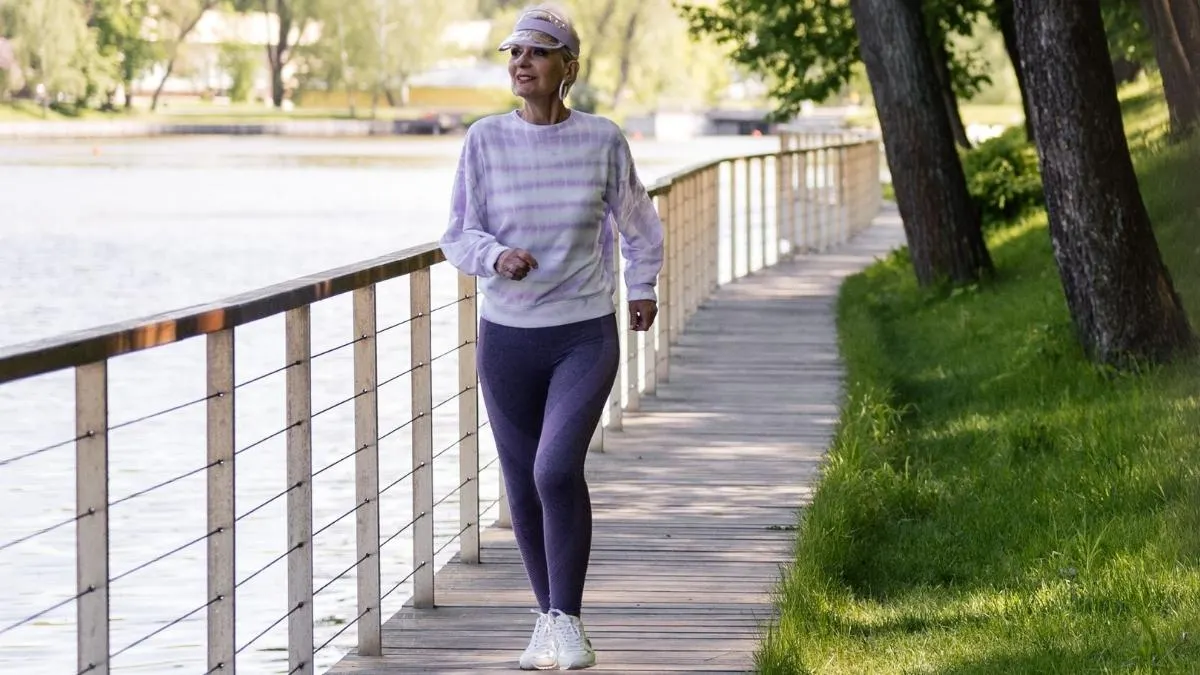
Most people focus on whether they do these habits, not on how the habits talk to each other inside a single day, but that timing is what the newest research on memory consolidation is starting to point to.
Talk to your doctor before starting a new exercise routine if you’re on heart or blood pressure medication, managing a chronic condition, or have had joint problems.
What counts as aerobic exercise:
- Brisk walking (30 minutes or more)
- Cycling, indoors or out
- Swimming
- Dancing
- Any activity that raises your heart rate and keeps it there
You don’t need high intensity. The PNAS trial used a moderate aerobic program.² Consistency over weeks matters more than effort in any single session.
What you eat in the hours after that walk can change what your brain does with memories while you sleep. That’s the next habit.
Habit 2: What You Eat in the Morning Can Change How Your Brain Files Memories That Night
You probably know food affects how you feel. It also affects how your brain stores what you learned.
One nutrient stands out when it comes to how the brain stores memories. The most relevant nutrient for this is DHA [docosahexaenoic acid, a type of omega-3 fat found in oily fish that makes up a large portion of the brain’s membrane structure, especially in the hippocampus].
A 24-month, double-blind randomized controlled trial in cognitively healthy adults aged 65 and older found that those who took a daily omega-3 supplement made significantly fewer errors on working memory tasks than those who took a placebo.⁴

A large analysis of the research adds more detail on the dose. A separate systematic review and dose-response meta-analysis of 24 randomized controlled trials covering 9,660 adults aged 40 and older found that the benefit to executive function [the brain’s ability to plan, focus, and hold information while doing something else] appeared most clearly in the first 12 months, at intakes above 500 mg of omega-3 per day.⁵
Two Notes Before You Shop
What the evidence actually says about this nutrient
Who Benefits Most
Clearest gains in clinical trials have been in people with early signs of cognitive change — not necessarily healthy adults with no symptoms. Results in healthy people are promising but mixed.Timing Matters
Getting this nutrient earlier in the day gives the body more time to absorb it before the overnight memory window opens.
Talk to your doctor before adding omega-3 supplements if you take blood thinners or anti-inflammatory medication.
Morning sources of DHA and omega-3:
- Sardines or smoked salmon on whole grain toast
- Walnuts stirred into oatmeal or yogurt
- Flaxseed ground and added to a smoothie
- Eggs from hens fed omega-3-enriched feed
The reason timing matters with food connects directly to what sleep does. That’s the habit most people think they already have covered.
Habit 3: Sleep Is When Your Brain Does the Work You Started During the Day
You can do everything right during the day and lose much of it overnight if sleep is short or broken.
The brain doesn’t just rest during sleep.
The hippocampus [the brain’s memory-linking region, described in the first section] replays newly formed memories during a specific stage called slow-wave sleep [the deepest phase of non-rapid eye movement sleep, also called deep sleep, when the brain transfers recent memories into longer-term storage].
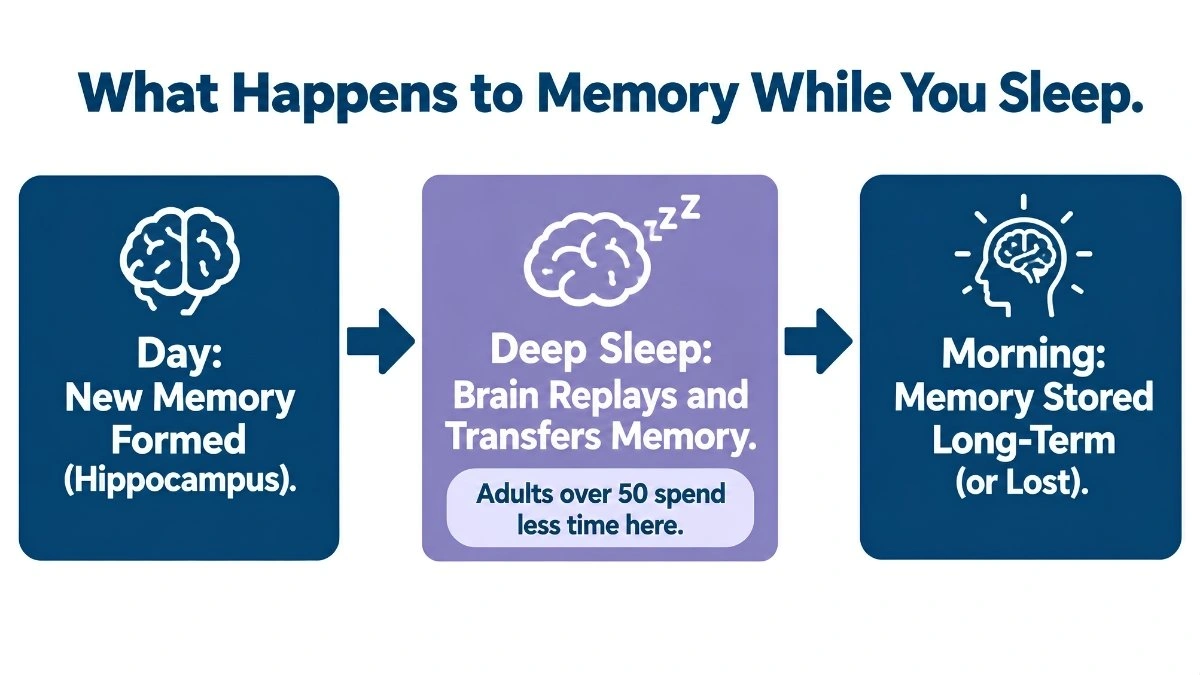
This process is called memory consolidation [the overnight stabilization of newly learned information into long-term memory].
Older adults tend to get less of the deep sleep that memory needs most.
Research reviewing sleep and memory consolidation across the lifespan found that this consolidation process declines in healthy older adults compared to younger adults, especially for declarative memory [memory for facts and events, the kind you use when you recall a conversation or a name].⁶
The decline is linked directly to age-related changes in slow-wave sleep.⁷
Here is what this means for daily habits. A separate study found that the amount of total sleep time was positively linked to how much memory benefit older adults got from sleep.⁷
Sleep habits linked to memory consolidation in older adults:
- Go to bed and wake up at the same time every day, including weekends
- Keep the bedroom cool and as dark as possible
- Avoid screens for 30 minutes before bed
- Avoid alcohol within three hours of sleep, which fragments the deep sleep stages
One more connection worth naming. Aerobic exercise, covered in Habit 1, is also linked to more time in slow-wave sleep in older adults.¹⁰
Social connection does the same thing, through a different part of what keeps memory working. That’s the next habit.
Habit 4: Loneliness Is a Memory Risk, and Short Social Moments Count
Loneliness doesn’t just feel bad. It’s measurable in the data on memory decline.
The data on loneliness and memory is more specific than most people know.
A 2026 study using harmonized data from four large longitudinal cohorts in the United States, Mexico, England, and China, covering 29,805 adults aged 55 and older, found that loneliness was linked to faster decline in episodic memory [the ability to recall specific past events] at a statistically significant level.⁸
Living with others was linked to slower memory decline in the same study.⁸
This is different from saying “stay social.” Loneliness is the subjective feeling of lacking connection. Social isolation is the objective absence of relationships. Both appear in the research as separate risk factors.
Two distinct paths connect loneliness to memory. First, the stress response to chronic loneliness raises levels of cortisol [the body’s primary stress hormone, which in high sustained amounts is linked to smaller hippocampal volume and slower memory recall].¹¹
Second, social interaction provides the kind of moment-to-moment cognitive demand that keeps the brain’s processing circuits active.⁸
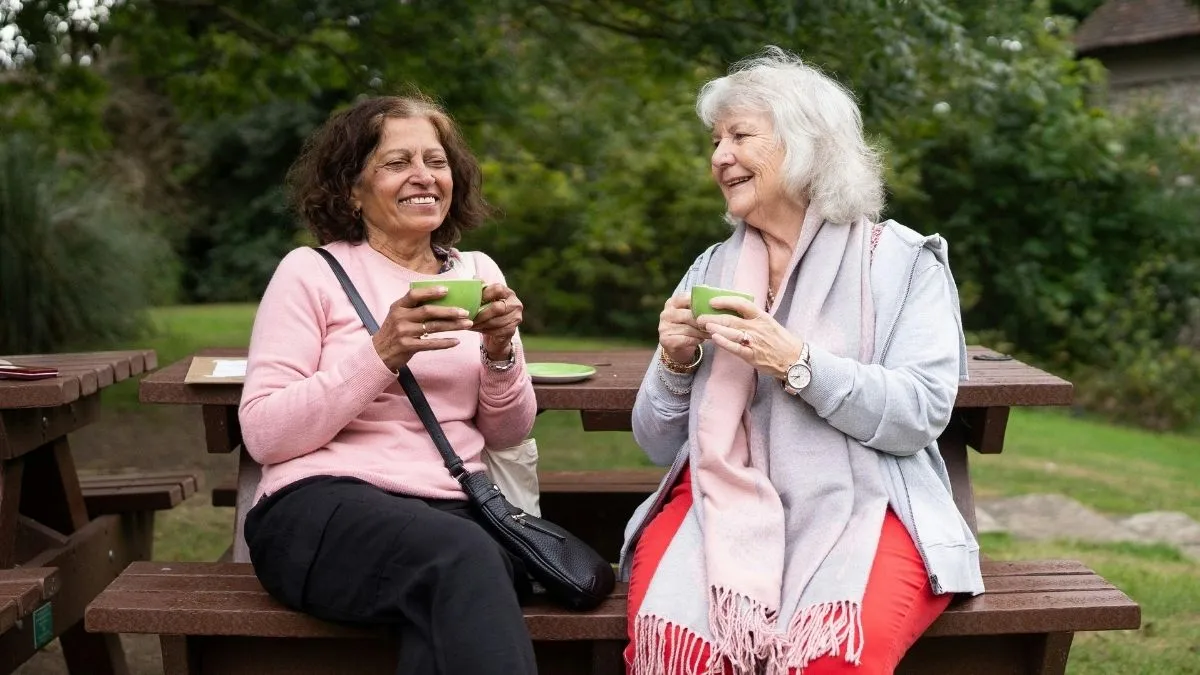
Short moments count. The research shows associations, not a minimum friendship requirement. A consistent morning call, a regular coffee with one person, a brief conversation during a walk: none of these are trivial.”
Daily habits for social connection:
- Schedule one regular call or meetup each week, not as an event but as a standing commitment
- Talk to one person you don’t see every day at least three times a week
- Join one group with a recurring meeting: a class, a club, a volunteer shift
Learning something new works through yet another path. The final habit covers that.
Habit 5: Learning Something New Is the Most Underused Tool for Protecting Memory After 50
You can change that pattern for your brain, even in your 50s or 60s. The adult brain does not stop changing in response to new experience.⁹ This capacity is called neuroplasticity [the brain’s ability to form new connections and reorganize existing ones in response to learning or experience].
A structured program of genuinely new learning showed measurable effects in a randomized trial. A 2025 pilot randomized controlled trial of 120 healthy adults with no cognitive deterioration, mean age 59, tested a structured program of new-knowledge acquisition over 12 weeks.
The global cognitive score rose 4.6 points (5%) in the intervention group. The memory domain showed the largest gain: 11.4%. The control group declined slightly over the same period.⁹

The word “new” is doing most of the work here.
Redoing the same crossword, re-reading familiar books, or watching shows in the same genre may be enjoyable. What they are less likely to build is cognitive reserve [the brain’s accumulated capacity to keep functioning well despite age-related changes, built through novel learning rather than rehearsing familiar material].
Options that qualify as genuinely new:
- Learning a language you have never studied
- Taking up an instrument for the first time
- Learning a new card or strategy game from scratch
- Cooking a cuisine you have never made
- Walking a new route while actively noticing three unfamiliar things along the way
The combination of daily habits to keep memory sharp after 50 works better when these five are treated as a daily pattern rather than a menu. Knowing all five habits is not the same as knowing which one to start with today.
Start With One Habit Today
The single most useful thing you can do right now is pick one habit from these five and do a version of it today, even a small one. Pick one of the five habits this week and start it today, even in a small way. The daily habits to keep memory sharp after 50 add up faster than most people expect. Brain health after 50 is built one decision at a time, not one resolution per year.
References
- Mekbib, D.B. and McDonough, I.M. Aging shifts hippocampal reactivation from selective reinstatement to category-level misbinding during episodic memory. Cerebral Cortex. 2026. https://academic.oup.com/cercor/article/36/7/bhag114/8758582
- Erickson, K.I. et al. Exercise training increases size of hippocampus and improves memory. Proceedings of the National Academy of Sciences. 2011. https://pubmed.ncbi.nlm.nih.gov/21282661/
- Aghjayan, S.L. et al. Aerobic exercise improves episodic memory in late adulthood: a systematic review and meta-analysis. Communications Medicine. 2022. https://www.nature.com/articles/s43856-022-00079-7
- Power, R. et al. Omega-3 fatty acid, carotenoid and vitamin E supplementation improves working memory in older adults: a randomised clinical trial. Clinical Nutrition. 2022. https://pubmed.ncbi.nlm.nih.gov/34999335/
- Inprasertkul, M. et al. The influence of n-3 polyunsaturated fatty acids on cognitive function in individuals without dementia: a systematic review and dose-response meta-analysis. Nutrients. 2024. https://pubmed.ncbi.nlm.nih.gov/38468309/
- Rauchs, G. et al. Sleep and memory consolidation in aging: a neuroimaging perspective. Sleep Medicine Reviews. 2023. https://pubmed.ncbi.nlm.nih.gov/37586942/
- Sleep and memory consolidation in healthy, neurotypical children and adults: a summary of systematic reviews and meta-analyses. Emerging Topics in Life Sciences. 2024. https://portlandpress.com/emergtoplifesci/article/7/5/513/234981/Sleep-and-memory-consolidation-in-healthy
- Li, J. et al. Global perspectives on social relationships and cognitive decline in older adults: insights from cohort studies in the U.S., Mexico, England, and China. Journal of Applied Gerontology. 2026. https://pubmed.ncbi.nlm.nih.gov/42527124/
- Kohan, A. et al. A new program for systematically enhancing cognitive reserve in healthy adults: a pilot randomized active-controlled clinical trial. PLOS ONE. 2025. https://journals.plos.org/plosone/article?id=10.1371%2Fjournal.pone.0331193
- Bai, X. et al. The interplay of sleep architecture and exercise in executive function of middle-aged and older adults. Frontiers in Aging Neuroscience. 2026. https://pubmed.ncbi.nlm.nih.gov/42256573/
- Lupien, S.J. et al. Cortisol levels during human aging predict hippocampal atrophy and memory deficits. Nature Neuroscience. 1998. https://www.nature.com/articles/nn0598_69