

The pill bottle sits on the nightstand, and it is 3 a.m. again. You wonder if the pills are a plan or just a pause. Many adults over 50 ask this exact question. I hear it often in my work with adults in their fifties and sixties. Some fear the pills. Others say the pills stopped working.
Major medical groups now name cognitive behavioral therapy for insomnia, or CBT-I, as the first treatment for long-term insomnia. Then a small trial in older adults added a twist. The gains from the therapy held up after treatment ended. The gains from a sleep drug faded.
Let me walk you through what that research found, and what your first week could look like.
Why Insomnia Gets Stickier After 50
Sleep changes with age. The National Institute on Aging says older adults often sleep lighter and wake more at night. That part is normal. Chronic insomnia is different. Doctors use that label when poor sleep hits three nights a week for three months or more and drains your days.
Several things pile on after 50. The National Institute on Aging notes that health problems and some medicines can disrupt sleep. Aches, hot flashes, and night bathroom trips add to the load. Late naps can push sleep later.
Then worry moves in. Bed stops feeling like a place to rest. Sleep experts call this conditioned arousal. The brain learns that bed means alert.
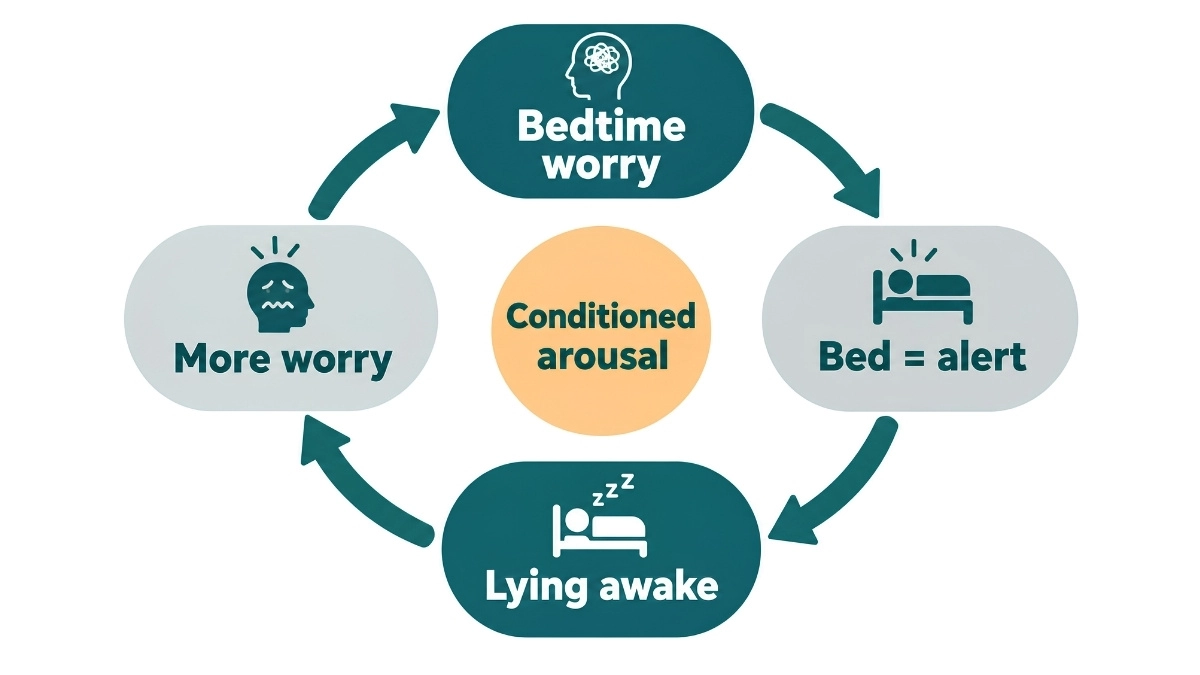
In my conversations with adults in their late 50s, one pattern repeats. They go to bed at 8:30 p.m. to catch up on rest. Then they lie awake for hours. Extra time in bed feeds the problem.
Clinical Sleep Guidelines
Evidence-Based Recommendations for Chronic Insomnia
ACP First-Line Recommendation
The American College of Physicians (ACP) backs behavioral fixes as the primary treatment protocol for adults.
2016 Annals Guidelines
Published in the Annals of Internal Medicine, establishing CBT-I as the standard first-line treatment.
AASM Endorsement
The American Academy of Sleep Medicine officially endorsed behavioral therapies in its 2021 guidelines.
Focus on Chronic Insomnia
Designed specifically to manage and resolve long-term chronic insomnia through non-pharmacological behavioral therapy.
One caution comes first. Loud snoring, gasping, or an urge to move your legs at night needs a doctor’s check. Sleep apnea and restless legs syndrome can look like insomnia. Next, let us look at the usual quick fix.
Note: Never stop a sleep medicine on your own. Ask your doctor how to cut back safely.
What Sleeping Pills Can and Cannot Do
Sleep medicine has a place. A doctor can prescribe a short course to help you through a rough patch. I never tell people to feel guilty about a prescription. The risks matter more as we age.
The American Geriatrics Society updated its Beers Criteria in 2023. It advises against benzodiazepines and Z-drugs, such as zolpidem (Ambien), for adults 65 and older. These drugs raise the risk of falls and fractures, and they can cloud thinking. The Beers panel notes that older bodies clear these drugs more slowly. They also react to them more strongly.

The FDA added a boxed warning in 2019 for zolpidem, eszopiclone, and zaleplon. It flags rare but serious complex sleep behaviors, such as sleepwalking and sleep driving. Some cases ended in serious injury or death.
The same list flags over-the-counter sleep aids that contain diphenhydramine or doxylamine. Many “PM” pain relievers contain one of them. Check your labels.
Some people tell me a pill worked for a few weeks, then lost its punch. That pattern is common in my practice. A doctor can help you cut back in small steps. CBT-I offers a different path, and the trials tell a clear story.
Why CBT-I Benefits Last Longer
In 2006, Børge Sivertsen and colleagues published a trial in JAMA. It tested CBT, the sleep drug zopiclone, and a placebo pill in 46 adults aged 55 and older with chronic insomnia.
CBT beat the drug on several sleep measures. Then came the six-month check. The CBT group kept its gains. The zopiclone group did not.
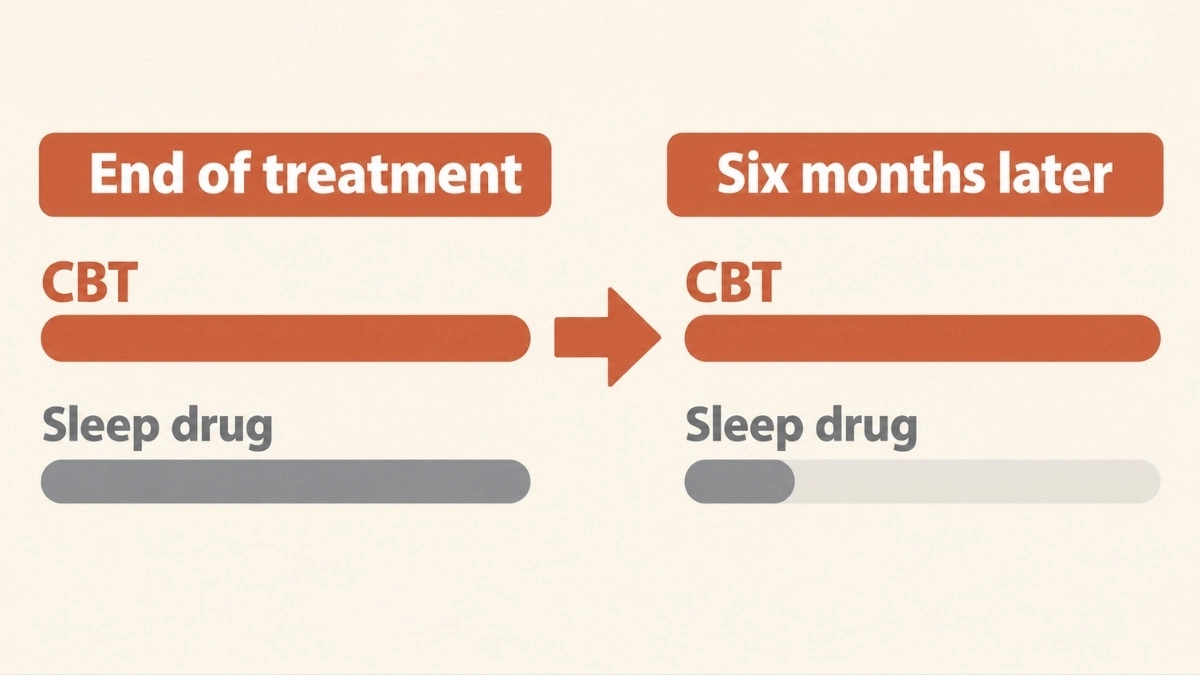
A 1999 JAMA trial by Charles Morin and colleagues tested behavioral therapy and the drug temazepam in 78 older adults. Behavioral therapy helped, and its benefit held at follow-up. Together, these trials point in one direction.
A 2015 meta-analysis by Trauer and colleagues in Annals of Internal Medicine pooled results from randomized trials. It found CBT-I improved sleep in adults. That adds weight beyond two small studies.
One likely reason is simple. A pill works while it stays in your body. CBT-I teaches skills you keep. You rebuild your natural urge to sleep and calm the alarm in your head.
The two trials were small, so may outlast is the honest phrase. Results vary from person to person. Ask a clinician to tailor the plan to your health and medicines. Skills only help if you know what to practice.
Note: CBT-I limits your time in bed, which can cause daytime drowsiness at first. Check with your doctor before starting if you have epilepsy, bipolar disorder, sleep apnea, or a history of falls.
What CBT-I Actually Asks of You
CBT-I has a few core parts. You start with a sleep diary. You log bedtime, wake time, and time spent awake. Then you add stimulus control. Use your bed only for sleep and sex. If you lie awake for about 20 minutes, get up and sit in dim light until you feel sleepy.
How Sleep Restriction Works
Match Time in Bed
Limit your bed time to match only the actual hours slept, cutting down spent awake.
Set Safe Window
Work with a clinician to establish a safe bedtime window tailored to your pattern.
Build Sleep Urge
Staying awake longer naturally increases your body’s drive to sleep deeply.
Consolidate Sleep
Gradually add time back as your sleep packs into one continuous block.
Expect some extra tiredness in the first few weeks. In my experience, people who push through describe the same change. They start to trust their sleep again. I also ask them to keep one wake time every day, seven days a week.
Start with your doctor, who can point you to a clinician trained in CBT-I or behavioral sleep medicine. Digital programs also exist. The US Department of Veterans Affairs offers a free app called CBT-i Coach that supports the same skills. The first step is smaller than you think.
Conclusion
You have more options than a pill bottle on the nightstand. This week, keep a simple sleep diary and bring it to your next doctor visit. Ask about CBT-I while you are there. One honest page of notes is enough to start. Better nights are worth the patience, and you are already on your way.