
A 2025 landmark study tested over 2,100 older adults and found something most doctors never tell their patients. Daily lifestyle habits can actually protect your brain and slow down cognitive decline. That’s not a hope. That’s a clinical trial result published in JAMA.
You’ve probably noticed small things. You forget a name. You walk into a room and stop cold. You lose your train of thought mid-sentence. And you assume it’s just part of getting old.
It’s not. Science says otherwise.
Your brain can still grow, rewire, and improve after 60. In this article, you’ll learn 8 specific daily habits backed by real 2025 research that can rebuild your brain from the inside out.
Habit 1- Move Your Body for at Least 30 Minutes a Day

Exercise is the single most studied brain protection tool available to you right now. A clinical trial published in the Journal of Sport and Health Science in August 2025 enrolled 130 adults and split them into two groups.
One group exercised. One group did not. After one year, the exercise group’s brains appeared measurably younger. Their brain-age gap dropped by 0.6 years on average. The control group aged slightly faster.
Harvard Health explains why this works. Aerobic exercise triggers the release of brain-derived neurotrophic factor, or BDNF. Think of BDNF as fertilizer for your brain cells. It helps neurons grow, survive, and connect better. Without movement, that fertilizer dries up.
You don’t need a gym. A 30-minute daily walk is enough to start. Northwestern University research also found that regular walking strengthens connections between brain networks, the same networks damaged in Alzheimer’s disease. Start today. Add hills or varied terrain as you get stronger.
Tips:
- Walk 30 minutes every morning before checking your phone
- Add two short strength or balance sessions per week as you build up
- Find a walking partner because this adds social connection, which also helps the brain
Habit 2- Eat the MIND Diet (Your Brain Has a Preferred Menu)
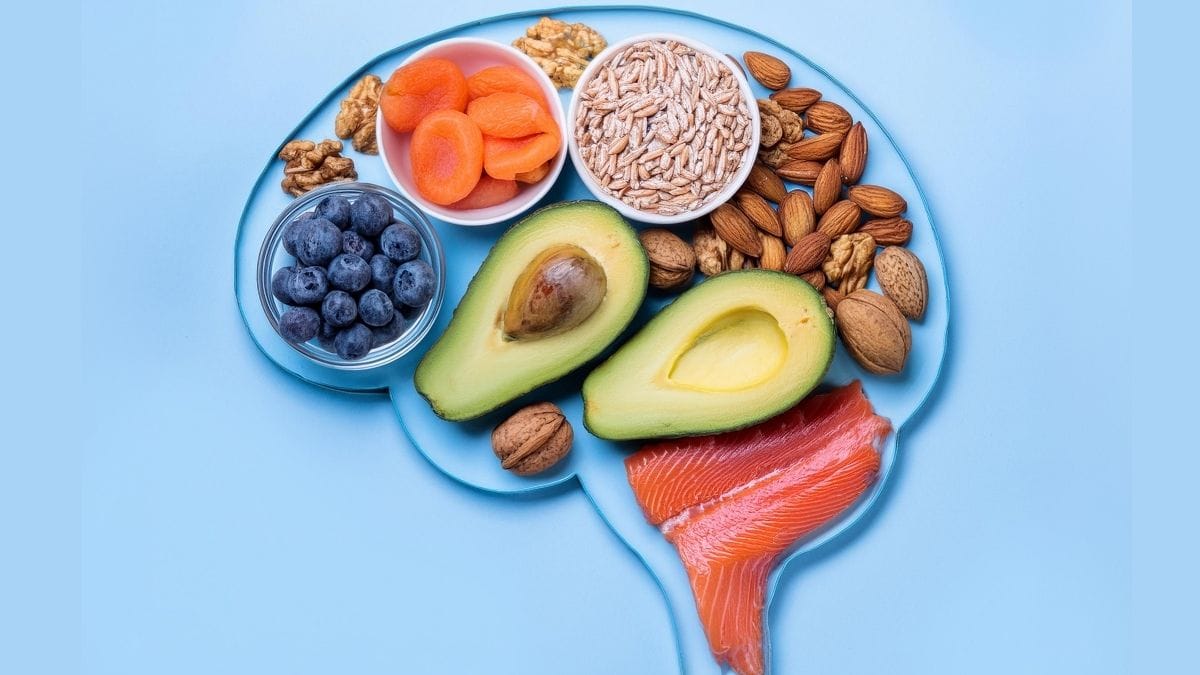
The MIND diet was designed specifically to protect the brain. It combines the best parts of the Mediterranean diet and the DASH diet.
The core brain foods are leafy greens, berries, nuts, olive oil, whole grains, fish, beans, and poultry. The foods to limit are red meat, butter, cheese, pastries, and fried food.
A 2024 review of 40 studies found that following the MIND diet was protective against dementia in 7 out of 10 research groups. It also showed positive results for global cognition in 3 out of 4 groups. That is strong, consistent evidence.
The U.S. POINTER trial used the MIND diet as one of its core tools and it worked.
A 2021 review found that diets high in saturated fat and sugar damage the hippocampus. That’s the part of your brain that forms new memories. A 2025 study confirmed that obesity directly speeds up memory decline. Food choices are not just a weight issue. They are a brain issue.
Tips:
- Add a handful of blueberries or strawberries to breakfast every day this week
- Replace butter with olive oil in your cooking starting now
- Eat fish at least twice a week because sardines, salmon, and mackerel are affordable options
Habit 3- Protect Your Sleep Like It’s Medicine (Because It Is)

Poor sleep does not just make you tired. It damages your brain. A large Mayo Clinic study published in Neurology in September 2025 found that people with chronic insomnia had a 40% higher risk of developing mild cognitive impairment or dementia. That equals 3.5 extra years of brain aging from sleep problems alone.
Getting only 5 hours of sleep per night raises dementia risk by 30% in adults over 50. Here is why. During deep sleep, your brain runs its own cleaning system called the glymphatic system.
It flushes out toxic waste, including amyloid plaques linked to Alzheimer’s. When you sleep poorly, that waste stays in your brain.
A December 2025 study using brain MRI scans found that people with good sleep, along with other healthy habits, had brains up to 8 years younger than expected. Sleep is not passive. It is active brain repair. Seven to nine hours per night is the target. Not six. Not five.
Tips:
- Set a fixed bedtime and wake time, even on weekends
- Turn off screens 60 minutes before bed because the light disrupts melatonin
- Avoid alcohol before sleep because it breaks up deep sleep stages even if you feel relaxed
Habit 4- Stay Socially Connected (Loneliness Is a Brain Risk)

Loneliness is not just sad. It is physically harmful to your brain. The Lancet Commission on Dementia Prevention identified social isolation as one of 12 modifiable risk factors for dementia.
Together, these 12 factors account for 40% of all dementia cases. Social connection is not a soft benefit. It belongs in the same category as diet and exercise.
A major study that tracked over 10,000 older adults across 24 countries found that social isolation was directly linked to lower memory, worse orientation, and weaker executive function.
A 2025 paper in Alzheimer’s and Dementia found that isolated patients started declining faster, sometimes months before their diagnosis.
The U.S. POINTER trial placed social engagement alongside exercise, nutrition, and cognitive challenge as a core pillar of brain protection. Researchers knew that connection alone can change outcomes. You do not need a large social life. You need consistent, meaningful contact with other people. Three real interactions per week is a strong starting point.
Tips:
- Join one group activity this month such as a class, walking club, or volunteer program
- Schedule a regular call or visit with a friend or family member you trust
- Avoid using screen-only contact as your main social source because face-to-face time is stronger
Habit 5- Manage Stress Actively (Cortisol Is Quietly Hurting Your Brain)

Stress is not just in your head. It is in your brain chemistry. Cortisol is your body’s main stress hormone. When it stays too high for too long, it breaks down the chemical signals your brain depends on.
The result is memory loss, fatigue, depression, and poor sleep. The Pacific Neuroscience Institute describes cortisol as a direct driver of brain cell damage over time.
Mindfulness meditation is the most studied solution. Scientific brain scans show that regular meditation increases activity in the prefrontal cortex and the hippocampus, the two areas most damaged by aging and stress.
A 2024 review of 111 randomized controlled trials with over 9,500 participants confirmed that mindfulness improves attention, working memory, and mental focus. The effects build over time. Long-term meditators show lower cortisol levels year after year.
The amygdala, your brain’s alarm system, actually shrinks with regular meditation and becomes less reactive. You don’t just feel calmer. Your brain physically changes. Start with 10 minutes per day.
Tips:
- Use the free UCLA Mindful app because it requires no sign-up and has sessions for beginners
- Try 10 minutes of quiet breathing each morning before your phone comes on
- Notice when you feel chronically stressed and treat it like a health problem, because it is
Habit 6- Challenge Your Brain With Something New Every Week

Your brain needs new problems to stay sharp. Watching the same TV shows and following the same daily routine does not protect it. Challenge does.
A February 2026 report by the American Psychological Association found that learning new skills in a supportive environment helped older adults score as well as young adults on cognitive tests. That is not a small finding.
A January 2025 McGill University study found that older adults who used the BrainHQ digital brain training program for just 10 weeks showed restored function in a brain system directly tied to learning and memory. That system had been declining with age. Ten weeks changed that. The brain adapted when pushed.
Research published in ScienceDirect confirms that even at 60 or beyond, the brain can reorganize neural circuits in response to new challenges.
The old saying that you can’t teach an old dog new tricks is simply not supported by science. The learning curve is the point. Struggle is how the brain grows. Pick one new skill and commit 20 minutes a day to it.
Tips:
- Start learning one new skill this week such as a language, instrument, card game, or craft
- Use the BrainHQ program for structured brain training based on clinical research
- Choose activities that feel slightly hard because comfort does not build new neural pathways
Habit 7- Drink More Water and Less Alcohol (Your Brain Is 75% Water)

Your brain is about 75% water. It uses water to produce neurotransmitters, flush waste, and keep neurons firing correctly. Even mild dehydration, as little as 1 to 2% body water loss, measurably slows memory and attention.
Older adults often feel less thirsty than younger people. That means you can be dehydrated without knowing it.
This is a daily, silent risk that is easy to fix. Aim for 6 to 8 glasses of water per day. Herbal teas count. A glass of water first thing in the morning before coffee is a strong habit to build. If you regularly forget to drink, set a phone reminder every two hours.
Alcohol is the other side of this. Research consistently shows that even moderate regular alcohol use over years contributes to brain volume loss and memory impairment. It also fragments deep sleep, which compounds the damage.
Reducing alcohol is one of the simplest things you can do for your brain without needing any special equipment or program.
Tips:
- Keep a water bottle visible on your desk or kitchen counter as a reminder
- Swap one alcoholic drink per week for sparkling water with lemon and build from there
- Drink a full glass of water before every meal because it supports both brain and body health together
Habit 8- Monitor Your Heart Health (A Healthy Heart Feeds a Healthy Brain)

Your heart and your brain are connected directly. What hurts one hurts the other. High blood pressure reduces blood flow to the brain.
Untreated diabetes damages blood vessels that feed neurons. High cholesterol can block those vessels further. Vascular dementia, caused by restricted blood flow to the brain, is the second most common form of dementia after Alzheimer’s.
The U.S. POINTER trial included cardiovascular health monitoring as one of its four core pillars. Researchers did not separate heart health from brain health because they are not separate issues.
University of Miami researchers linked long-term exercise, diet, and social engagement to better cognitive outcomes, specifically through their effect on heart health markers.
The good news is that the habits already listed in this article, including exercise, the MIND diet, stress management, and quality sleep, all also support cardiovascular health.
You are already working on this. Add one more step: check your blood pressure regularly and talk to your doctor about your cardiovascular risk specifically in the context of your brain health.
Tips:
- Buy a home blood pressure monitor because they are inexpensive and give you weekly data
- At your next doctor’s visit, ask: “What is my cardiovascular risk for cognitive decline?”
- Keep sodium low because high sodium raises blood pressure, which directly reduces brain blood flow
Conclusion:
Memory loss after 60 is not your fate. It is a signal. The 2025 U.S. POINTER trial proved that modest daily changes in exercise, diet, sleep, and social connection protect and improve the aging brain. Pick one habit from this list. Start today. Small steps, done consistently, add up to real protection.