

I did 10 minutes of this every morning—my back finally relaxed
I used to wake up and just… not move. Not right away. My back would lock up overnight, and the first few steps to the bathroom looked more like a shuffle than a walk. Sound familiar?
I’d tried stretching before. But I never had a real plan. I’d do a random move here, skip a day there, and wonder why nothing changed. Turns out, the order matters. So does doing it first thing, before you check your phone or bend over the sink.
Here’s the exact 10-minute morning stretching routine for back pain that I follow now. It’s simple. It’s short. And it’s the reason my back finally relaxed.
Why Your Back Feels Stiffest in the Morning
Here’s what’s actually happening. Overnight, your spine soaks up fluid like a sponge. By morning, your spinal discs are a little more “full” than they were the night before. That extra fullness makes your back feel stiffer and less flexible when you wake up.
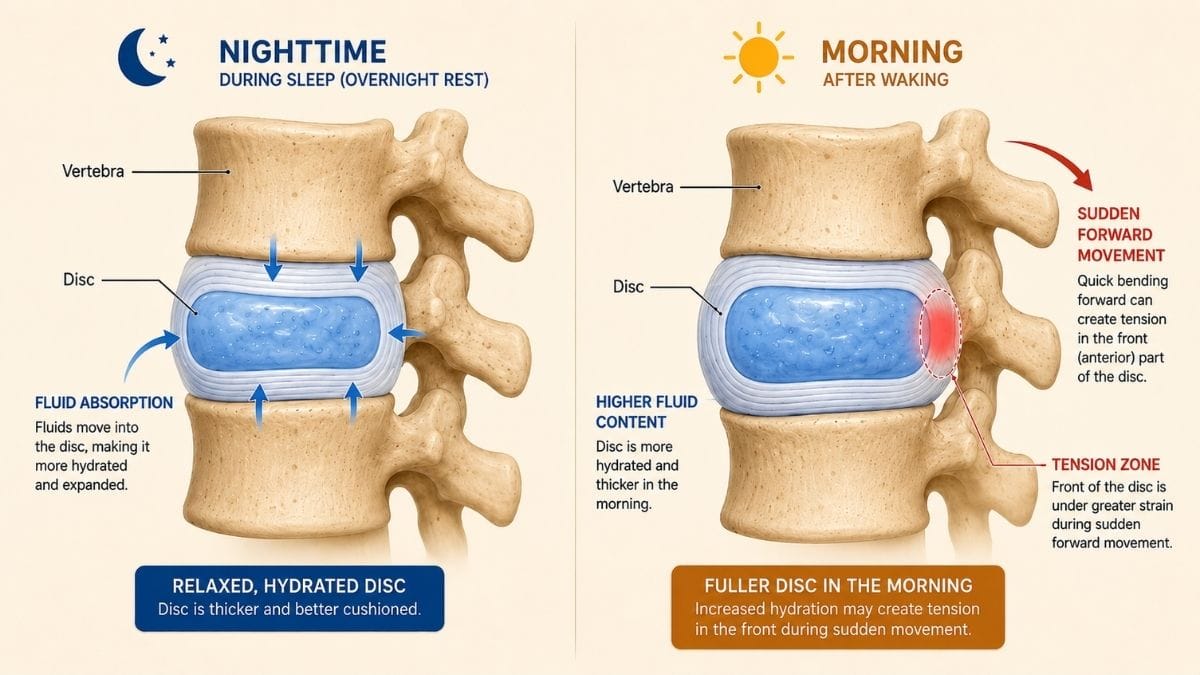
This is also why rushing into movement can backfire. If your first move of the day is a deep forward bend, like reaching down to touch your toes, your back may tense up to protect itself. That tight, guarded feeling? That’s your body reacting to a sudden ask after hours of stillness.
Most people make it worse without realizing it. They lean over the sink to brush their teeth. They slouch over their phone in bed. None of that gives your back a chance to ease in first.
You’re not alone in this, either. Morning back pain is incredibly common. Millions of people deal with it every single day.
- Avoid deep forward bends right after waking up.
- Move slowly for the first few minutes, even before you start stretching.
The 10-Minute Morning Stretching Routine for Back Pain (Step by Step)
Here’s exactly what I do, in order, every morning. Stay lying down for the first few moves. Don’t rush to standing.
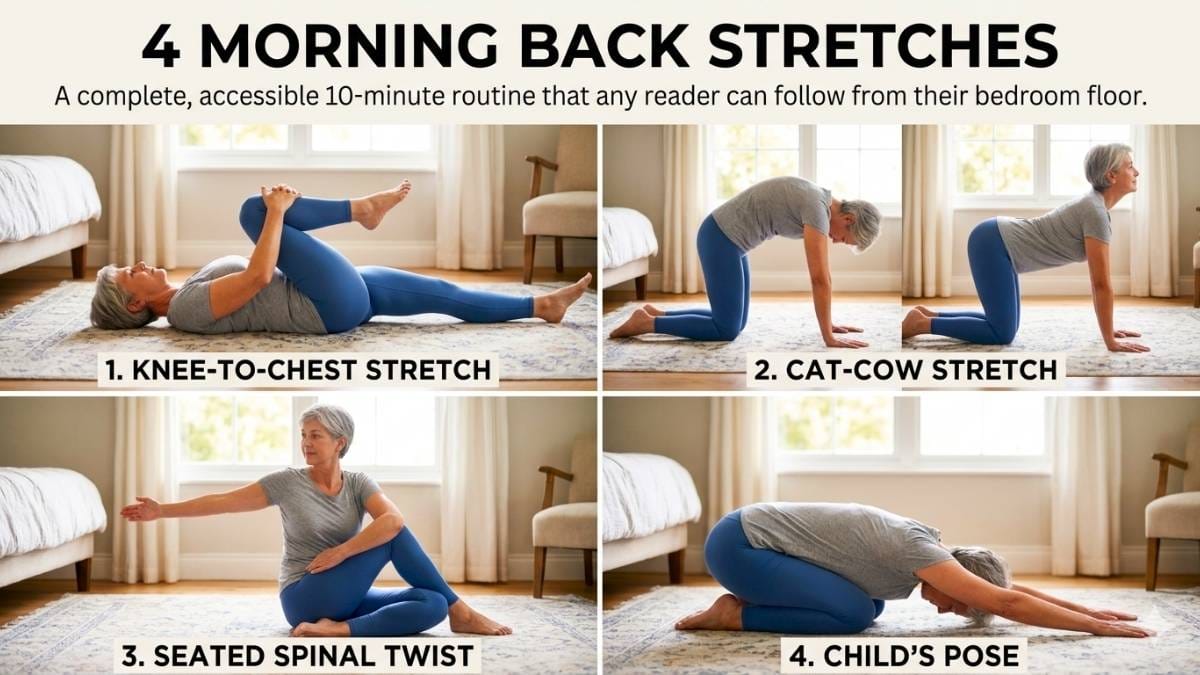
1. Knee-to-chest stretch. Lie on your back. Pull one knee toward your chest and hold for 30 seconds. Switch sides. This loosens your lower back and glutes fast.
2. Gentle spinal twist. Still lying down, bend both knees with feet flat on the floor. Let your knees fall to one side while your shoulders stay flat. Hold 10 to 15 seconds. Switch sides. This wakes up your spine without forcing it.
3. Figure-4 stretch. Cross one ankle over the opposite knee. Reach through and hold the back of your thigh, pulling it gently toward your chest. This loosens your hips, which are often the real reason your lower back feels tight.
4. Standing quad stretch. Stand up slowly. Hold one ankle behind you, pulling your heel toward your glute. Keep your knees together. Hold 30 seconds per side. Tight quads pull on your hips, so this helps your whole lower back relax.
That’s it. Ten minutes, four moves, done.
- Move slowly and breathe through each stretch. Don’t rush the holds.
- If something hurts, ease off. A stretch should feel gentle, not painful.
How Long Until You Notice a Difference

I’ll be honest. Nothing happened on day one. Or day three. That’s normal, so don’t quit early.
Most people who stick with a routine like this start noticing real change after three to four weeks. And the change is often big. Back pain commonly drops by half or more from where it started.
But it’s not just about pain. Your posture gets better without you even trying. Stiffness that used to last for hours starts fading in minutes instead.
Here’s the catch, though. This only works if you actually do it. Doing the routine almost every day for a month gets you real results. Doing it twice one week, then forgetting for the next two? You won’t feel much of anything.
This is the part that made the biggest difference for me. I didn’t stretch when I felt like it. I stretched every morning, whether I felt like it or not. That consistency is what finally let my back relax.
- Give it at least three weeks before deciding if it’s working.
- Track your stretching daily, even with a simple checkmark on a calendar.
Tips to Get the Most Out of Your Morning Stretch Routine
A few small changes made this routine actually work for me, instead of just being something I tried once.
First, gentle beats intense every time. You’re not trying to stretch as far as possible. You’re trying to feel a slow release. If it hurts, you’re pushing too hard.
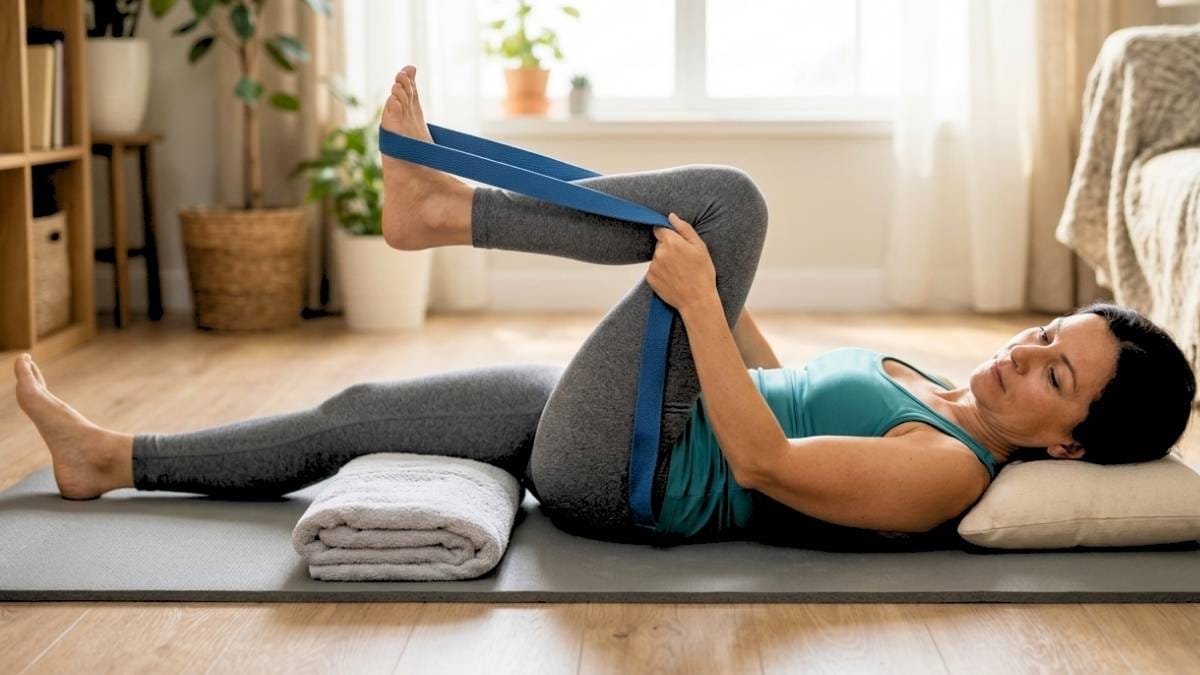
Second, use what you have. If a stretch pulls at your neck or shoulders, slide a folded towel or small pillow behind your knee for support. It’s a small fix that makes a big difference.
Third, don’t force long holds right away. Start with 15 to 30 seconds per stretch. Build up to a minute over time, as your body loosens up.
Fourth, your morning routine isn’t the only thing that matters. Pay attention to how you sleep and how you sit during the day too. They all add up.
Last, know when to call it. If stretching doesn’t help, or your pain is severe and isn’t improving, talk to a doctor. That’s not failure. That’s just smart.
- Keep a towel nearby for stretches that strain your knees or shoulders.
- See a doctor if pain stays severe or doesn’t improve with stretching.
Building the Habit So It Actually Sticks
Here’s the truth. The stretching isn’t hard. Remembering to do it is.

The easiest fix is linking it to something you already do. Stretch right after your alarm goes off, before you even check your phone. That small order change makes it automatic instead of optional.
Keep your mat or towel out the night before, somewhere you’ll see it. If you have to dig through a closet to find it, you’ll skip it more often than not. Less friction means more consistency.
For the first month, track it loosely. A simple checkmark on a calendar works fine. You’re not trying to be perfect. You’re just trying to remind yourself that this matters, especially in the early weeks before you feel a difference.
By week two, it stops feeling like a task. It starts feeling like part of waking up.
- Stretch before checking your phone, not after.
- Leave your mat or towel somewhere visible the night before.
Final Thoughts
Ten minutes. Four stretches. Done every morning, not just when I remembered. That’s what changed things for me, not some intense workout or fancy equipment.
Try this morning stretching routine for back pain tomorrow, before you reach for your phone. Give it three to four weeks before you judge it. Your back might finally relax too.