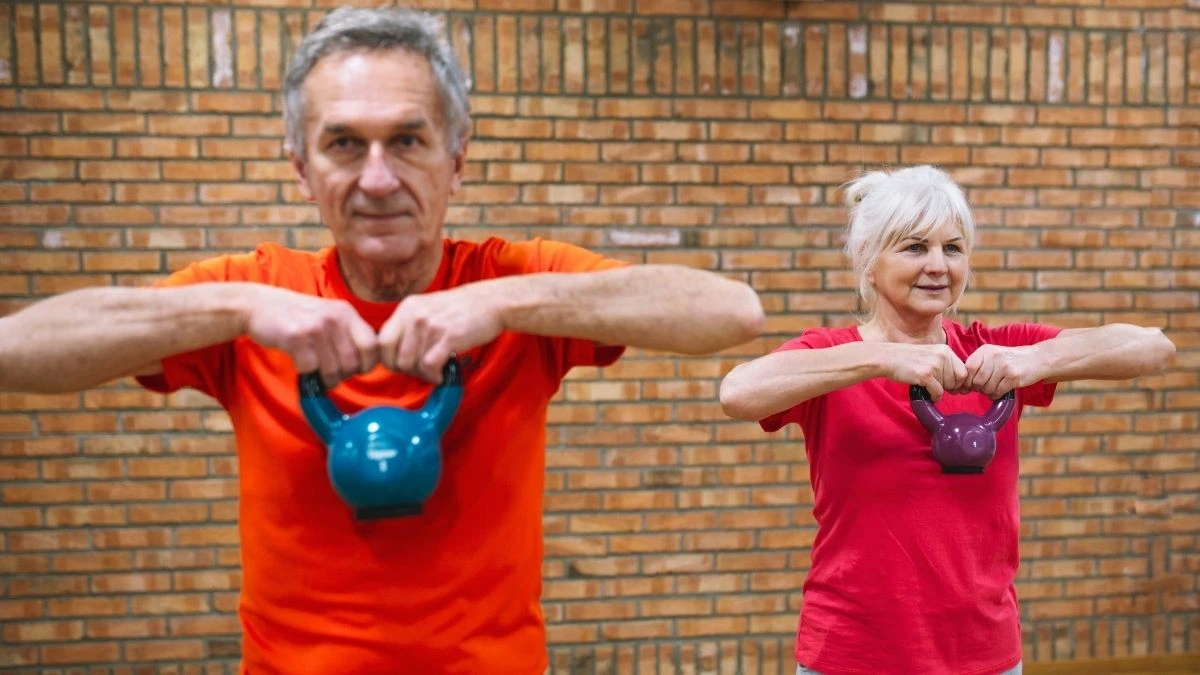
You don’t need to grind through five gym sessions a week. Strength training after 50 has a precise answer now, and it’s more manageable than most people expect.
People over 50 are losing muscle faster than they realize, and most believe they need to train far more than they actually do to stop it. A 30-year study of 147,374 adults has given us a clear number, and it’s a lot less than the fitness industry suggests.
This article is written for adults in their 50s and 60s who want to stay strong and independent. By the time you finish reading, you’ll know exactly how much strength training you need each week and what to put in each session.
A 30-Year Study Just Gave Strength Training a Ceiling. It’s 2 Hours a Week.
You clicked this because some part of you hoped there was a simpler answer about strength training after 50. There is. A study published in the British Journal of Sports Medicine in June 2026 tracked 147,374 adults for up to 30 years and found that 90 to 120 minutes of weekly strength training was linked to a 13% lower risk of dying from any cause.¹
That same window of time was associated with a 19% lower risk of death from cardiovascular disease and a 27% lower risk from neurological disease, including dementia.¹
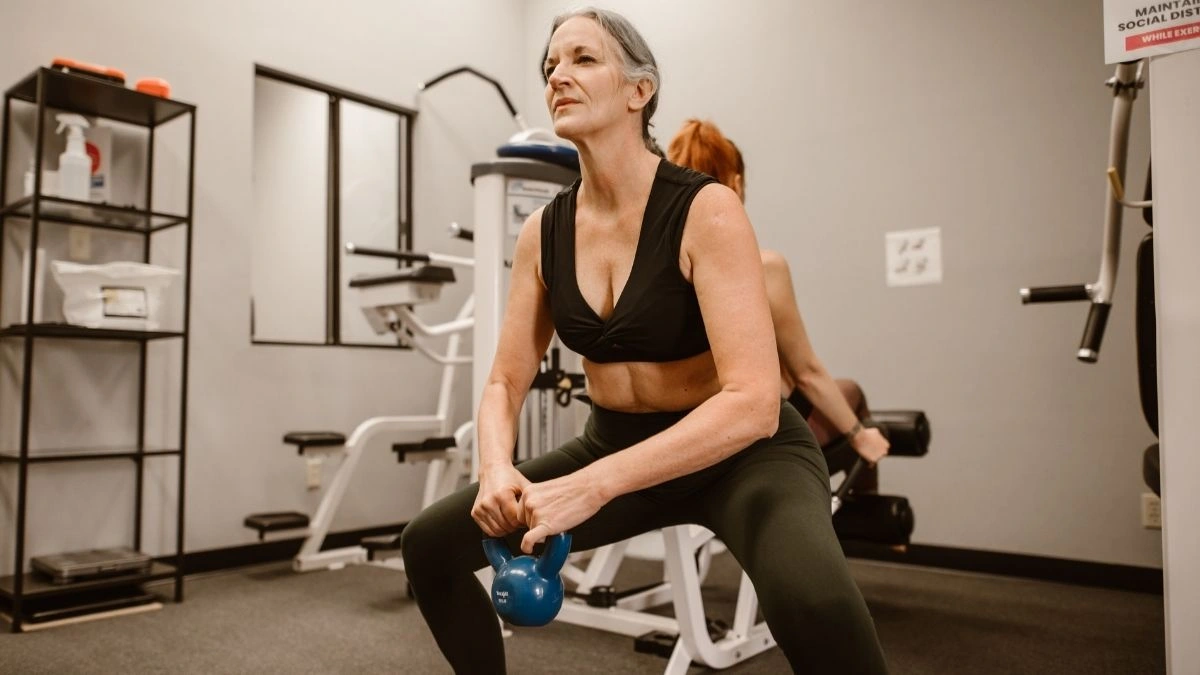
Here’s the part that changes everything: no additional benefit was found above 120 minutes per week.¹
Keep one thing in mind as you read these numbers: this was an observational study, meaning it shows an association, not a direct cause and effect. The pattern held across three major cohorts and three decades of data.
Strength Plus Cardio:
The 45% Effect
Adding aerobic exercise to strength training produces
significantly greater reductions in all-cause mortality risk.
Individual results vary by age, baseline fitness, and frequency.
- Component 01 Strength Training Is the Foundation
Resistance training alone showed meaningful mortality benefits — preserving muscle mass, metabolic health, and functional independence as we age.
- Component 02 Aerobic Exercise Amplifies the Effect
Adding cardio on top of strength work was associated with even greater risk reductions — the two types appear to work through complementary biological pathways.
- The Finding Combined Training Outperforms Either Alone
Participants doing both showed up to 45% lower all-cause mortality risk compared to those who did neither — one of the strongest lifestyle-based risk reductions in the literature.
Two hours a week. That’s roughly two 60-minute sessions, or three 40-minute sessions. For most people over 50, that is already within reach.
What the study could not tell you is exactly what to put inside those two hours, or why the ceiling exists.
Your Body After 50 Isn’t Broken. It Just Needs Less Than You Think.
If you’ve felt like your body doesn’t respond to training the way it used to, you’re right. It doesn’t. But that’s not a reason to train more. It’s the reason the ceiling is lower.
Here’s what’s happening in your body. Starting around age 30, skeletal muscle mass declines at roughly 3 to 5% per decade.² The NIH estimates that between 10 and 20% of older adults have sarcopenia [the progressive, age-related loss of skeletal muscle mass and physical function].² That loss speeds up after 50, and it’s one of the main reasons strength, balance, and mobility all decline together.
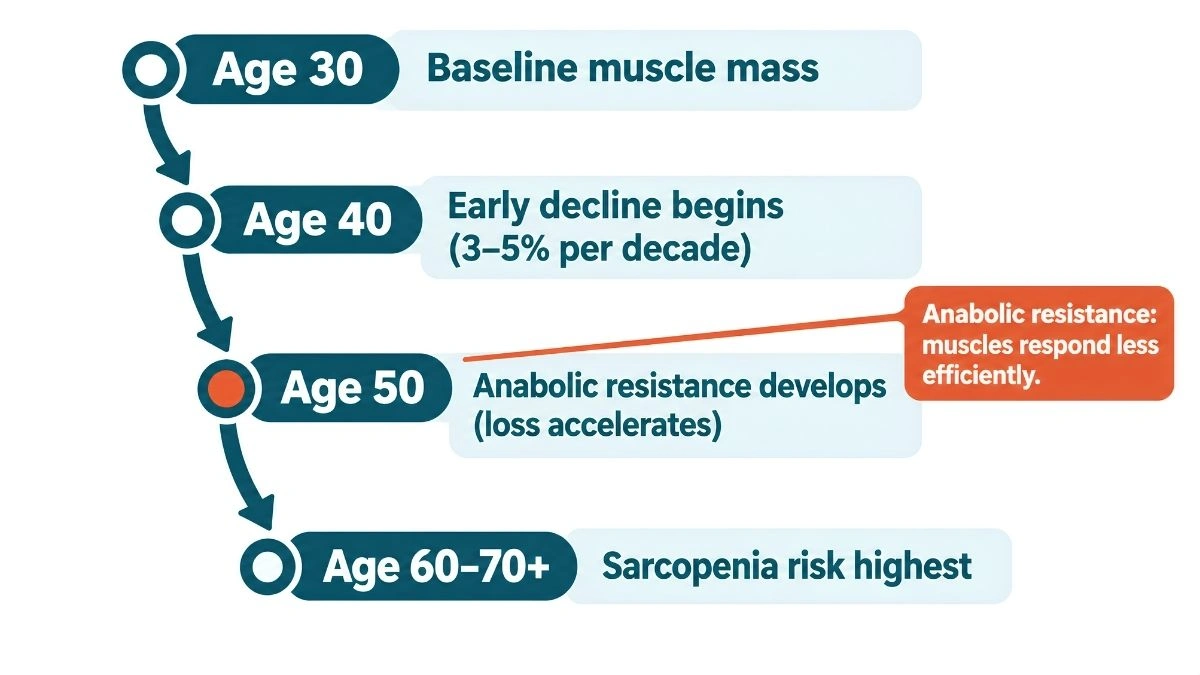
This is what sarcopenia after 50 looks like in practice: a slow, largely invisible loss that picks up speed.
Your body isn’t failing to respond. It’s responding to a different set of rules, and those rules mean fewer sessions is often enough.
After 50, the hormonal and cellular signals that drive muscle repair become less robust. Testosterone and growth hormone fall, and the process that rebuilds muscle fibers slows down.³
Researchers call this anabolic resistance [the reduced ability of older muscles to respond to the same protein and exercise signal that would build muscle in a younger person].³ More sessions per week run into that blunted response faster, which is why frequency alone stops returning clear benefits.
The data backs this up. A randomized controlled trial of community-dwelling adults aged 65 to 79 found that once or twice weekly resistance exercise produced strength gains comparable to three sessions per week.⁴

The problem was never that you were doing too little. It was that no one told you there was a ceiling.
What that ceiling actually looks like in your weekly strength training after 50 schedule is simpler than you might expect.
What 2 Hours Actually Looks Like, Session by Session
Talk to your doctor before starting a new strength training routine if you’re managing a chronic condition, recovering from injury, or taking medication that affects blood pressure or heart rate.
Two hours a week can be split however fits your life. Three 40-minute sessions and two 60-minute sessions both land comfortably inside the sweet spot. The NSCA’s position statement on resistance training for older adults supports 2 to 3 sessions per week, targeting all major muscle groups.⁵
Here is what a single session should contain:
- Warm-up: 5 minutes of light movement — walking in place, arm circles, bodyweight squats with a small range of motion
- Main work: 5 to 6 compound movements (detailed in the next section), 2 to 3 sets each, 8 to 12 repetitions per set
- Rest between sets: 1 to 2 minutes
- Cool-down: 3 to 5 minutes of light stretching
That structure fits inside 45 to 55 minutes. A 60-minute session has room for a longer warm-up or an extra set.
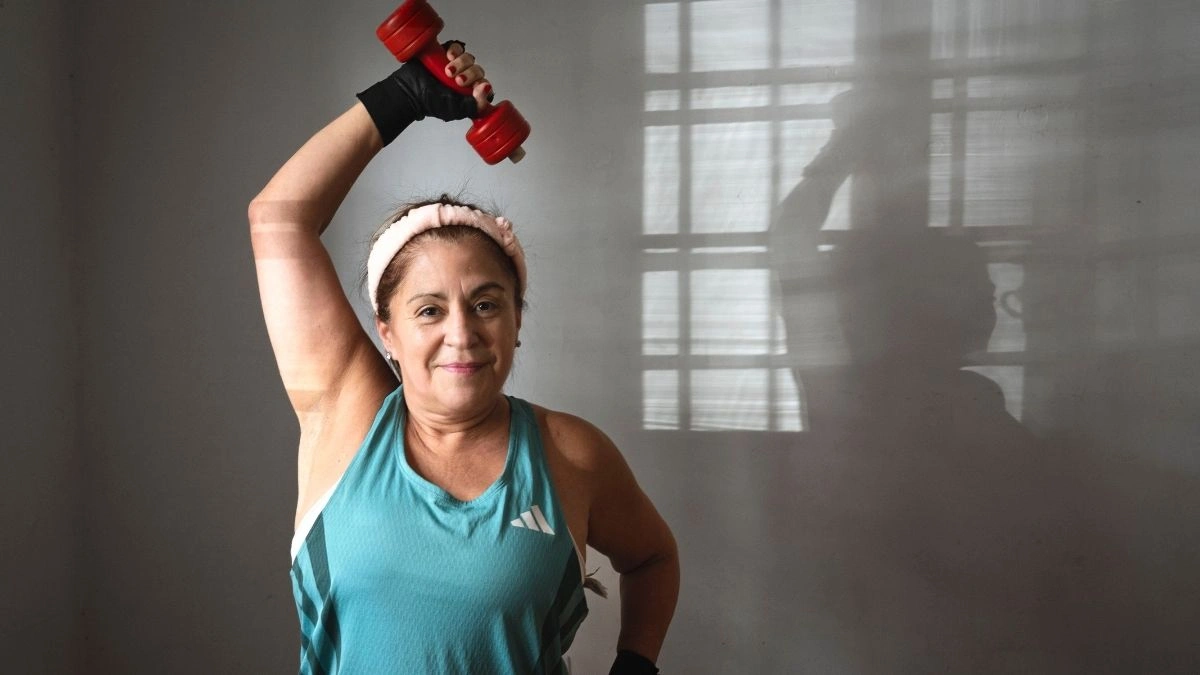
Here’s something worth saving: a study published in a peer-reviewed journal found that adults with a mean age of 55 made significant strength gains from sessions lasting under 15 minutes, done twice per week at high effort.⁶ Clock time is not the driver. Effort is.
Start short. If 60-minute sessions feel like too much, two 30-minute sessions at genuine effort still move the needle. The program you actually do beats the perfect program you don’t.
The next question is what to put inside those sets, and the list is shorter than most trainers suggest.
Five Moves That Do Most of the Work
Most strength programs for older adults are longer than they need to be. The NSCA recommends 8 to 10 multi-joint exercises targeting all major muscle groups for older adults.⁵ But you don’t need all 10 to cover the basics.
The most efficient exercises for adults over 50 work multiple muscle groups at once. Compound movements [exercises that work multiple muscle groups at the same time, rather than isolating one] are the most efficient choice because they build strength in the movement patterns that matter most for everyday life: getting up from a chair, lifting a bag, climbing stairs.
If you’re asking which exercises to do, the best strength exercises over 50 are the ones that mimic how your body actually moves. Here are five that cover the major patterns:
- Goblet squat — sit-to-stand pattern, works legs and core
- Romanian deadlift — hip hinge, targets the back of the legs and lower back
- Seated or standing row — pulling pattern, strengthens the upper back and posture muscles
- Push-up or chest press — pushing pattern, works chest, shoulders, and triceps
- Farmer’s carry — carrying pattern, builds grip, core, and full-body stability

There is one rule that holds all five exercises together. Progressive overload [gradually increasing the weight, reps, or difficulty of an exercise over time so the muscle keeps adapting] means you keep adding a small challenge each week. Without it, the body adapts and progress stalls.⁷
Start at a weight where the last two reps of each set feel genuinely hard. Not painful, but effortful. That’s the signal the muscle is being challenged enough to respond.
More volume per session is not what drives results. What drives results is what happens when you go past the ceiling, which the next section explains.
Why More Strength Training Isn’t Better After 50 and What Happens Past the Ceiling
A lot of people over 50 feel like they should be doing more. More sets, more sessions, more days in the gym. The 2026 BJSM study answered that directly: past 120 minutes per week, the longevity data flatlined.¹ The risk reductions simply stopped growing.
This isn’t just about the research ceiling. It’s about how the body actually recovers after 50. Inflammation from training takes longer to resolve. The hormonal environment that drives repair is less robust.³
A 2012 study found that two and three resistance sessions per week produced comparable muscle strength and lean body mass gains in older adults.⁸ The extra day added recovery demand without adding proportional benefit.
Watch for these signals that you’re training past your recovery capacity:
- Soreness that lasts more than three days after a session
- Strength declining over two or more consecutive workouts
- Sleep getting worse, not better, in the weeks after starting a new program
If you’re hitting those markers, the answer is almost never to train harder. It’s to reduce session frequency or volume and let the adaptation catch up.
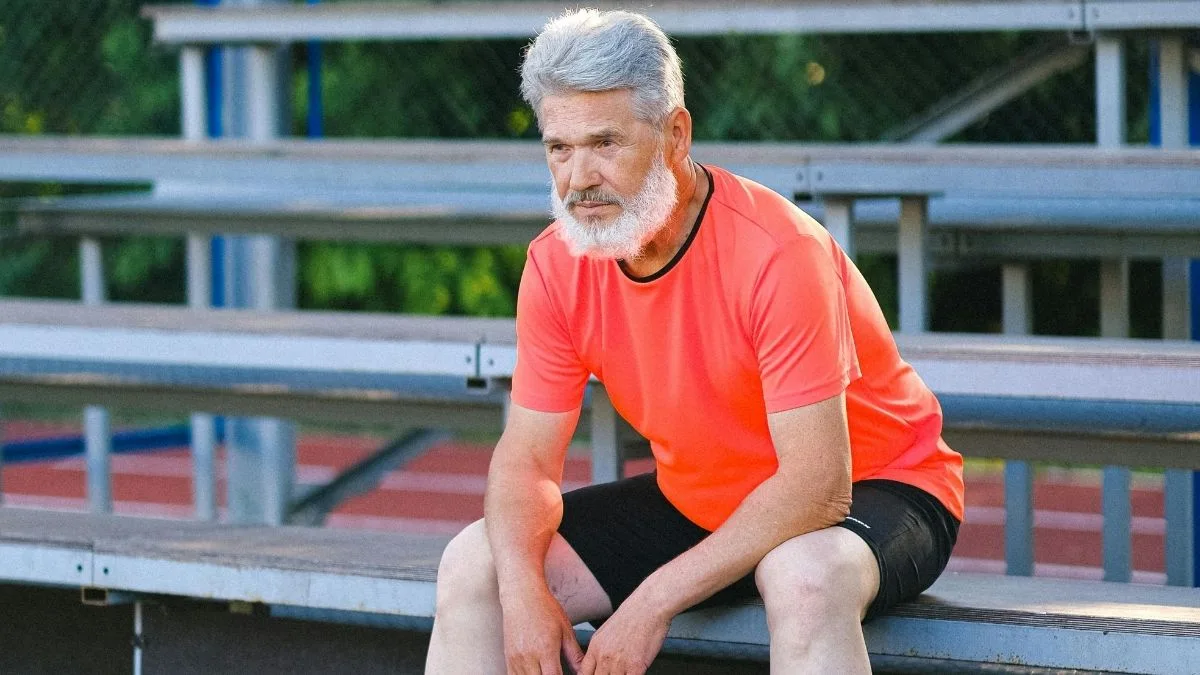
The smartest move is to keep strength training inside the sweet spot and add aerobic activity — walking, swimming, cycling — on top. That combination was linked to the greatest longevity benefit of any group in the 2026 study.¹ Add aerobic, not lifting. That’s the lever.
Knowing you’re staying inside the ceiling is one thing. Knowing whether the training is actually working is another, and the scale won’t tell you.
How to Know You’re Getting Stronger When the Scale Lies
The number on the scale often doesn’t move for months after starting strength training, even when everything is working exactly as it should. Muscle adds weight while fat drops. The net change can look like nothing. It isn’t nothing.
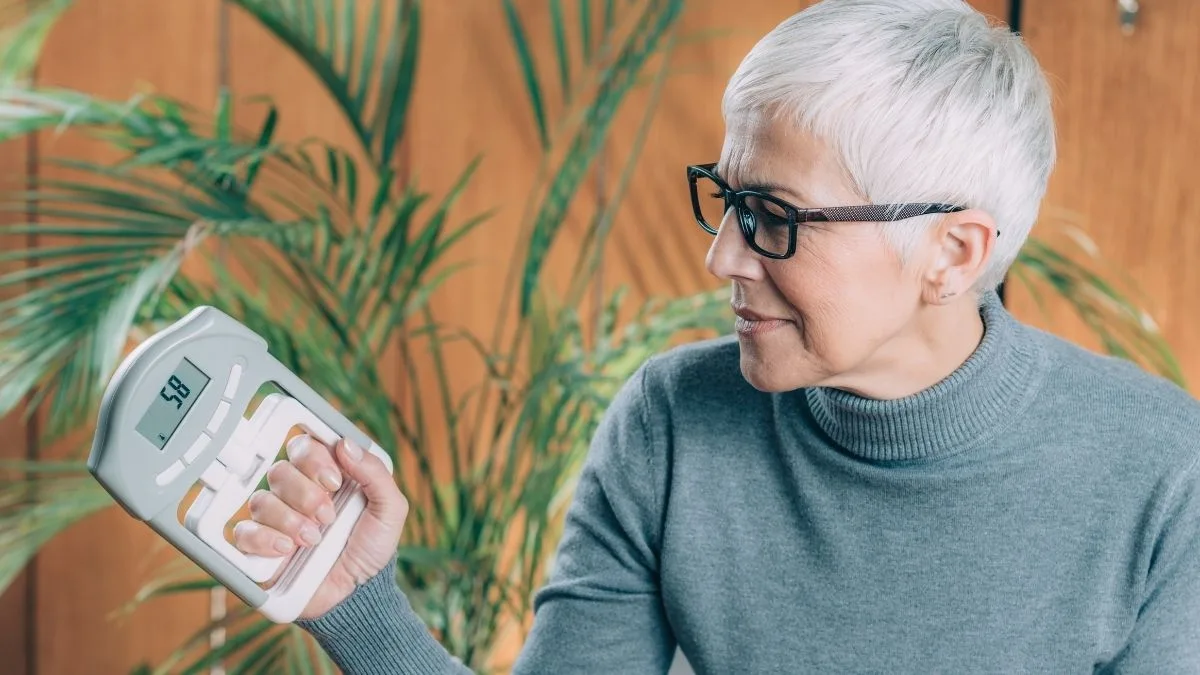
One of the most useful things you can track is your grip. Grip strength [the amount of squeezing force your hand can produce] is one of the most studied markers of overall muscle health in aging adults. NIH-funded research has linked weaker grip to higher risk of falls, hip fractures, and mobility limitations.²
These improvements show up in daily life before they show up on a scale. A 2025 meta-analysis found that resistance exercise programs significantly improved grip strength, static and dynamic balance, lower body strength, and fall efficacy in older adults.⁹
Better measures of progress after 50:
- More reps with the same weight, or the same reps with more weight
- Getting up from a chair or floor with less effort
- Carrying groceries or bags without fatigue
- Decreased soreness over time even as weights increase
- Improved balance and steadiness during daily tasks
Track one thing. Write down how many reps you completed this week. Compare it to last week. If the number went up, the program is working.
If you’re over 50, the risk of a serious fall is real and worth paying attention to. Falls are a leading cause of injury in this age group. The same resistance training that builds strength is associated with improved balance and reaction speed, both of which are linked to fall prevention.⁹
Conclusion
Pick two days this week and do them. Start a two-session-per-week strength training routine this week, even if that means beginning with bodyweight squats and wall push-ups in the living room. The research on strength training after 50 now has a ceiling, and that ceiling is lower than the fitness industry ever admitted. Two hours a week is not a shortcut. It’s the answer.
References
- Nguyen TT et al. Long-term resistance training with all-cause and cause-specific mortality: assessing dose-response and joint associations with aerobic physical activity. British Journal of Sports Medicine. 2026. DOI: 10.1136/bjsports-2025-110503. https://hsph.harvard.edu/news/moderate-amount-of-strength-training-each-week-could-boost-longevity/
- National Institutes of Health. Slowing Sarcopenia. NIH News in Health. 2025. https://newsinhealth.nih.gov/2025/04/slowing-sarcopenia
- Kumar V et al. Aging impairs contraction-induced human skeletal muscle mTORC1 signaling and protein synthesis. American Journal of Physiology. 2011. https://www.ncbi.nlm.nih.gov/pmc/articles/PMC3156634/
- Taaffe DR et al. Once-weekly resistance exercise improves muscle strength and neuromuscular performance in older adults. Journal of Gerontology. 1999. Study population: community-dwelling healthy men and women aged 65 to 79 years. https://pubmed.ncbi.nlm.nih.gov/10522954/
- Fragala MS et al. Resistance Training for Older Adults: Position Statement from the National Strength and Conditioning Association. Journal of Strength and Conditioning Research. 2019. https://www.nsca.com/contentassets/2a4112fb355a4a48853bbafbe070fb8e/resistance_training_for_older_adults__position.1.pdf
- Steele J et al. Strength Gains as a Result of Brief, Infrequent Resistance Exercise in Older Adults. Journal of Exercise Physiology Online. 2015. Study population: 33 older adults, mean age 55 years. https://www.ncbi.nlm.nih.gov/pmc/articles/PMC4590889/
- Castillo-Garza R et al. Different resistance training volumes on strength, functional fitness, and body composition of older people: A systematic review with meta-analysis. Mechanisms of Ageing and Development. 2023. https://www.sciencedirect.com/science/article/abs/pii/S0167494323003813
- Schoenborn V et al. Effect of resistance training frequency on physiological adaptations in older adults. Isokinetics and Exercise Science. 2012. https://www.sciencedirect.com/science/article/pii/S1728869X12000081
- Han K et al. Effects of resistance exercise programs on older adults: a systematic review and meta-analysis. Journal of Geriatric Physical Therapy. 2025. https://pubmed.ncbi.nlm.nih.gov/40917577/