
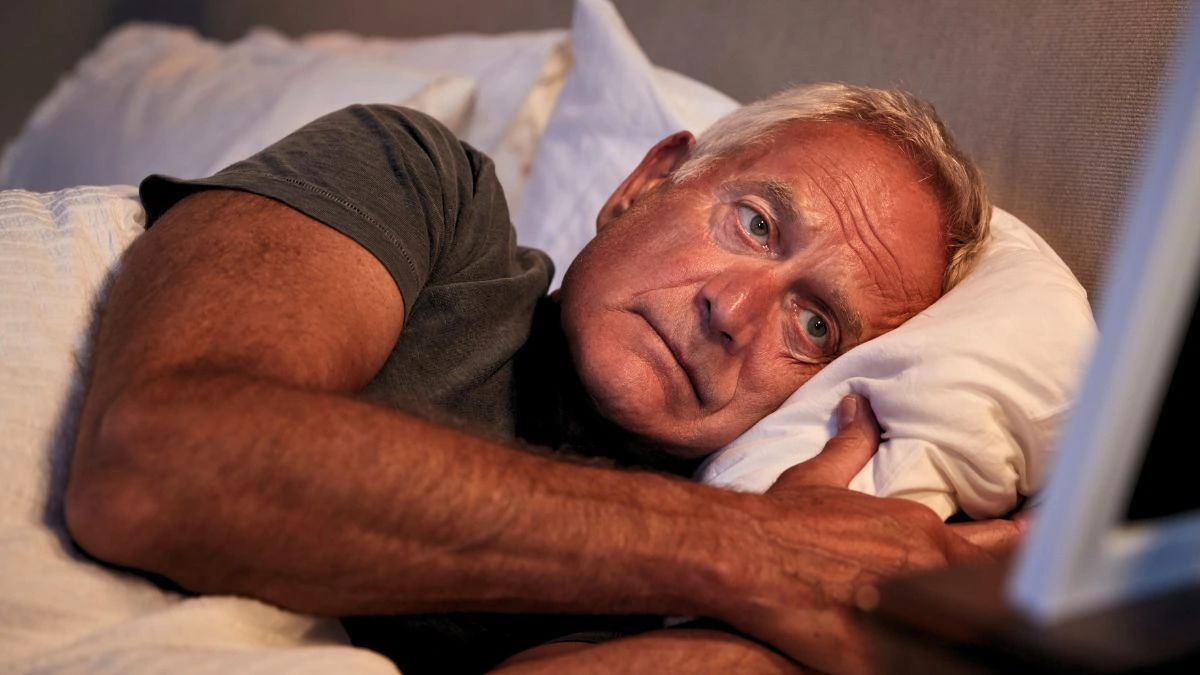
The clock reads 3:07. You fell asleep without trouble, yet here you are, wide awake in the dark. Your mind has started a list of tomorrow’s tasks and old worries. You lie still and wait for sleep to return. It does not. So you start counting the hours left.
You may have heard that this is just age. Part of that is true. But waking up at 3 AM after 50 can have more than one cause. The right fix depends on which one is yours. Three patterns cover the common causes.
Each one looks alike at 3 AM but needs a different response by morning. Here is how to tell them apart.
Pattern One: Your Sleep Itself Has Changed
Sleep changes with age. The National Institute on Aging says older adults still need about seven to nine hours a night. What changes is the sleep itself. NIA says it tends to be shorter and lighter, and you may wake more often during the night.
Insomnia Guidance and Nighttime Waking in Older Adults
Insomnia Guidelines Still Put CBT-I First
The American College of Physicians (ACP) published an insomnia guideline in 2016 and treats its guidelines as expired after five years, but newer VA/DoD and AASM guidance still puts CBT-I first.
Waking During the Night in Older Adults
Guidance notes that older adults more often report waking during the night than trouble falling asleep.
Small Triggers Can End a Sleep Cycle
Lighter sleep gives way to small things—a noise, a warm room, or a full bladder can end a sleep cycle.
Nocturia Linked to Poorer and Shorter Sleep
A 2024 review in BMC Geriatrics linked nocturia, or waking to urinate, to poorer and shorter sleep in older adults.
Hormones play a part. The American Academy of Sleep Medicine surveyed 2,007 US adults. Among women aged 45 to 64, 37% reported frequent night waking and 35% reported hot flashes or night sweats that disrupt sleep, which they linked to menopause.
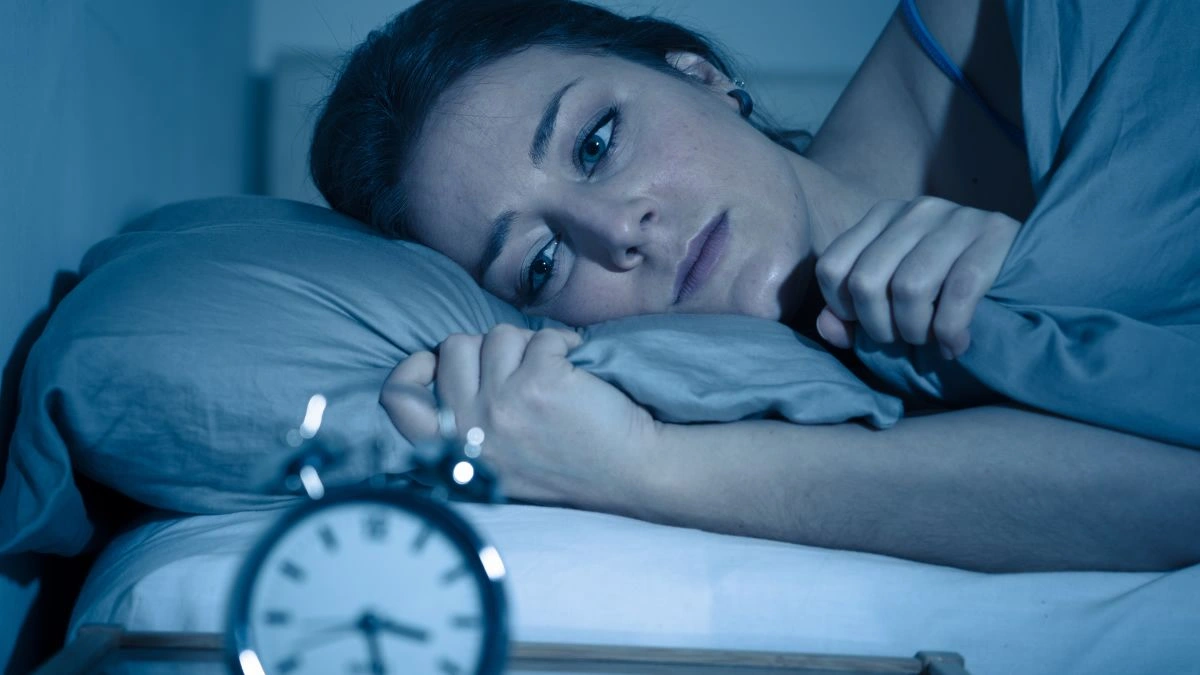
A common pattern looks like this. A woman in her mid-50s wakes at 3 AM, warm and damp. She blames stress and lies there worrying. Her night sweats woke her first. Spotting the real trigger changes the fix.
Men have their own version. The ACP lists an enlarged prostate among the treatable causes of insomnia. Frequent night trips to the bathroom often come with it.
The Menopause Society’s 2022 position statement says hormone therapy improves sleep in women whose hot flashes and night sweats disrupt it. That choice belongs to you and your doctor.
Try three small habits this week. Get up at the same time every day, even after a poor night. Keep your bedroom cool. If bathroom trips wake you, mention it to your doctor, and ask about timing your evening drinks.

These steps help when age or hormones drive your waking. But some awakenings come from something that interrupts your sleep.
Pattern Two: Something Is Interrupting Your Sleep
Some awakenings have a medical cause. The ACP lists sleep apnea and restless legs syndrome among the treatable causes of insomnia that doctors should consider. Both are treatable.
In sleep apnea, breathing stops and starts through the night. Each pause can jolt the brain awake for a moment. You often do not remember these wake-ups.

A study in the journal Menopause looked at midlife women with disturbed sleep. It found that 53% had a sleep disorder such as sleep apnea or restless legs. Women with severe hot flashes had 1.87 times the sleep apnea risk of women with mild or no hot flashes.
Learn the clues. The National Institutes of Health says loud, frequent snoring, gasping or snorting, and pauses in breathing can point to sleep apnea, though not everyone who snores has it. The North American Menopause Society (now The Menopause Society) adds early morning headaches and heavy daytime sleepiness to that list.
Restless legs syndrome brings an urge to move your legs. It is worst in the evening. Moving gives brief relief.
A common pattern: a man in his early 60s wakes at 3 AM with a dry mouth. His partner says he snores and stops breathing for moments. He blames age. A sleep test can find a cause that age does not explain.
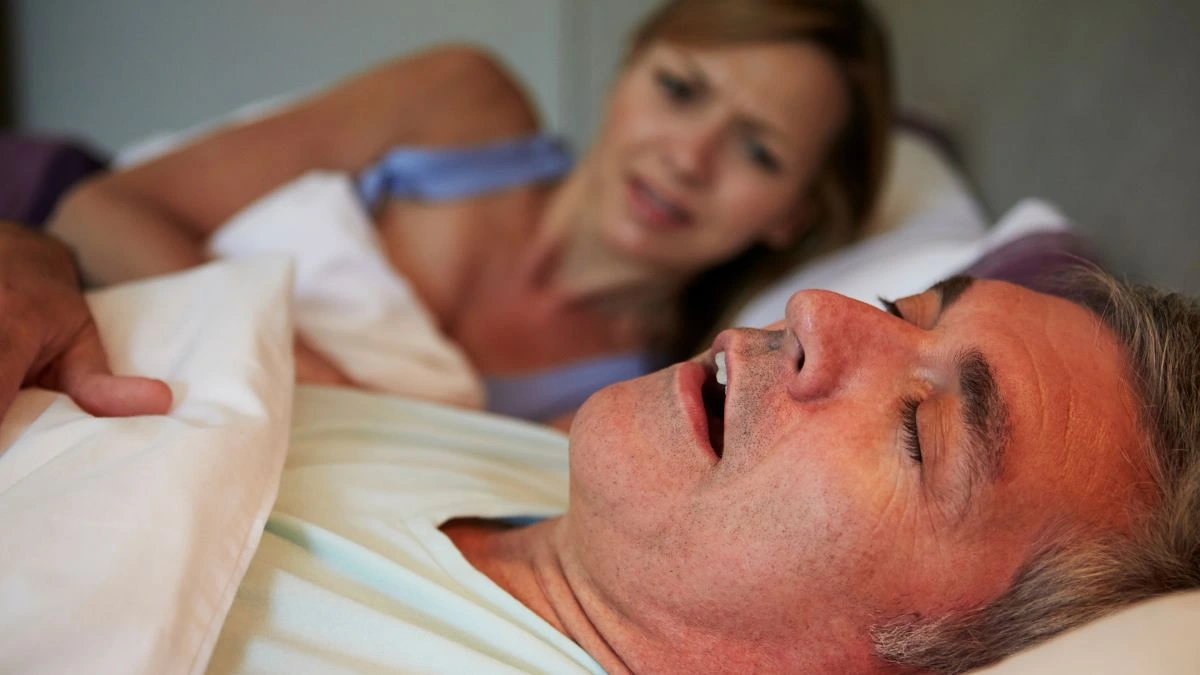
If these clues sound familiar, ask your doctor about a sleep study. Sleep apnea can look different in women, and loud snoring is not always the main sign. The same society says many sleep disorders in midlife women go undiagnosed.
If none of these clues fit, look closely at the third pattern.
Pattern Three: Your Mind Has Learned to Wake Up
Sometimes no medical cause turns up, and the nightly pattern itself keeps you awake. After a few bad nights, you start to dread 3 AM. That dread keeps your brain on alert. Your bed becomes a place for worry instead of rest.
Sleep clinicians call this conditioned arousal. Worry raises your alertness. Higher alertness makes sleep harder. Harder sleep brings more worry. The loop feeds itself.
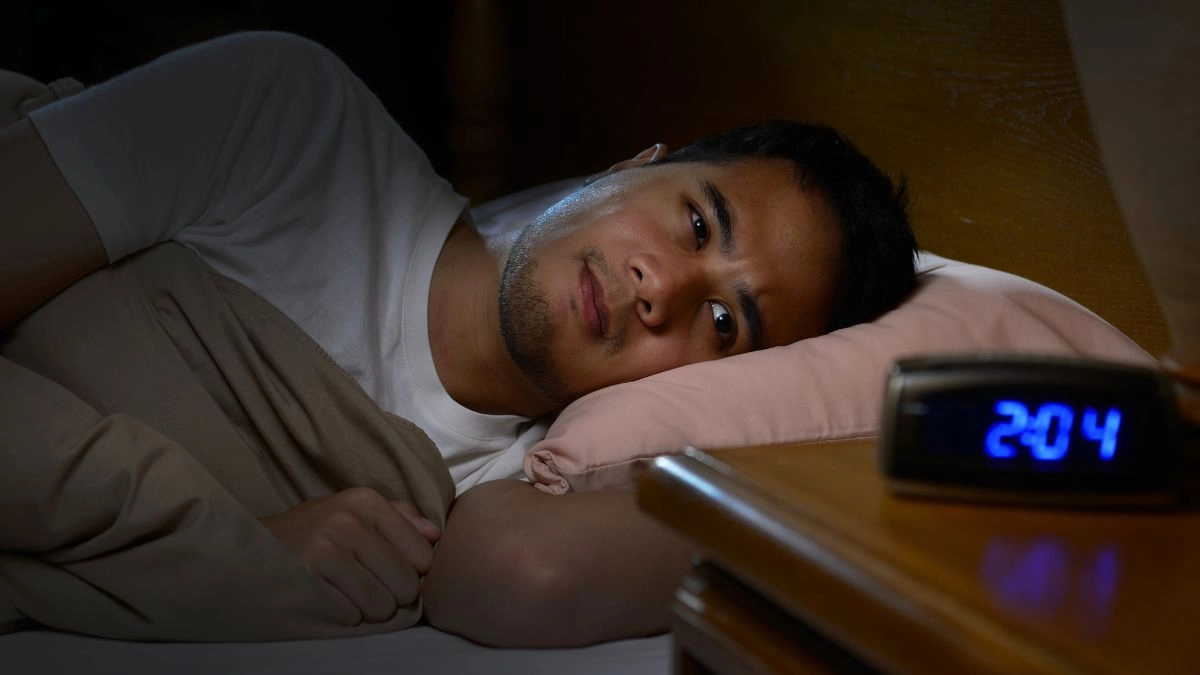
A common pattern starts after a stressful month. Someone wakes at 3 AM, checks the clock, and counts the hours left. By 3:30, they feel more alert than they did at noon. The stress fades, but the 3 AM habit stays. Your body learned this response. You can teach it a new one.
Mood matters too. The ACP names depression among the treatable causes of insomnia. If low mood, loss of interest, or early waking lasts for weeks, tell your doctor.
This pattern can be retrained. The ACP’s 2016 guideline names CBT-I, or cognitive behavioral therapy for insomnia, as the first treatment to try for chronic insomnia. The guideline’s evidence review found moderate-quality evidence that CBT-I cut time awake after sleep onset in older adults.
One small habit may help. Turn the clock away from the bed. Watching the minutes pass feeds the dread.
With all three patterns in view, the next question is which one fits you.
How to Tell Which Pattern Is Yours, and What to Try First
Note: Some of these steps change your sleep routine. If you have a health condition or take medication, talk with your doctor first.
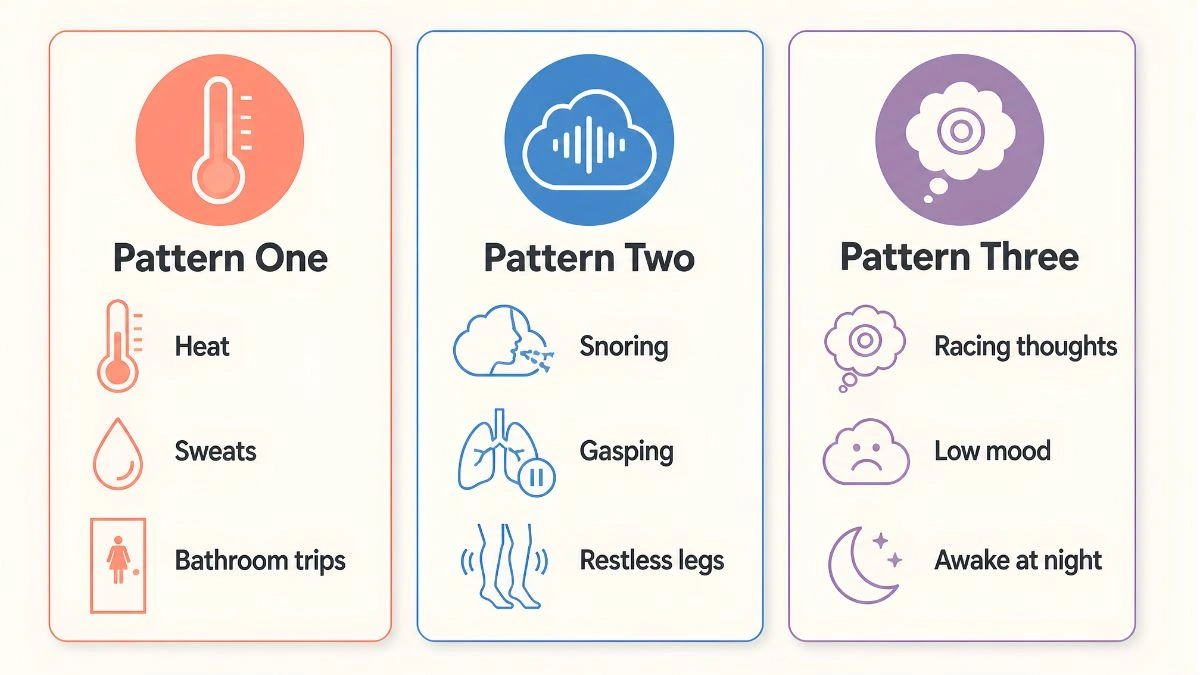
Match your night to the clues, not the clock. Heat, sweats, or bathroom trips point to Pattern One. Snoring, gasping, or restless legs point to Pattern Two. Racing thoughts or low mood point to Pattern Three.
Many people have more than one pattern. If snoring or gasping is among your clues, I suggest starting with the doctor visit.
- Pattern One: Keep a steady wake time and a cool room. Ask your doctor about night sweats.
- Pattern Two: Ask your doctor about a sleep study.
- Pattern Three: Look into CBT-I and turn the clock away.
CBT-I does not need a sleep lab. The ACP says it can run in individual or group sessions, by phone or web, or through self-help books. Psychiatric News reports that most programs last four to eight weeks. Ask your doctor for a referral to a sleep specialist or CBT-I program.
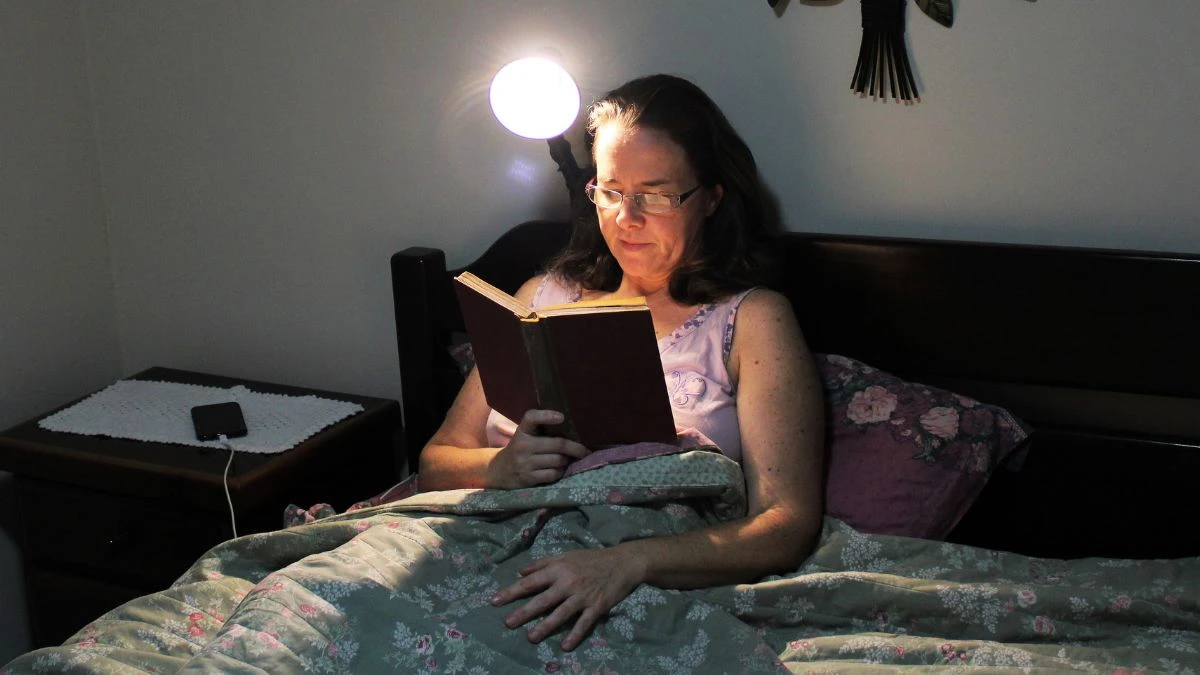
One CBT-I tool is stimulus control. When you cannot sleep, leave the bed. Move to a dim spot, watch your step, and read something calm. Return when you feel sleepy. This teaches your brain that bed means sleep.
Another tool, sleep restriction, limits your time in bed. Start it only with a clinician’s help. Tell them about any sleep apnea, falls, or drowsy driving.
Many people reach for melatonin first. The ACP’s evidence review found not enough evidence for melatonin in older adults. Thin evidence does not prove it fails. Ask your doctor before you rely on it.
Self-care has limits, and some signs call for a doctor sooner.
When Waking at Night Needs a Doctor
Book a visit if you wake three nights a week for three months. The ACP uses that mark to define chronic insomnia, along with daytime effects such as fatigue or poor focus.
I would see a doctor sooner if you have loud snoring with gasping, heavy daytime sleepiness, or low mood that lingers. Also go sooner if the problem began after a new medicine. The National Institute on Aging says medications and health conditions can keep older adults from sleeping well. Ask your doctor for a medication review.

Avoid starting sleeping pills on your own. The ACP says doctors should weigh benefits and harms with you and keep drug use short-term. It also tells doctors to look for pain, depression, and substance use. Bring a list of every medicine and supplement you take. A few notes from home will make the visit work better.
A Final Word
Three AM can feel lonely, but you do not have to sort this out alone. This week, keep a notepad by your bed. When you wake, jot down the time and the first thing you notice. Those few lines give your doctor something real to work with. You will walk in with facts, not guesses. That is a strong start.
This article is for general education and is not medical advice. Talk with your doctor before changing medications, starting supplements, or beginning a new sleep program, especially if you have other health conditions.
References
- American College of Physicians. Management of Chronic Insomnia Disorder in Adults: A Clinical Practice Guideline. Annals of Internal Medicine. https://www.acpjournals.org/doi/10.7326/M15-2175
- American College of Physicians. ACP Recommends Cognitive Behavioral Therapy as Initial Treatment for Chronic Insomnia: https://www.acponline.org/acp-newsroom/acp-recommends-cognitive-behavioral-therapy-as-initial-treatment-for-chronic-insomnia
- National Institute on Aging. Sleep: https://www.nia.nih.gov/health/sleep/sleep-and-older-adults
- The Menopause Society. The 2022 hormone therapy position statement. Menopause. https://menopause.org/wp-content/uploads/professional/nams-2022-hormone-therapy-position-statement.pdf
- American Academy of Sleep Medicine. Survey on menopause and sleep in women aged 45 to 64 (reported at https://aasm.org/wp-content/uploads/2026/05/sleep-prioritization-survey-2025-menopause-affecting-sleep.pdf
- BMC Geriatrics. 2024 review on nocturia and sleep in older adults.
- North American Menopause Society. Study in Menopause on hot flashes, sleep disorders and sleep apnea: https://www.eurekalert.org/news-releases/868938
- Psychiatric News. Treat Chronic Insomnia With CBT-I, Says American College of Physicians: https://psychnews.psychiatryonline.org/doi/10.1176/appi.pn.2016.6b19