
By the time memory starts to slip, the brain may have been quietly changing for two decades. And your skin may have been trying to warn you the whole time. Most people think dementia only shows up through forgetfulness. That is not the full picture.
Your skin shares deep biological roots with your brain. Certain skin conditions, texture changes, and even how your skin reacts to UV light can reflect what is happening inside your brain years before any memory problem appears.
In this article, you will learn why skin and brain health are linked, which skin conditions raise your dementia risk, what researchers are measuring right now, and what you can do about it in 2026. This is not about fear. It is about acting early, when it still counts.
Why Skin and the Brain Are More Connected Than You Think
Most people never connect a skin rash to brain disease. But the link is real and it starts before you are even born.
Your skin and brain both develop from the same tissue in the embryo. It is called the ectoderm. Because they come from the same source, they share many of the same biological pathways throughout your life.
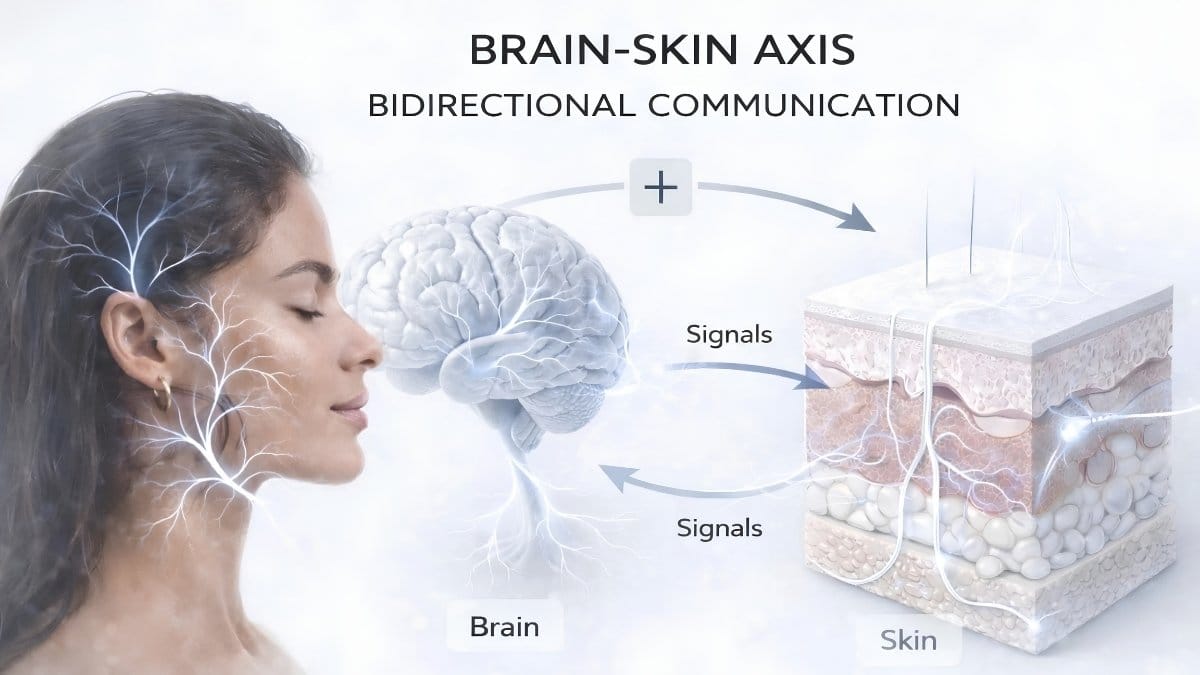
Here is what makes this important. Researchers have found that skin cells in Alzheimer’s patients can produce beta-amyloid and tau. These are the same toxic proteins that build up in the brain and cause damage. Your skin is not just a protective layer. It is biologically active in ways that mirror what is happening in your nervous system.
Alzheimer’s disease accounts for 60 to 70 percent of all dementia cases. Dementia is now the seventh leading cause of death worldwide, according to the WHO. With 57 million people affected globally, finding early signals matters more than ever.
Dermatologists and neurologists are now working together more than before. The reason is simple. The skin is easy to access. The brain is not.
The Skin Glow Test That Could Predict Dementia Risk

There is a compound in your body called AGEs, which stands for advanced glycation end products. They form when sugar reacts with proteins inside your tissues. Poor diet, high blood sugar, and oxidative stress all speed up their formation.
AGEs build up in your skin over time. And here is the key finding. A device called the AGE Reader shines UV light on your forearm and measures how brightly your skin glows. That glow reflects how many AGEs have collected in your tissue.
A major study from Erasmus University in Rotterdam tracked 2,922 people without dementia from 2013 to 2020. Those with higher skin glow readings had a 21 percent higher risk of developing dementia. Their risk of Alzheimer’s specifically was 19 percent higher. Brain MRI scans confirmed more brain shrinkage and small vessel damage in the same group.
The good news is that AGEs are reducible. Cut ultra-processed foods. Avoid high-heat cooking like grilling and frying. Eat more berries, green tea, and olive oil. Control your blood sugar. These habits reduce AGE build-up in your skin and protect your brain at the same time.
Three Inflammatory Skin Diseases Linked to Higher Dementia Risk
Chronic skin inflammation does more than damage your skin. It sends inflammatory signals through your entire body, including your brain. Three conditions keep appearing in the research.
Bullous Pemphigoid:
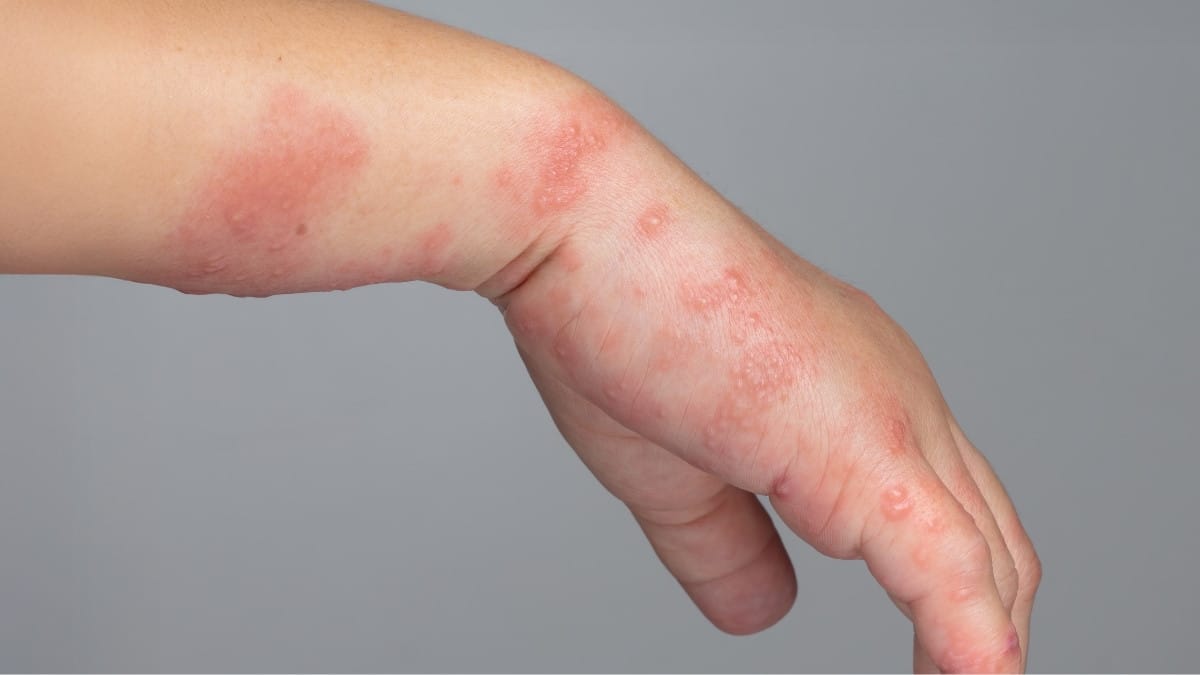
is an autoimmune blistering skin disease. A meta-analysis of 14 studies found it was linked to a dementia risk ratio of 4.46. A Finnish study found that people with Alzheimer’s were 2.6 times more likely to develop it. In most cases, the brain disease came first.
Psoriasis:
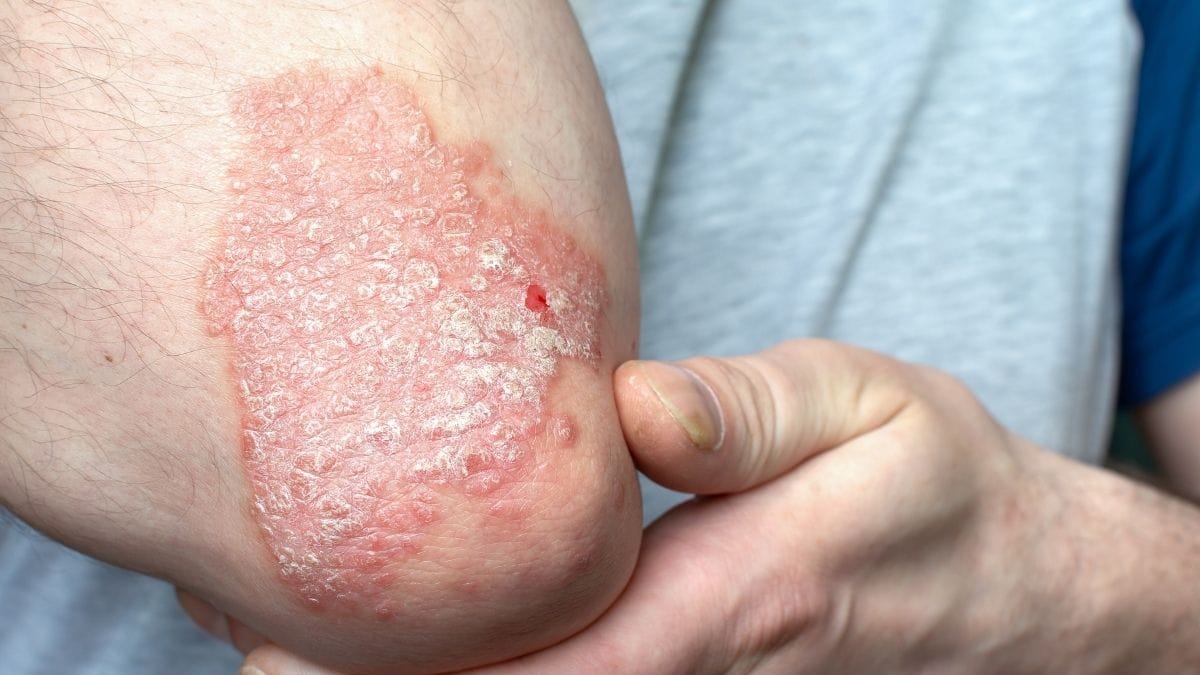
raises dementia risk by 10 to 25 percent across multiple studies. In people with severe psoriasis, the risk of dying from dementia rises more than three times. The reason is long-term systemic inflammation that slowly damages blood vessels supplying the brain.
Rosacea:
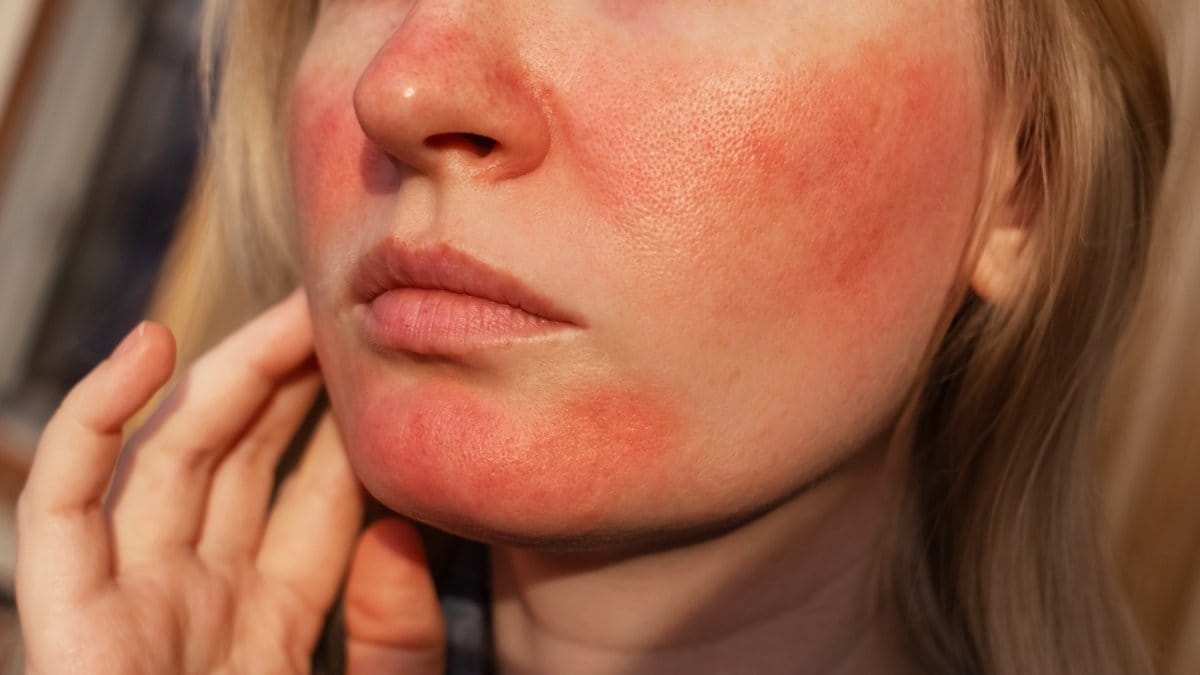
shows upregulation of neurodegeneration-linked proteins including SNCA, GSK3B, and HSPA8, all connected to Alzheimer’s and Parkinson’s disease. One documented case showed a man’s rosacea was an early sign of Parkinson’s, not just a skin problem.
If you have any of these conditions, poorly controlled inflammation is a brain risk, not just a skin one.
What Researchers Are Now Measuring on the Skin Itself
Scientists are not just looking at which skin diseases correlate with dementia. They are measuring the skin’s physical properties directly.
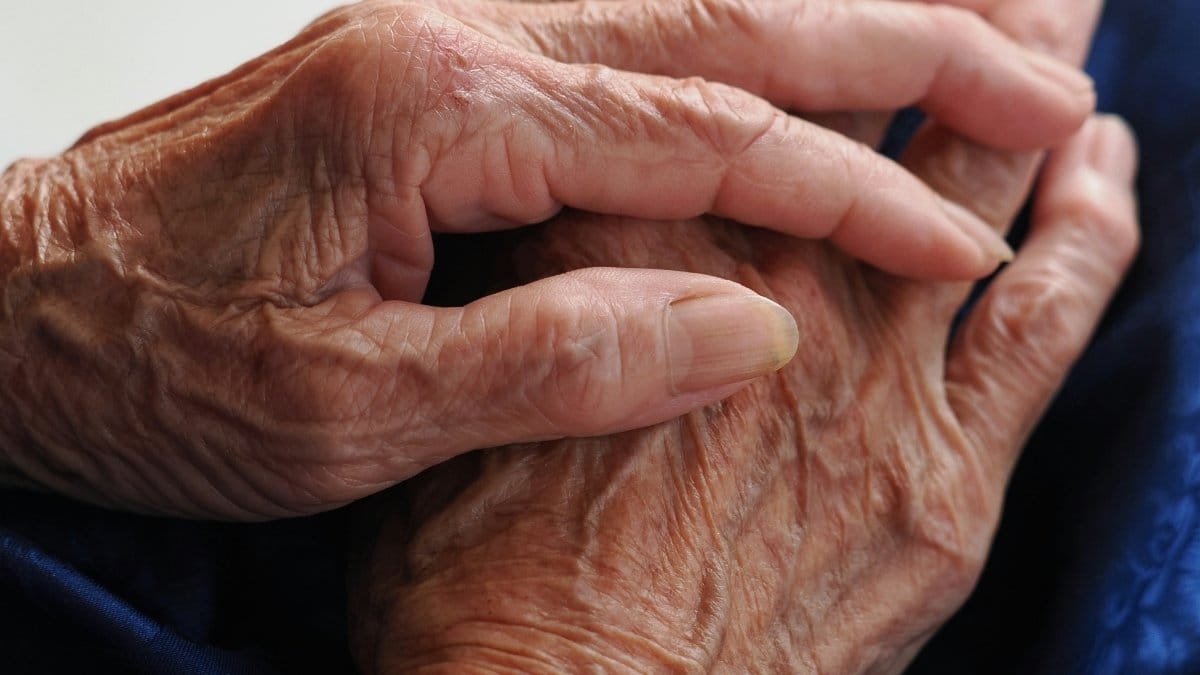
A study at Kaohsiung Medical University found clear differences in Alzheimer’s patients compared to healthy people of the same age. Alzheimer’s patients had more neutral skin pH, more skin hydration, and less skin elasticity. These are measurable biological shifts, not things you can see in a mirror.
Researchers also found that people with Alzheimer’s had more tortuous, meaning twisted, capillaries under the skin’s surface. These twisted blood vessels correlated with lower scores on cognitive tests.
The ApoE E4 gene, which is the biggest known genetic risk factor for Alzheimer’s, also appears to influence these capillary patterns.
None of these tests are part of a standard doctor visit yet. But they are moving in that direction. Researchers at Harvard Medical School and Massachusetts General Hospital are actively studying skin-based markers as a new diagnostic approach.
This is an early-stage field. But the direction is clear. Your skin’s biology is changing alongside your brain’s.
What You Can Actually Do Right Now in 2026
You cannot change your genes. But you can change the conditions that drive skin and brain aging at the same time. Here are five specific steps.
The Skin-Brain Health Connection
Managing chronic inflammation and metabolic markers today safeguards both your dermatological wellness and future cognitive vitality.
Control Skin Inflammation
Uncontrolled psoriasis, rosacea, or eczema fuels chronic systemic inflammation—the shared enemy undermining both skin barrier stability and long-term brain health. Consult a dermatologist promptly.
Halt AGE-Forming Habits
Frying, grilling, and ultra-processed foods spike Advanced Glycation End-products (AGEs). Pivot toward steaming, boiling, or baking while enriching your plate with protective options.
Manage Blood Sugar
Elevated glucose environments act as an accelerator for AGE formation. Secure a basic fasting glucose test; tracking borderline-high readings provides critical early opportunities for intervention.
Initiate Cognitive Screenings
Clinical data strongly correlates severe skin conditions like bullous pemphigoid or profound psoriasis with broader neurological profiles. Proactively discuss cognitive checks with your healthcare provider.
Track Emerging Clinical Tech: The AGE Reader
Currently utilized across prominent European research institutions, this non-invasive diagnostic device detects tissue accumulation of glycation components. Watch for its expanding availability in global clinical practices soon.
The 2024 Lancet Commission found that 45 percent of dementia cases could be delayed or prevented through lifestyle changes. Your skin health is part of that window.
Where This Science Is Headed and Why It Matters Now
The skin-brain connection is no longer just a theory. It is becoming a clinical tool.
In the US, skin biopsy is already approved to detect alpha-synuclein, a protein linked to Parkinson’s disease. That means the skin-to-brain diagnostic path is already open in one condition. Alzheimer’s detection through skin may not be far behind.
Blood biomarkers like plasma p-tau217 can detect Alzheimer’s pathology 15 to 20 years before a person shows any symptoms. Researchers believe skin-based testing could one day offer the same early detection without a needle in the spine.
Teams at the San Gallicano Dermatological Institute in Rome, Erasmus University in Rotterdam, and Harvard Medical School are all actively studying the skin as a non-invasive window into the aging brain. The work is serious, well-funded, and moving fast.
The skin has advantages that brain scans do not. It is accessible. Testing is low-risk. It can be repeated over years. No hospital stay required.
This is not science fiction. The tools are being built right now. And patients who understand this link are better positioned to ask the right questions at their next appointment.
Conclusion
Your skin is not just a surface. It shares biology with your brain, responds to the same inflammation, and may carry early signals of dementia risk years before memory fails. Control your skin inflammation, reduce AGEs, and talk to your doctor. The research on skin signs of dementia risk is still growing but it is too important to wait for.