
You’ve probably tried more than one diet in the last few years. Maybe you went low-carb for a while. Then someone told you to eat more plants. Then you heard that Mediterranean was the best. Then keto. Then fasting.
And somewhere in the middle of all that, you gave up trying to figure it out.
Here’s the good news. In March 2025, researchers published a 30-year study in Nature Medicine. They tracked 105,015 people and looked at 8 different dietary patterns against real healthy aging outcomes. What they found should actually make you breathe easier.
The lead researcher, Dr. Anne-Julie Tessier, said it plainly: “There is no one-size-fits-all diet. Healthy diets can be adapted to fit individual needs and preferences.”
You were never wrong for being confused. The science itself says there are multiple right answers. And this article will show you exactly what they are.
What Did the Harvard Study Actually Find?
The study, published in Nature Medicine, examined the association between eight different long-term dietary patterns, ultra-processed food consumption, and healthy aging. It is one of the few studies to evaluate diet using a model that looks at physical, cognitive, and mental health together as markers of aging.
Healthy aging was defined as reaching age 70 free of major chronic diseases, with cognitive, physical, and mental health all maintained. After up to 30 years of follow-up, only 9,771 people, which is 9.3% of the full sample, achieved this.
That number might sound low. But the study wasn’t designed to scare you. It was designed to find out what separated that 9.3% from everyone else.
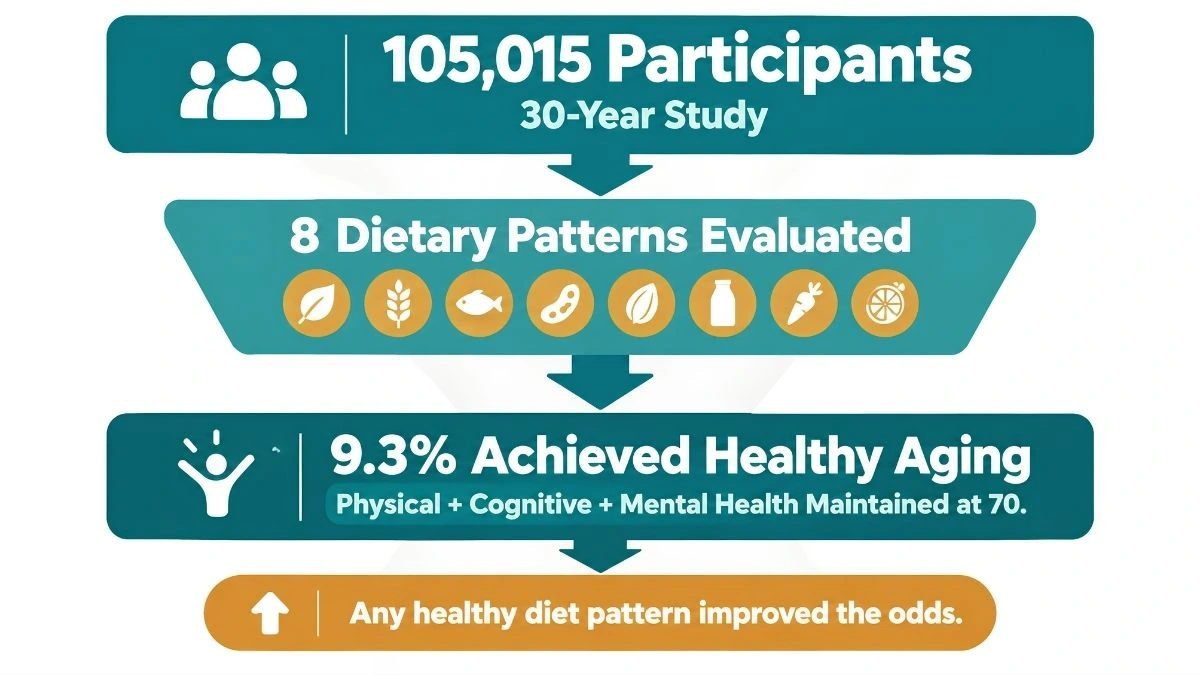
The finding that matters most: adhering to any one of the healthy dietary patterns was linked to overall healthy aging and its individual domains, including cognitive, physical, and mental health.
Not one diet. Any healthy pattern. That’s the real headline. And it changes everything about how you should think about food from here on.
Path 1: The AHEI Diet (The One That Came Out on Top)
Of the eight dietary patterns tested, the Alternative Healthy Eating Index, known as the AHEI, came out on top. Developed by Harvard, the AHEI prioritizes fruits, vegetables, whole grains, nuts, legumes, and healthy fats.
People whose eating matched the AHEI most closely in middle age had 86% better odds of healthy aging at 70. They were also 2.2 times more likely to be healthy at 75.
This isn’t a trendy branded diet. It’s more like a flexible checklist. Eat more of the right things. Eat less of the wrong ones. That’s the whole idea.
What does that look like in real life? Swap white rice for quinoa or farro once a week. Replace chips with a small handful of walnuts. Add a handful of spinach to whatever you’re already making for dinner.

You don’t need a meal plan. You just need a direction. And the AHEI is the clearest signal the science has given us yet about which direction works.
Path 2: Mediterranean and MIND Diets (For Your Brain and Heart)
The Mediterranean diet has been ranked the Best Overall Diet by U.S. News and World Report since 2018. In 2025, it was also ranked number one for diabetes, high cholesterol, gut health, mental health, and inflammation.
A review of 18 studies found the Mediterranean diet consistently showed beneficial effects on cognitive health, including improved memory and processing speed, with the potential to delay cognitive aging by up to 3.5 years.
The MIND diet builds on that. Tracking over 1,000 older adults, researchers found that those who closely followed the MIND diet had a 53% lower risk of developing Alzheimer’s disease.
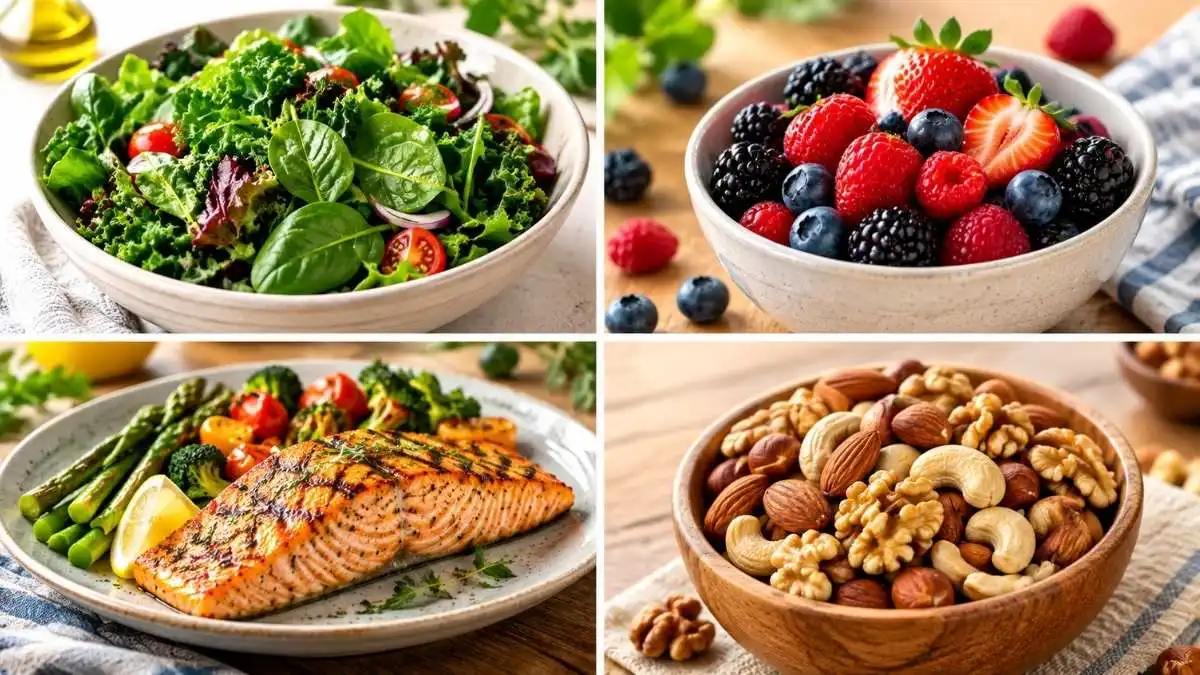
The MIND diet focuses on eating vegetables, especially leafy greens, nuts, berries, beans, whole grains, fish, and lean poultry, while limiting red meat, butter, cheese, pastries, and fried food.
A real swap you can try today: use olive oil instead of butter. Add berries to your breakfast. Eat one serving of leafy greens at lunch or dinner. Small, consistent shifts are what both these paths ask of you.
Path 3: The DASH Diet (For Blood Pressure and Metabolic Health)
If your doctor has mentioned blood pressure or prediabetes, this path is built for you. The DASH diet was created specifically to lower hypertension, which is one of the most common and silent drivers of age-related disease.
It focuses on cutting sodium, eating whole foods, choosing lean proteins, and loading up on potassium-rich vegetables like sweet potatoes, spinach, and bananas.
What makes DASH a strong starting point for people over 50 is that it doesn’t ask you to overhaul everything at once. You reduce one thing, excess sodium, and build from there.

A practical first step: look at the three packaged foods you eat most often. Check the sodium. If any single item has more than 600mg per serving, that’s the first one to replace with a home-cooked version. This one habit, done consistently, is exactly what DASH was built around. Simple, direct, and supported by decades of research.
Path 4: Plant-Based Eating (You Don’t Have to Go Fully Vegan)
Another leading diet in the study was the Planetary Health Diet Index, which considers both human and environmental health by emphasizing plant-based foods and minimizing animal-based foods.
Here’s the part that surprises most people. Going plant-based doesn’t mean giving up everything. The research rewards direction, not perfection. Even shifting toward more plants, while reducing how much processed meat you eat, makes a measurable difference.
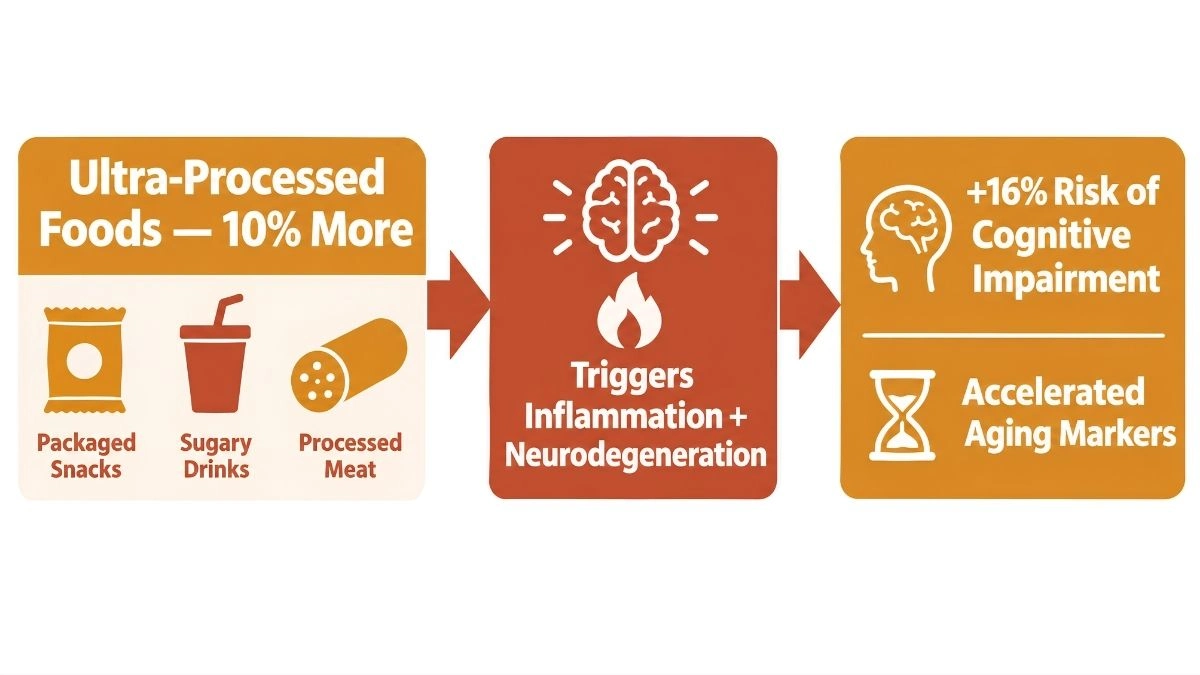
A high intake of ultra-processed foods like packaged snacks, processed meats, and sugar-sweetened beverages is linked to systemic inflammation, poor metabolic health, neurodegeneration, cancer, frailty, and sarcopenia.
Small Shifts,
Long-Term Impact
Begin with just two meat-free dinners per week. No dramatic overhaul — just two evenings where the plate looks a little different.
Add lentils, chickpeas, or black beans to meals you already cook. They fold into soups, salads, and stews without changing the dish beyond recognition.
Try replacing ground beef with a lentil-based filling in tacos or pasta once a week. The texture and seasoning carry the dish — most people barely notice the difference.
These are not big changes. But research shows that small, consistent shifts sustained over months and years are precisely what moves the needle on healthy aging outcomes.
The Real Enemy: Ultra-Processed Food
Every single path in the study shared one thing in common. Participants who ate more processed foods had less likelihood of healthy aging, with processed meat and sugary or diet beverages named as the biggest culprits.
A 2024 study published in Neurology found that a 10% increase in ultra-processed food consumption was associated with a 16% higher risk of cognitive impairment.
About 65% of food products purchased by U.S. households are considered ultra-processed foods. These aren’t just chips and soda. They include flavored yogurts, packaged bread, deli meat, diet drinks, and flavored oatmeal packets, things people over 50 eat every day without realizing.
A simple rule: if you can’t picture the ingredient growing somewhere, eat it less often.
Three easy swaps: flavored yogurt to plain Greek yogurt with fresh berries. Packaged bread to sourdough from a bakery. Deli meat to grilled chicken or canned salmon. You don’t need to change everything this week. Pick one. That’s enough to start.
What “Healthy Aging” Really Means (And Why You Should Care Now)
Most people think healthy aging means not getting sick. The science has a bigger definition.
The study defined healthy aging as reaching age 70 free of major chronic diseases, with cognitive, physical, and mental health maintained. That means being able to think clearly. Move your body. Live independently. Feel well, not just survive.
Researchers highlighted a shift from a disease-focused approach to aging toward a more positive strategy focused on preserving functional ability and preventing loss of capacity, as recently acknowledged by the World Health Organization.
According to the United Nations World Population Prospects 2024, the number of individuals aged 65 and over is expected to double from 761 million in 2021 to 1.6 billion in the next two to three decades.

The world is getting older. And more years alive doesn’t automatically mean more years well. What you eat in your 50s directly shapes what your 70s look like, not just in terms of disease, but in terms of energy, memory, and whether you’re living life on your own terms.
How to Start This Week: A Simple Action Plan
You don’t need a new diet. You need a new default. Here’s how to start without feeling overwhelmed.
Three Steps to
Eating Better
first
your path
swap
taken one at a time, in order.
Don’t cut anything yet. Simply add one serving of vegetables or fruit to each meal this week. Let that feel normal before changing anything else.
Choose the eating approach that fits your kitchen, your culture, and how you already eat. Pick the one that requires the least reinvention. You can always shift later.
Find your most common ultra-processed snack or drink and swap it for something whole. One swap — not ten. That single change, repeated daily, is enough to start.
One researcher on the study noted that eating well doesn’t require farm-fresh produce every day: “It doesn’t have to be fresh fruits and vegetables.” Canned, frozen, and dried foods count. This is doable on any budget, in any kitchen.
Start small. Stay consistent. That’s the whole plan.
Conclusion
The science is clear. All the dietary patterns studied improved the likelihood of healthy aging. You don’t need the perfect diet. You need a consistent direction, more plants, fewer processed foods, and a path you’ll actually stick to.
Pick one swap today. Your future self will feel the difference.