
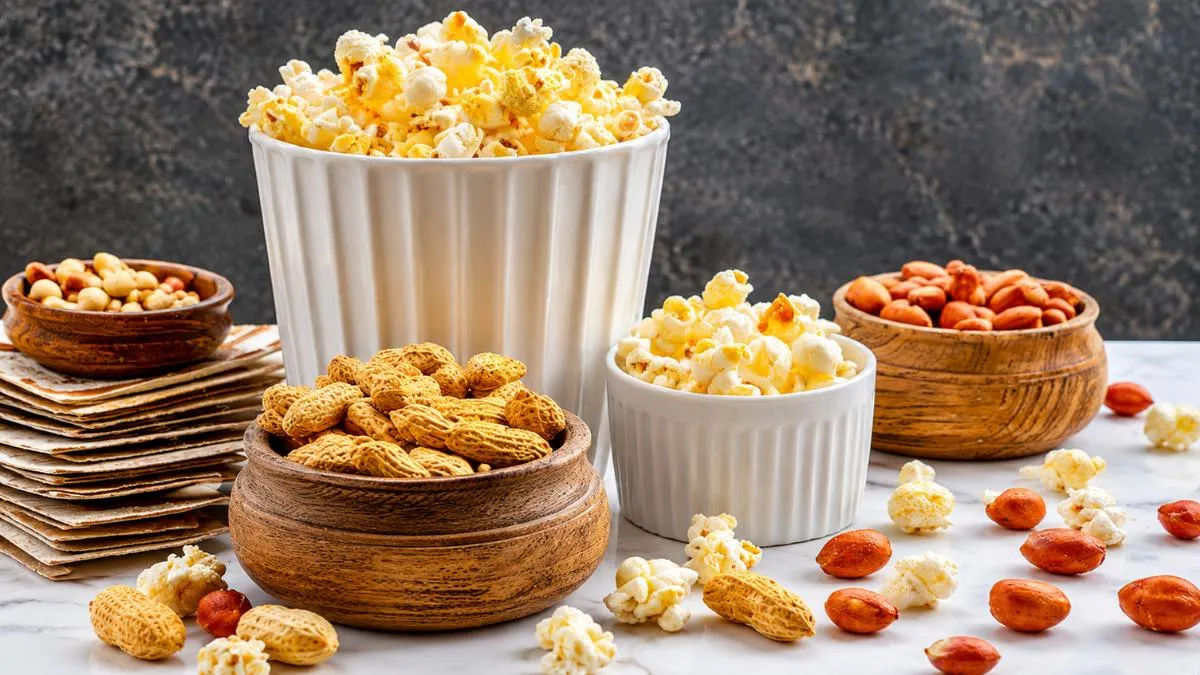
The pamphlet said no popcorn. Your doctor may have added nuts, seeds and corn. So you stopped. Almonds, sesame crackers and popcorn left your kitchen, and you stayed away for years.
If you live with diverticulosis, that caution came from a good place. Doctors feared a stray seed could lodge in a colon pouch and spark pain. That fear shaped medical advice for decades. Then researchers tracked more than 47,000 men for 18 years and checked the fear against real cases. The results changed the advice.
A newer study in women and a 2026 guideline from the American College of Gastroenterology point the same way. The findings come next, along with a careful way to act on them.
Where the “Avoid Nuts and Seeds” Rule Came From
Diverticulosis, Diverticulitis, and Seeds or Nuts
Diverticulosis vs. Diverticulitis
Diverticulosis means small pouches have formed in your colon wall. Diverticulitis happens when one of those pouches becomes inflamed or infected, causing symptoms like lower left belly pain, fever, and nausea, according to Harvard Health Publishing.
How Often Diverticulitis Develops
Harvard adds that fewer than 5% of people with diverticulosis develop diverticulitis.
Why the Fear Made Sense
Even so, the fear made sense because doctors worried that a seed or nut fragment could lodge in a pouch and cause trouble.
Little Evidence Behind the Rule
The theory was rarely tested, and the rule spread with little evidence behind it.
Diverticulosis means small pouches have formed in your colon wall. Diverticulitis is different. It happens when one of those pouches becomes inflamed or infected. Symptoms include lower left belly pain, fever and nausea, according to Harvard Health Publishing.
Harvard adds that fewer than 5% of people with diverticulosis develop diverticulitis. Even so, the fear made sense. Doctors worried that a seed or nut fragment could lodge in a pouch and cause trouble.
The theory was rarely tested. The rule spread with little evidence behind it.
In my conversations with adults in their 60s, I hear the same story again and again. A doctor handed over a list of banned foods years ago, and nobody has revisited it since. Researchers did, and their numbers were clear.
What Two Large Studies Found in Men and Women
A 2008 study in JAMA by Strate and colleagues followed more than 47,000 men aged 40 to 75. The men were health professionals. Over 18 years, researchers recorded 801 cases of diverticulitis and 383 cases of diverticular bleeding.
Nuts, corn and popcorn did not raise risk. Men who ate popcorn at least twice a week had a hazard ratio of 0.72 for diverticulitis. That compares with men who ate it less than once a month.
A ratio below 1.0 points to lower risk. Men who ate nuts twice a week or more had a ratio of 0.8. The authors reported a trend toward lower risk with both foods. Why these foods might lower risk is not established.

Women got their own test in 2025. A study in the Annals of Internal Medicine tracked 29,916 women aged 35 to 74. Barlowe and colleagues at UNC Chapel Hill led the work. Researchers counted 1,531 cases of diverticulitis.
Peanuts, nuts and seeds showed no significant link to risk. Women with the highest intake had a ratio of 1.07. A ratio near 1.0 means no real change in risk. Fresh fruit with edible seeds showed no link either.
Overall diet quality also stood out in that study. Women whose eating matched the DASH pattern best had a 23% lower risk than women in the lowest group. Researchers saw a 22% lower risk for the Healthy Eating Index pattern.

Both studies are observational. They show patterns, not proof of cause. They also cannot predict how any one person will feel after a handful of almonds. Medical societies have now weighed this evidence, and their advice has changed.
What Medical Guidelines Say Today
In July 2026, the American College of Gastroenterology released a new guideline on diverticulitis. Dr. Anne Peery and colleagues published it in the American Journal of Gastroenterology. It suggests patients with past diverticulitis do not need to avoid nuts, corn, seeds or popcorn to prevent a repeat attack.

The American Gastroenterological Association took a similar position in its 2015 guideline. It suggests against telling patients with past diverticulitis to avoid seeds, nuts and popcorn as a routine rule. The AGA labeled this a conditional recommendation, noting the data come from observational studies.
Harvard Health Publishing agrees. It calls the old advice wrong. The evidence shows no higher risk in people who eat a lot of these foods. It adds that these foods are full of fiber, which supports gut health.
For most people, then, the sacrifice was not needed. The old reason sounded sensible, but it never had strong evidence. The ACG and the AGA both advise against a blanket ban on these foods.
The ACG also suggests a high-fiber, plant-forward diet for people with past diverticulitis. Nuts and seeds fit that plan. Putting this into practice takes a little care, though.

How to Add Them Back Safely, and When to Hold Off
Note: If you have diverticular disease, check with your doctor or gastroenterologist before changing your diet, especially during or soon after a flare.
Start with one food and a small portion. Try a small handful of almonds or a cup of air-popped popcorn, then wait a few days. Add more if you feel fine. This is a practical suggestion, not a tested protocol.
In my conversations with adults in their late 50s, I see one pattern. They restart with a big bag of mixed nuts, feel gassy and blame the nuts. A slow start avoids that problem. Write down what you eat and how you feel for two weeks.
Build the base with fiber and water. Harvard Health Publishing recommends 25 to 30 grams of fiber a day from beans, whole grains, vegetables, fruit, nuts and seeds. It also advises drinking plenty of water.

Harvard adds that fiber keeps bowels moving. That eases pressure on the pouches. After a flare, Mayo Clinic advises adding fiber slowly, over a few weeks.
The 2026 ACG guideline adds other habits that may lower the risk of another attack. It suggests regular physical activity and quitting smoking. It also suggests limiting heavy drinking and avoiding regular NSAID painkillers, such as ibuprofen, unless your doctor says otherwise.
Hold off during a flare, a sudden attack of diverticulitis. Harvard Health Publishing lists lower left belly pain, fever, nausea and vomiting as symptoms to report to your doctor. Do not test a snack to see how you feel.
Mayo Clinic says doctors may start with clear liquids for a few days. Low-fiber foods come next. Mayo also says to skip fiber-filled toppings, such as nuts, while you recover. That step rests your gut. Ask your doctor when to bring high-fiber foods back.
Your own body still gets a vote. If a food reliably sets off your symptoms, you should still avoid it. Tell your doctor about that personal trigger too.
Lastly
You protected your gut the best way you knew how, and that deserves credit. This week, write one question on a sticky note: “Do I still need to avoid nuts, seeds and popcorn?” Bring it to your next appointment. Your doctor knows your history and can answer for you. That one small question could put almonds back on your counter.
References
- Strate LL, et al. Nut, corn, and popcorn consumption and the incidence of diverticular disease. JAMA. 2008;300(8):907-914. Coverage: https://mdedge.com/internalmedicine/article/15211/gastroenterology/nuts-popcorn-found-ok-diverticulosis-patients
- Barlowe T, et al. Diet and Risk for Incident Diverticulitis in Women: A Prospective Cohort Study. Ann Intern Med. 2025. https://pubmed.ncbi.nlm.nih.gov/40324196/
- HealthDay. Nuts, Seeds OK For People With Diverticulitis, Study Says. May 6, 2025. https://refills.mhchealthcare.org/patient-resources/article/1746457981454/privacy-policy
- Peery AF, Strate LL, Stollman N, Mankaney G, Chang JW, Grover S. ACG Clinical Guideline: Colonic Diverticulitis. Am J Gastroenterol. 2026;121(7):1549-1561. https://doi.org/10.14309/ajg.0000000000004047
- American College of Gastroenterology. Diverticulitis Guideline Highlights. https://webfiles.gi.org/GuidelineHighlights/Diverticulitis_Guideline_Highlight.pdf
- American Gastroenterological Association Institute. Guideline on the management of acute diverticulitis. Gastroenterology. 2015. https://www.gastrojournal.org/article/s0016-5085(15)01432-8/fulltext
- Harvard Health Publishing. The dos and don’ts of managing diverticular disease. https://www.health.harvard.edu/diseases-and-conditions/the-dos-and-donts-of-managing-diverticular-disease
- Mayo Clinic. Diverticulitis diet. https://www.mayoclinic.org/healthy-lifestyle/nutrition-and-healthy-eating/in-depth/diverticulitis-diet/art-20048499