Runners in their late 50s often ask me one question while icing a sore knee. If my joints force me to stop, do I lose my best shot at a long life?
My honest answer has two parts. First, low-impact workouts after 50 can protect the same systems that running protects. Second, no study I know of has pitted them against running head to head. I will show you where the evidence is strong and where it is thin.
These six options all earn their place. Each one builds fitness, muscle, or balance, and each one is gentler on aging joints than a road run. Let me walk you through them, starting with the one I never let clients skip.
Strength Training: The Workout I Never Let My Clients Skip
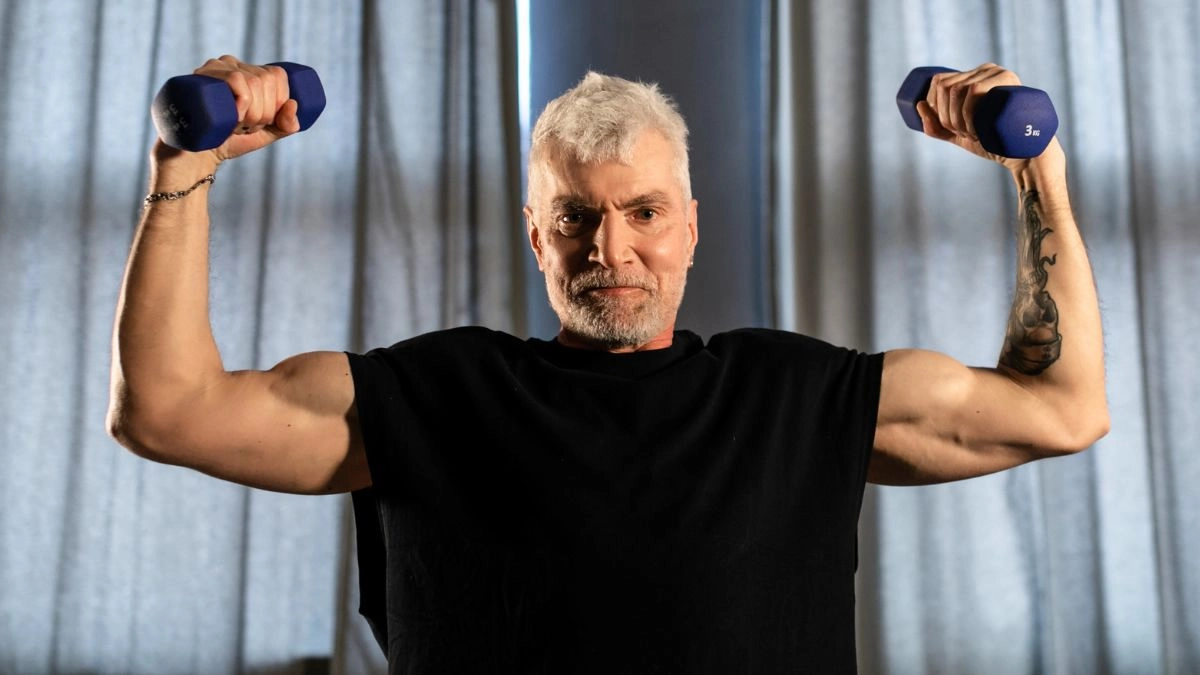
Strength work trains muscle, which running does not target the same way. A 2022 meta-analysis in the British Journal of Sports Medicine pooled 16 studies. People who did strength work had a 10 to 17% lower risk of early death, heart disease, cancer, and diabetes. The gains peaked at about 30 to 60 minutes a week.
A cohort study of 89,962 adults aged 65 and older used National Health Interview Survey data. Those who did strength work twice a week had 8% lower mortality. Those who also met the aerobic activity guideline had 43% lower mortality.
The CDC advises strength work on at least 2 days a week for all major muscle groups. Pick a weight that makes the last repetition hard. A band, dumbbells, or your own body weight all count. Start light and add weight in small steps.
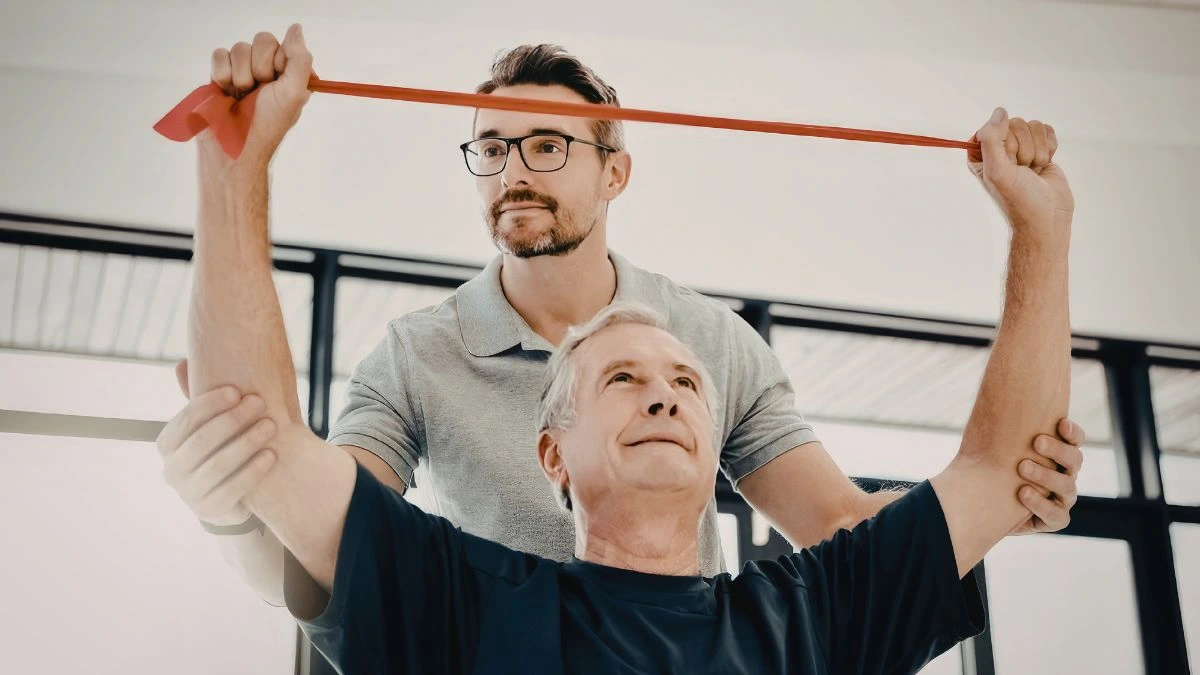
Check your form with a trainer if you are new to lifting. Muscle guards the body, but your heart still needs steady cardio, and a walk is the easiest place to start.
Brisk Walking, Done With Purpose
Walking needs no gym, no gear, and no class. A 2022 meta-analysis in The Lancet Public Health pooled data from 47,471 adults in 15 studies. For adults 60 and older, the risk of early death fell as steps rose. It leveled off at about 6,000 to 8,000 steps a day.
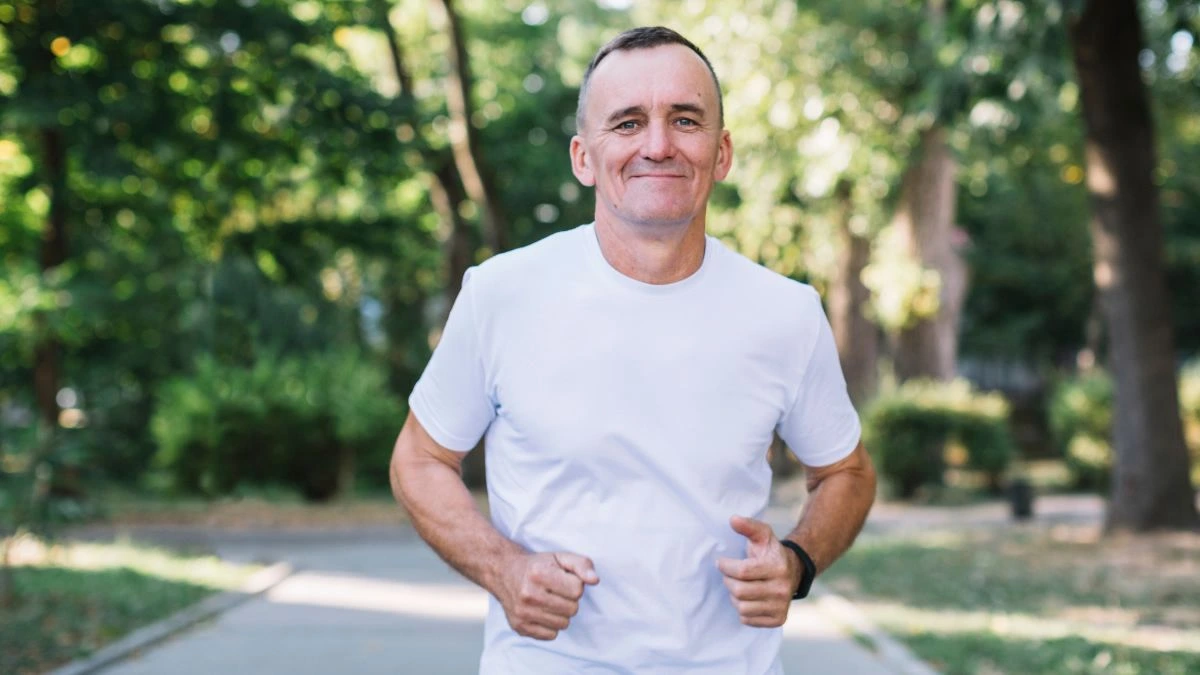
The same analysis found mixed evidence for walking speed. Total steps mattered most. The CDC defines moderate effort as a 5 or 6 on a 10-point scale. You breathe harder and your heart beats faster.
In my conversations with new walkers in their early 60s, one pattern repeats. They aim for 10,000 steps, miss the goal by day three, and quit. The Lancet data should free them. Risk fell step by step as daily steps rose, so every small gain counts.
When you want more challenge, or your knees want less load, a bike delivers both.
Cycling: Steady Miles Without the Pounding
Cycling builds heart and lung strength without hard landings. A 2018 Cleveland Clinic study in JAMA Network Open reviewed 122,007 adults who took treadmill tests. Low cardiorespiratory fitness, or weak heart and lung stamina, carried a death risk as large as smoking or diabetes. The fittest adults lived longest, with no observed upper limit to the benefit.
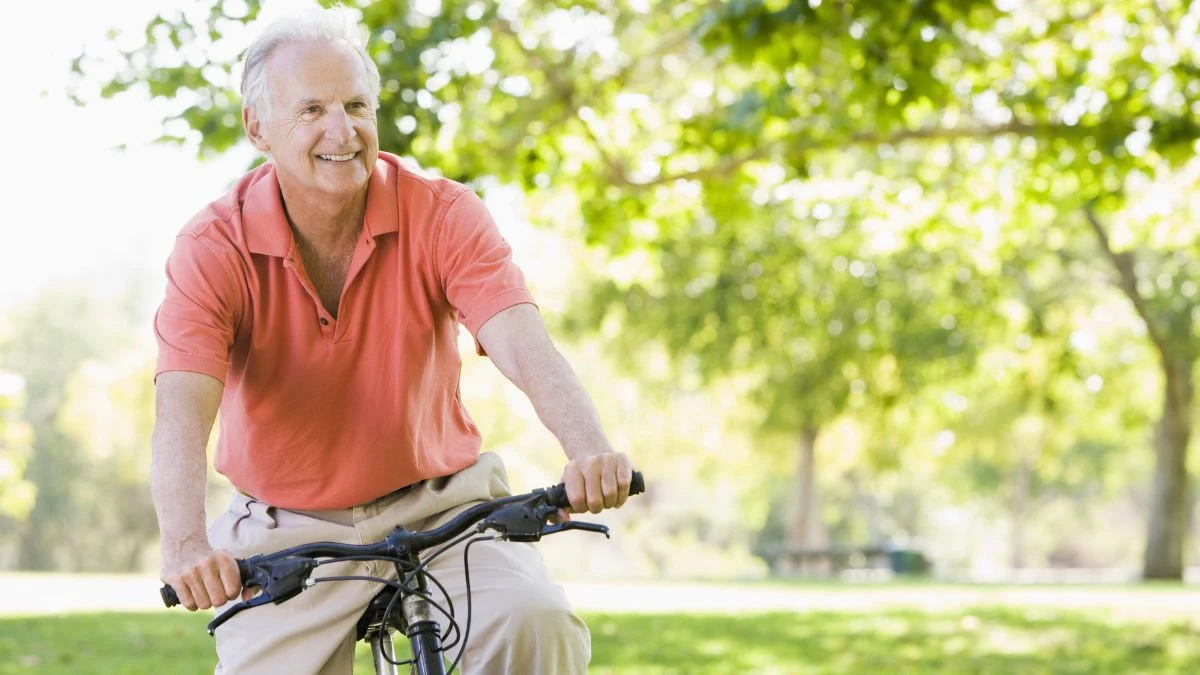
A 2017 study in the British Journal of Sports Medicine tracked 80,306 British adults. Adults who cycled for any purpose had 15% lower all-cause mortality. Both studies are observational, so they show a link, not proof. Still, they match what I see in practice: steady cardio keeps people moving for years.
Getting Started with Cycling Workout Form
Initial Pace and Frequency
Start with 20 minutes at an easy pace, three days a week.
Seat Height and Knee Alignment
I tell clients to set the seat so the knee keeps a small bend at the bottom of each pedal stroke.
Knee Protection
That one tweak spares the knee.
Bone Loading and Strength Pairing
Cycling does not load your bones, so pair it with strength work.
If even pedaling bothers your joints, water takes off nearly all the load.
Swimming and Water Workouts for Sore Joints
Water holds up much of your body weight, so your joints get a break. The CDC counts water aerobics as aerobic activity. The 2017 study above found that swimmers had 28% lower all-cause mortality. Their cardiovascular disease death risk, which includes stroke, was 41% lower.
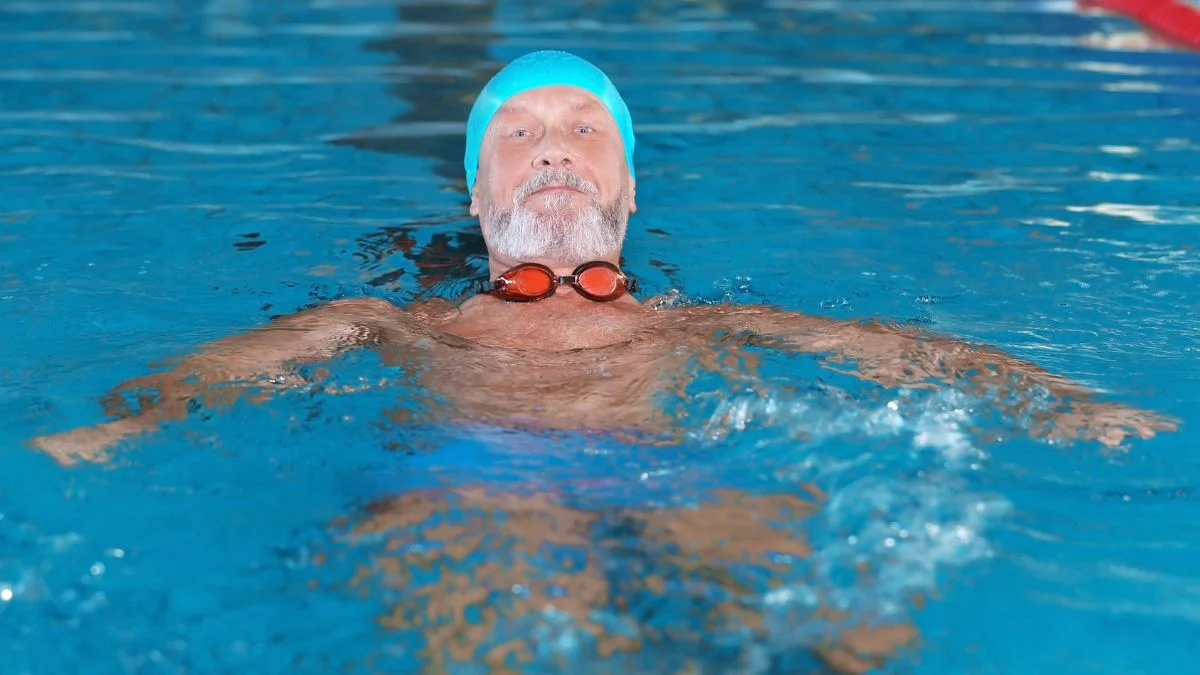
Low impact can still mean high effort. Swim laps with short fast bursts, or push the pace in a water class. Water pushes back on every move, so your muscles work as you swim.
In my conversations with adults who have sore hips or knees, the pool is often where they first feel strong again. Begin with 15 minutes if you have not swum in years.
Swimming does not load your bones, so add strength work on land. Aim for two swims a week, and rest between hard laps.
If you miss the hard breathing that running gave you, machines can bring it back.
Note: If you have a heart condition, joint disease, or balance problems, or you have been inactive, check with your doctor before trying hard intervals.
Elliptical and Rowing Intervals When You Miss the Effort of Running
The CDC treats 1 minute of vigorous activity as about the same as 2 minutes of moderate activity. So 75 minutes of vigorous effort meets the same weekly goal as 150 minutes of moderate effort.
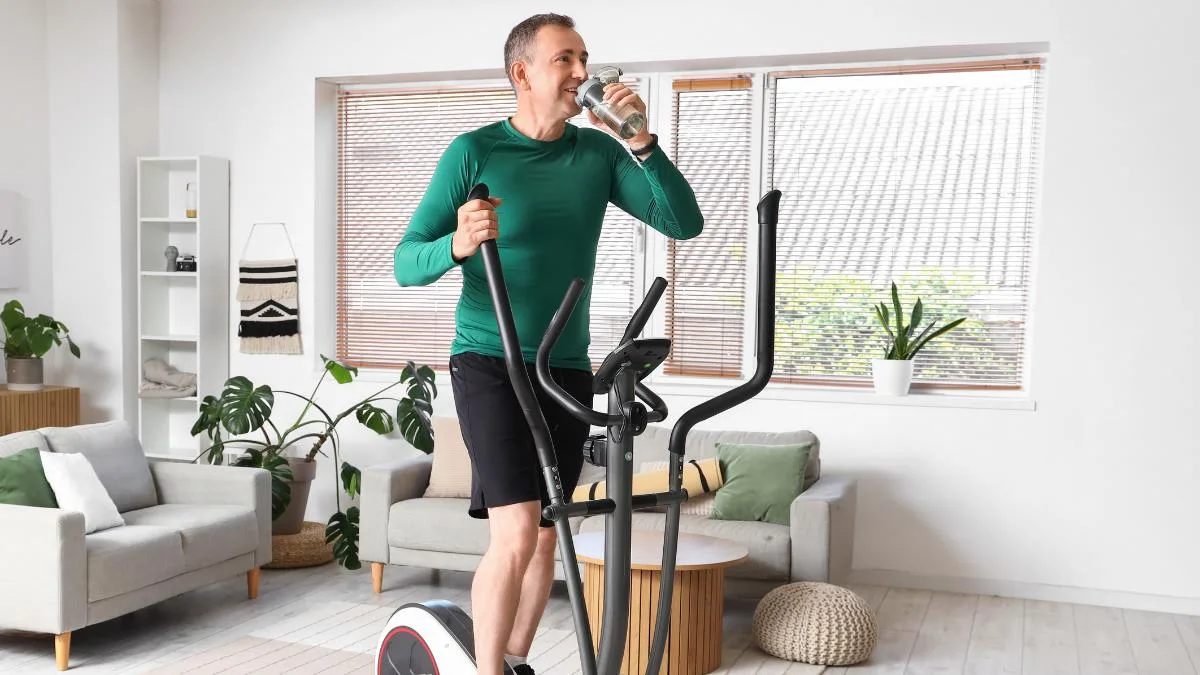
An elliptical copies your running stride without the ground impact. Rowing works your legs, back, and arms in one smooth motion. I found no long-term study that tests these machines for longevity. The case rests on effort and fitness, which the research above supports.
Former runners tell me they miss the hard breathing more than the pounding. Warm up for 5 minutes at an easy pace. Then try 4 minutes hard, then 3 minutes easy, three times.
The CDC puts hard effort at 7 or 8 on the same 10-point scale. Build up over several weeks, and stop if you feel chest pain or dizziness.
Fitness and muscle guard your body, but falls need their own training.
Tai Chi: The Quiet Protector Against Falls
Falls can change a life in one moment. A 2019 Cochrane review covered 108 trials in adults 60 and older. Exercise programs cut the rate of falls by 23%. Programs that focus on balance and everyday movements cut falls by 24%.
Tai chi may help as well. The same review found it may cut the rate of falls by 19%, though the evidence has low certainty. Slow weight shifts in tai chi train the same balance skills you use when you trip.
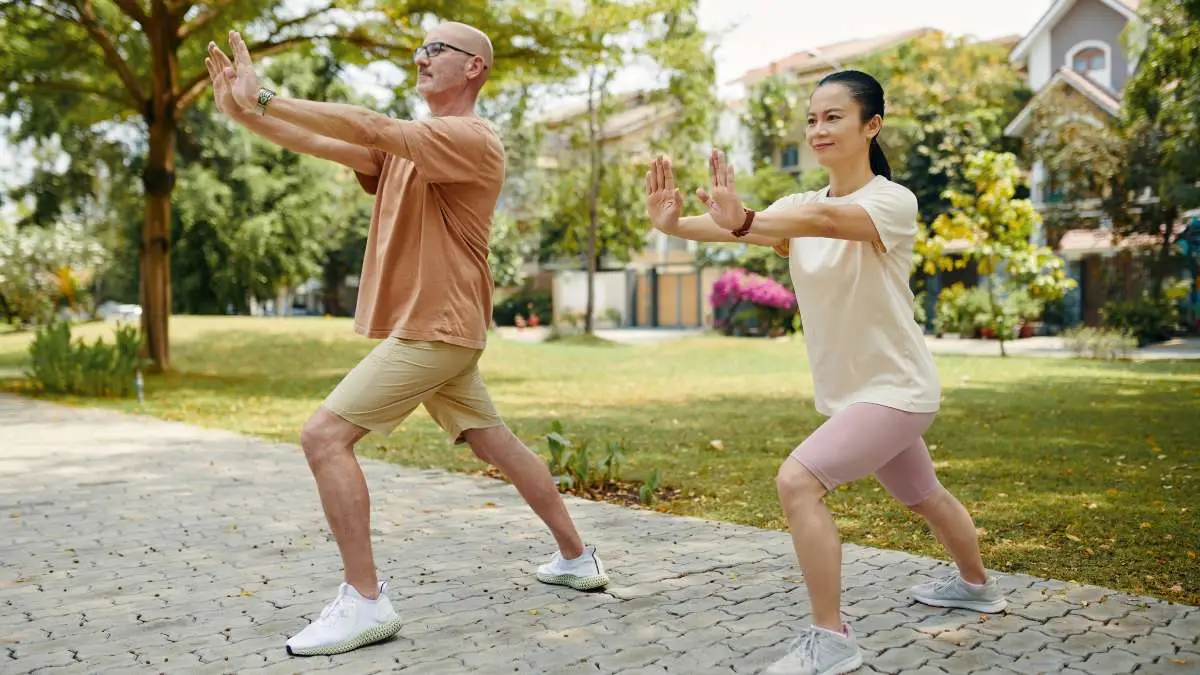
The Cochrane authors were unsure about walking or strength work alone for preventing falls. That is why I add balance on top. The CDC recommends balance activities each week, such as walking heel to toe. Try that along a hallway, with a hand near the wall.
Then look for a tai chi class with a trained teacher. With six options on the table, the real task is fitting them into a normal week.
How I Would Combine These Across a Week
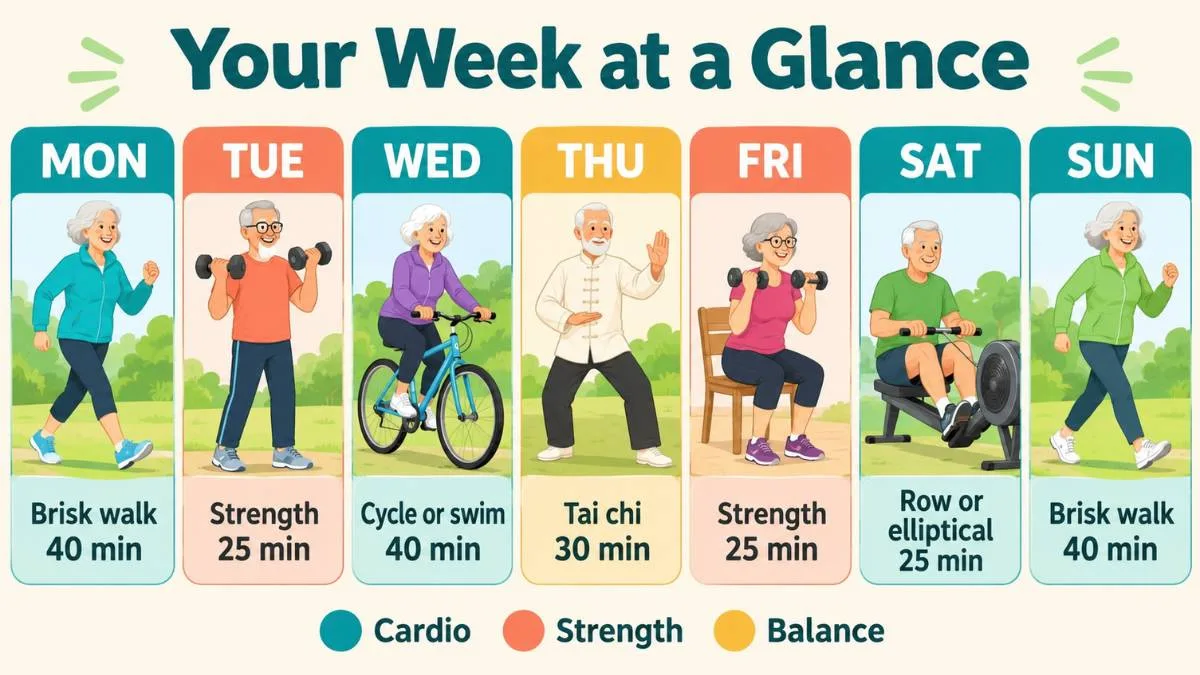
The CDC target is simple: 150 minutes of moderate activity, strength work on 2 days, and balance practice. Hard minutes count double. This sample week gets close and fits an ordinary schedule.
- Monday: 40-minute brisk walk
- Tuesday: 25-minute strength session
- Wednesday: 40 minutes of steady cycling or swimming
- Thursday: 30-minute tai chi class or balance practice
- Friday: 25-minute strength session
- Saturday: 25 minutes of elliptical or rowing intervals
- Sunday: 40-minute brisk walk
A 2024 review of meta-analyses in the Journal of the American Medical Directors Association covered adults 60 and older. Activity near guideline levels came with about 19 to 30% lower all-cause mortality. The authors said higher levels may bring even more benefit.
I know of no trial that compares these workouts with running head to head. They build fitness, muscle, and balance, the same traits the studies above tie to longer, safer lives.
If running still feels good, keep it and add these on top. The CDC says some activity beats none, so even a short session counts.
Conclusion
Your sore knee can change your routine without changing your future. This week, pick the one workout you look forward to. Put a 20-minute session on your calendar and keep that appointment. Start small, stay steady, and let your body show you what it can still do. I am cheering for you.
References
- Centers for Disease Control and Prevention. Older Adult Activity: An Overview. https://cdc.gov/physical-activity-basics/guidelines/older-adults.html
- Centers for Disease Control and Prevention. What Counts as Physical Activity for Older Adults. https://cdc.gov/physical-activity-basics/adding-older-adults/what-counts.html
- British Journal of Sports Medicine, 2022. Muscle-strengthening activities are associated with lower risk and mortality in major non-communicable diseases: a systematic review and meta-analysis of cohort studies. https://pubmed.ncbi.nlm.nih.gov/35228201/
- Independent and Joint Associations Between Leisure Time Physical Activity and Strength Activities With Mortality Outcomes in Older Adults At least 65 Years of Age: A Prospective Cohort Study. https://pubmed.ncbi.nlm.nih.gov/33858013/
- Paluch AE et al. Daily steps and all-cause mortality: a meta-analysis of 15 international cohorts. The Lancet Public Health, 2022. https://pubmed.ncbi.nlm.nih.gov/35247352/
- Mandsager K et al. Association of Cardiorespiratory Fitness With Long-term Mortality Among Adults Undergoing Exercise Treadmill Testing. JAMA Network Open, 2018. https://doi.org/10.1001/jamanetworkopen.2018.3605
- Oja P et al. Associations of specific types of sports and exercise with all-cause and cardiovascular-disease mortality: a cohort study of 80,306 British adults. British Journal of Sports Medicine, 2017. https://doi.org/10.1136/bjsports-2016-096822
- Sherrington C et al. Exercise for preventing falls in older people living in the community. Cochrane Database of Systematic Reviews, 2019. https://pubmed.ncbi.nlm.nih.gov/30703272/
- Dose-Response Relationship of Physical Activity with All-Cause Mortality among Older Adults: An Umbrella Review. Journal of the American Medical Directors Association, 2024. https://pubmed.ncbi.nlm.nih.gov/37925162/