
Every morning, millions of older adults swallow a calcium or vitamin D pill to protect their bones. Doctors recommended it. Packaging promised it. So people kept buying it.
But in June 2026, the largest study ever done on this topic found something surprising. Researchers looked at 69 trials and 153,902 adults. The result? These supplements do not meaningfully prevent fractures in most healthy older adults.
This does not mean bone health does not matter. It means what you are doing to protect your bones may need to change. This article breaks down what the study found, who the exceptions are, and what actually works to keep your bones strong and your body upright in 2026.
What Did the BMJ Study Actually Find?
Canadian researchers looked at 69 separate trials with a total of 153,902 adults. They compared people who took calcium supplements, vitamin D supplements, or both against people who took nothing. The goal was to see whether the supplements reduced fractures and falls.
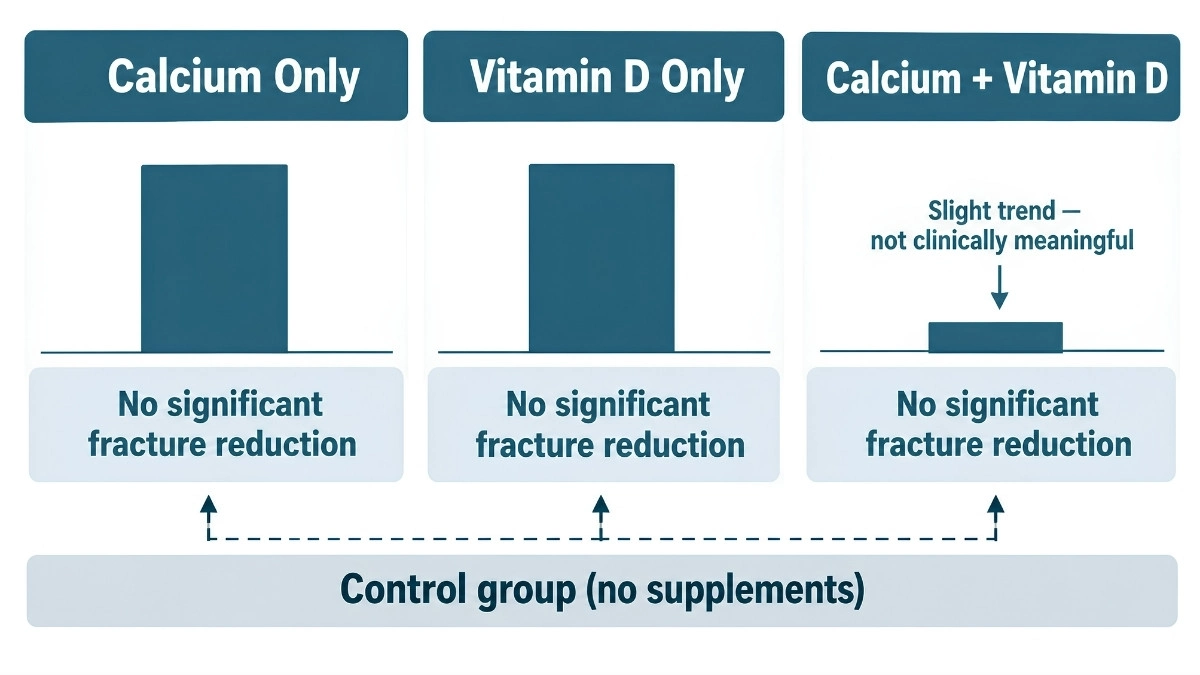
The answer was no. Calcium alone showed little to no benefit. Vitamin D alone showed little to no benefit. Even taking both together only showed a tiny trend toward fewer fractures — but it was not big enough to count as a real clinical benefit.
This was published in The BMJ on June 15, 2026. The DOI is 10.1136/bmj-2025-088050. This was not a small study someone ran in a lab. It was a meta-analysis — a study that pulls together results from dozens of trials. The evidence quality was rated moderate to high. That makes it hard to argue with.
Who Does This Study NOT Apply To?
This study was mostly about healthy older adults living at home — not people in nursing homes, not people already being treated for bone disease. That matters a lot.
The research team said the results may not apply to people with specific bone disorders, people on drug treatment for osteoporosis, or people using long-term corticosteroids.
The US Preventive Services Task Force (USPSTF) also said in January 2025 that their similar findings do not apply to people with a history of osteoporotic fractures, vitamin D deficiency, or malabsorption conditions.

So if your doctor prescribed calcium or vitamin D for a specific reason — diagnosed osteoporosis, a confirmed deficiency, a steroid medication, or a bone drug that requires it — do not stop. This study is not about you. Talk to your doctor before changing anything. The study targets people taking these supplements as a general health habit, with no specific medical reason.
Why Did So Many People Start Taking These in the First Place?
The early research did show benefits — but only in very specific groups. The most-cited study, from 1992, showed benefits in women who were 84 years old on average, severely deficient in vitamin D, and eating only about 513 mg of calcium per day from food. That is a very different person from someone picking up a bottle at the pharmacy today.
Over time, recommendations made for high-risk groups quietly became advice for everyone. Clinicians repeated it. Guidelines echoed it. Prescriptions went up year after year. And most people assumed: if the doctor says it, it must help.

The science kept questioning it. But habits and guidelines move slowly. Now the largest dataset ever built on this topic has confirmed what several smaller studies had already suggested. The general recommendation needs to change.
Are There Any Downsides to Taking Them Anyway?
If the supplements are not helping, why not just keep taking them? Because there are reasons not to.
Taking calcium supplements — even at doses around 1,000 mg daily — is linked to a slightly higher risk of kidney stones. The risk is small, but it is real. And if the supplement is not doing what you thought it was doing, even a small risk tips the scale.

There is also a financial cost. Millions of people spend money every month on these supplements. That money could go elsewhere — including on things that actually help.
The biggest hidden downside is false security. If you believe a pill is protecting your bones, you may feel less urgency about the things that actually work. That false sense of safety is where the real harm can quietly happen.
What Actually Prevents Fractures in 2026?
The good news is that real options exist. They just take more effort than swallowing a pill.
Weight-bearing exercise — like walking, resistance training, or Tai chi — builds bone density and improves balance. A meta-analysis of 10 studies found physical activity may reduce the number of older adults who experience a fall-related fracture. Exercise also cuts the risk of falls, which is where most fractures begin.
Fall prevention matters just as much as bone strength. Check your home for rugs that slip, dim lighting, and bathrooms without grab bars. Get your vision checked. Ask your doctor whether any of your current medications cause dizziness. These practical steps have strong evidence behind them.
For people with diagnosed osteoporosis, prescription medications like bisphosphonates (alendronate), denosumab, teriparatide, and romosozumab actually reduce fracture risk in clinical trials. These are not supplements. They are a different category entirely.
Get calcium from food first — dairy, leafy greens, canned fish with bones, tofu, and fortified foods. Sunlight remains the best source of vitamin D.
What Should You Do Right Now?
Here is a simple guide based on your situation.
If you are a healthy adult over 60 and you take calcium or vitamin D only to prevent fractures: have a conversation with your doctor. Do not stop on your own, but bring this study up at your next appointment. Ask whether continuing makes sense for your specific health picture.
If you have osteoporosis, a confirmed vitamin D deficiency, or you take long-term steroids: do not change anything without guidance. This study is not directed at you.
If you have never had a bone density DEXA scan and you are a woman over 65, a man over 70, or anyone who has fractured a bone as an adult: ask about getting one. It gives you real data, not guesswork.
Start moving. Even a daily walk helps. Add some resistance training if you can. Check your home for fall risks. These steps have real evidence behind them — and none of them come in a bottle.
Conclusion
The largest study ever done on this topic found that calcium and vitamin D supplements do not prevent fractures in most healthy older adults. That does not mean giving up on bone health. It means putting effort into what actually works — movement, fall prevention, food, and real medical care when needed. Ask your doctor. Get tested. Take action.