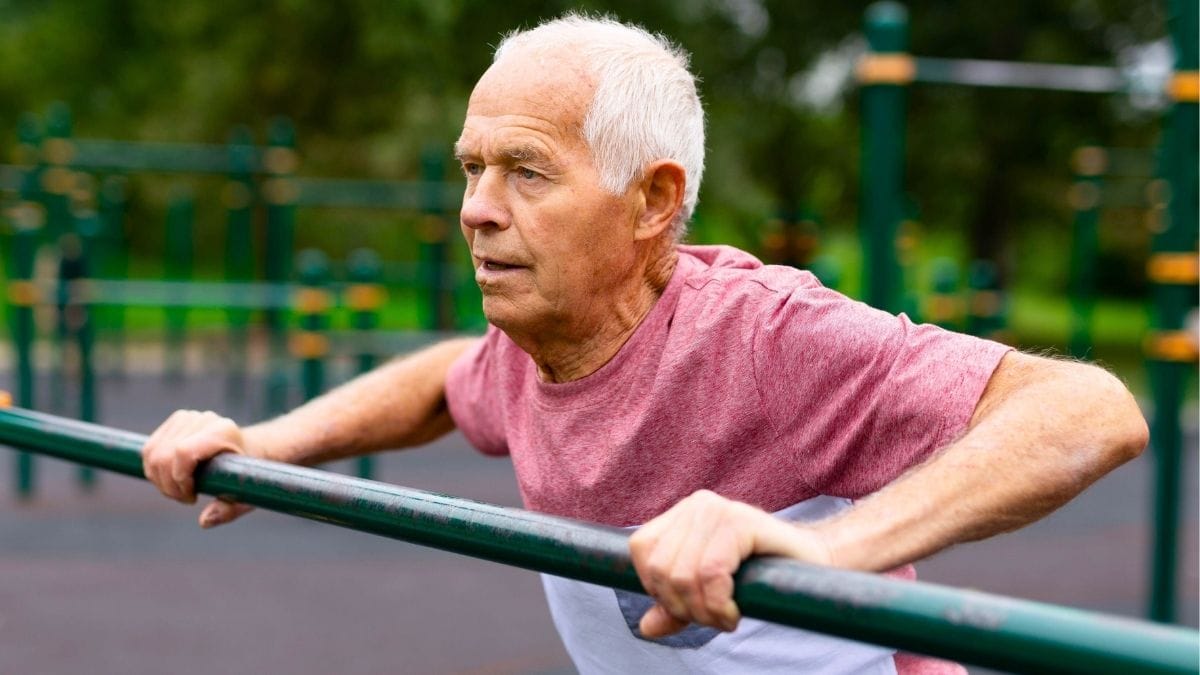
You looked in the mirror last year and noticed it. Your arms look smaller. Your legs feel weaker. Getting up from the couch takes a little more effort than it used to. And somewhere in the back of your mind, a quiet voice said: “This is just what getting old feels like.”
That voice is lying to you.
At 74, John has more muscle than he did at 50. Not because of surgery, supplements, or a personal trainer. Because of three exercises he does every single morning before breakfast. He has not skipped a day in six years.
After age 30, your body loses 3% to 5% of muscle every decade. By 60, most people accept that as final. They stop fighting it. They adjust their life around the weakness instead of fixing the weakness.
You do not have to do that.
This article gives you the exact 3 exercises, and the simple eating habit that makes your body respond. No gym required. No special equipment. Just the truth about what your body is still capable of.
Your Body Is Losing Muscle. Here Is Why
There is a name for what is happening to your body. It is called sarcopenia. It is the slow loss of muscle mass, strength, and function that comes with age. It makes walking harder. It makes climbing stairs feel like work. And it raises your risk of a serious fall.
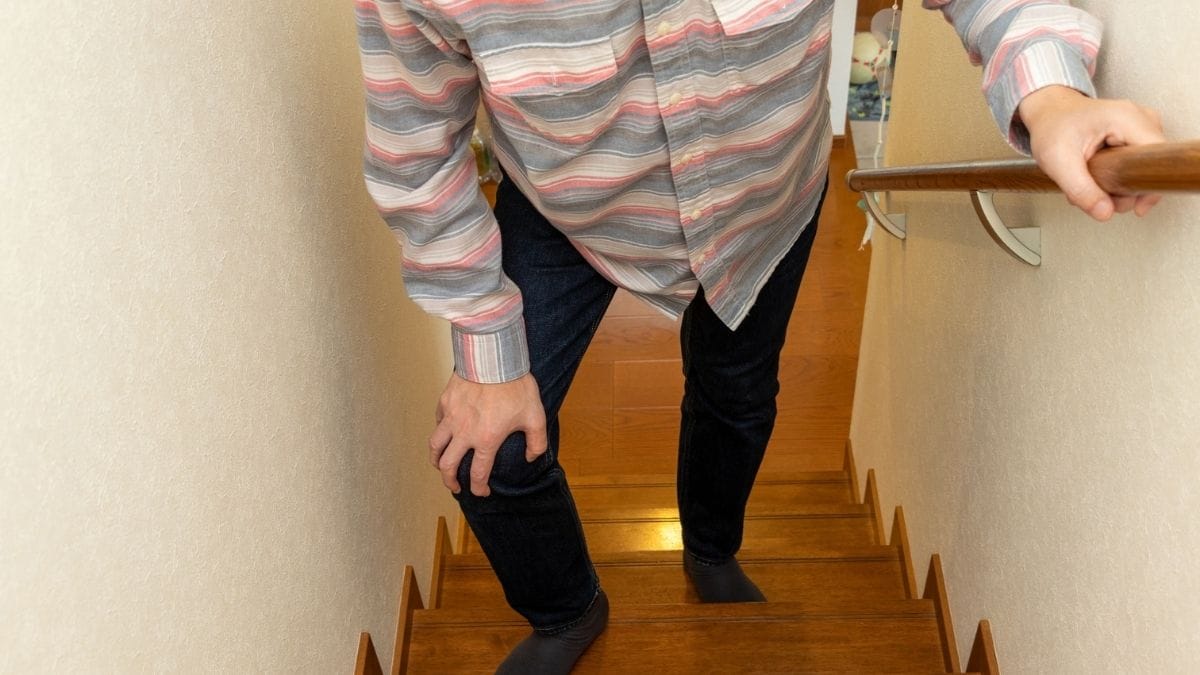
According to the Cleveland Clinic, sarcopenia can make everyday tasks like getting out of a chair or climbing steps harder over time. The NIH reports it affects 5 to 13% of people over 60 and up to 50% of people over 80.
Here is something most doctors do not tell you. New 2025 guidelines show muscle decline speeds up starting at age 50, not 70. That means the time to act is now, not later.
People with sarcopenia have 2.3 times the risk of a low-trauma fracture from a fall, like a broken hip or wrist, according to Harvard Health. That one stat should stop you cold.
This is not about looks. It is about staying independent. It is about getting off the floor if you fall. It is about carrying your own bags at 80.
Proof It Works: Real People, Real Results
You do not need to take anyone’s word for it. These are real people with real results.
John D. Markunas is a 70-year-old professional from Florida. He is not a trainer or bodybuilder. He is just a normal man who decided to stop accepting decline. He told Men’s Journal: “I realized I was on a slow path toward senior-citizen health mediocrity without a structured plan.” He has been building muscle naturally ever since.
Mitch Kahn started at age 55. He weighed 265 pounds and had pre-diabetes, high cholesterol, and high blood pressure. He adopted compound movements, stayed consistent, and reversed all three conditions. Today he has over 933,000 Instagram followers as @foreverfitwithmitch.
Jack Eckenrode did not even start cycling until he was 75. He is now 96 and won five medals at the National Senior Games.

None of these people used complicated programs. None needed expensive gym equipment. What they had in common was this: simple exercises, done daily, for a long time.
The 3 Moves: Do Them Every Morning
You do not need ten exercises. You need three, done every morning without fail.
Short, consistent sessions beat long, irregular ones. Research cited by Eat This confirms that eight focused minutes done every day outperforms an unfocused hour done once in a while.
Exercise 1: Bodyweight Squat (or Chair Squat)

This is the most important move you can do. Strong legs mean you can stand up from a chair, get off the floor, and walk without support. Squats also build bone density and cut your fall risk.
How to do it: Stand with feet shoulder-width apart. Push your hips back. Lower yourself like you are sitting in a chair. Press through your heels to stand. Start with 2 sets of 10 reps. Work up to 3 sets of 15 over time.
Exercise 2: Wall Push-Up or Incline Push-Up
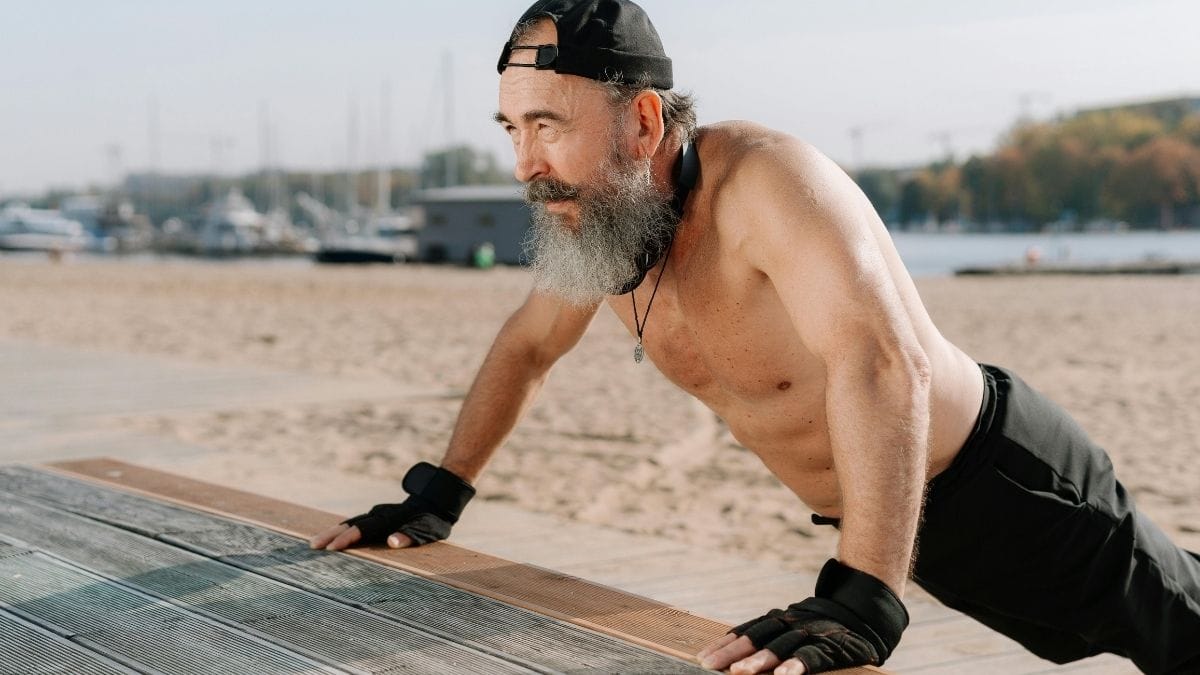
This builds your chest, shoulders, triceps, and core. The wall version is joint-friendly and safe for any fitness level. Place your hands on the wall at chest height. Keep your body straight. Lower your chest toward the wall, then push back. Start with 2 sets of 8 reps.
Exercise 3: Resistance Band Row
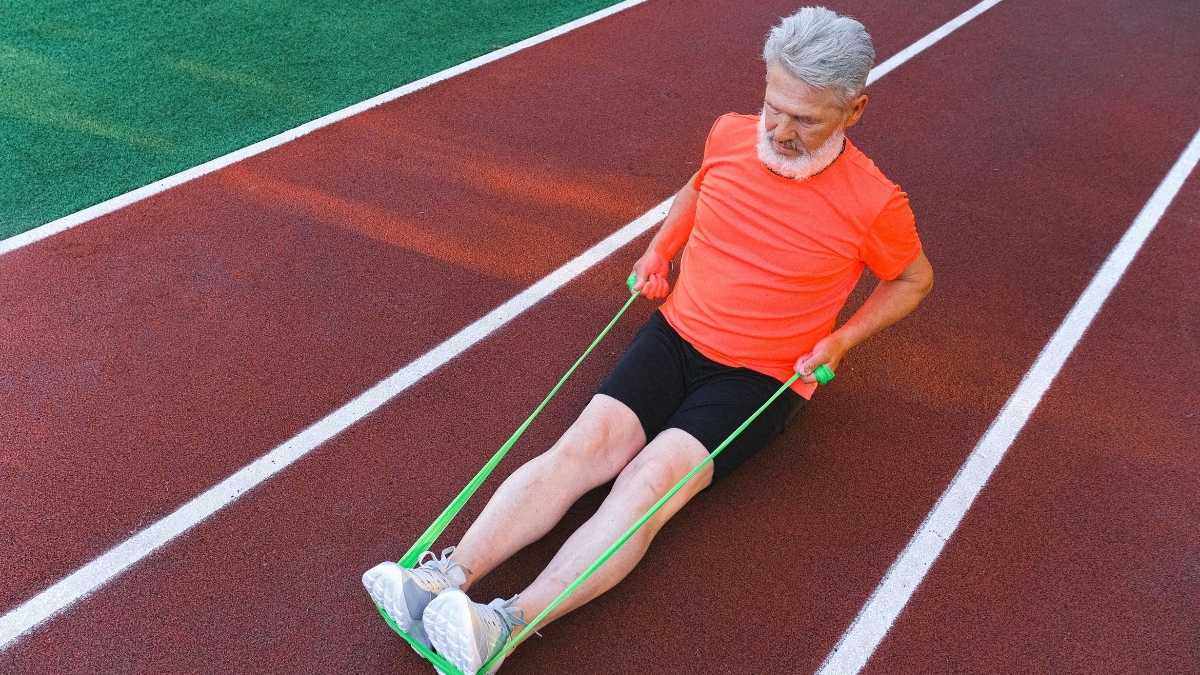
This fixes the hunched posture that gets worse with age. It builds your upper back and shoulders. Tie a resistance band to a door handle or railing. Hold the ends in both hands. Pull your elbows back and squeeze your shoulder blades. Start with 2 sets of 10 reps.
A University of Bath study with participants averaging age 74 found that daily short sessions improved sit-to-stand performance by 31% in just 28 days. That is real, measurable change in under a month.
Eat This or Your Workout Is Wasted
Exercise alone is not enough. If you do not eat enough protein, your body cannot repair or build muscle tissue.
Most seniors are not eating nearly enough. According to the 2020 to 2025 US Dietary Guidelines, about 30% of men and 50% of women over 71 are under-eating protein. This is one of the biggest reasons people do not see results despite working out.
UCLA Health recommends older adults eat 1.2 to 1.6 grams of protein per kilogram of body weight each day. For a 165-pound person, that is roughly 90 to 120 grams of protein per day.

Here is what that looks like in real food. Three eggs at breakfast gives you about 18 grams. A chicken breast at lunch gives you 30 grams. Fish at dinner adds another 25 grams. A cup of Greek yogurt as a snack adds 15 more grams. That gets you to 88 grams without much effort.
Leucine is the amino acid that triggers muscle growth. Animal proteins like eggs, dairy, and meat are the best sources. If you eat plant-based, get leucine from peanuts, soybeans, and lentils.
This One Habit Makes or Breaks Everything
Here is the honest truth. The routine does not matter if you do it for two weeks and quit.
The people who built muscle at 70, 74, or even older did not have a magic program. They showed up every single morning. No exceptions for bad moods, tiredness, or busy schedules.
Exercise physiologist Melissa Hendrix Wogahn told Medical News Today that the single biggest factor in results for older adults is not intensity. It is consistency over time. Start slow. Progress slowly. But never stop.
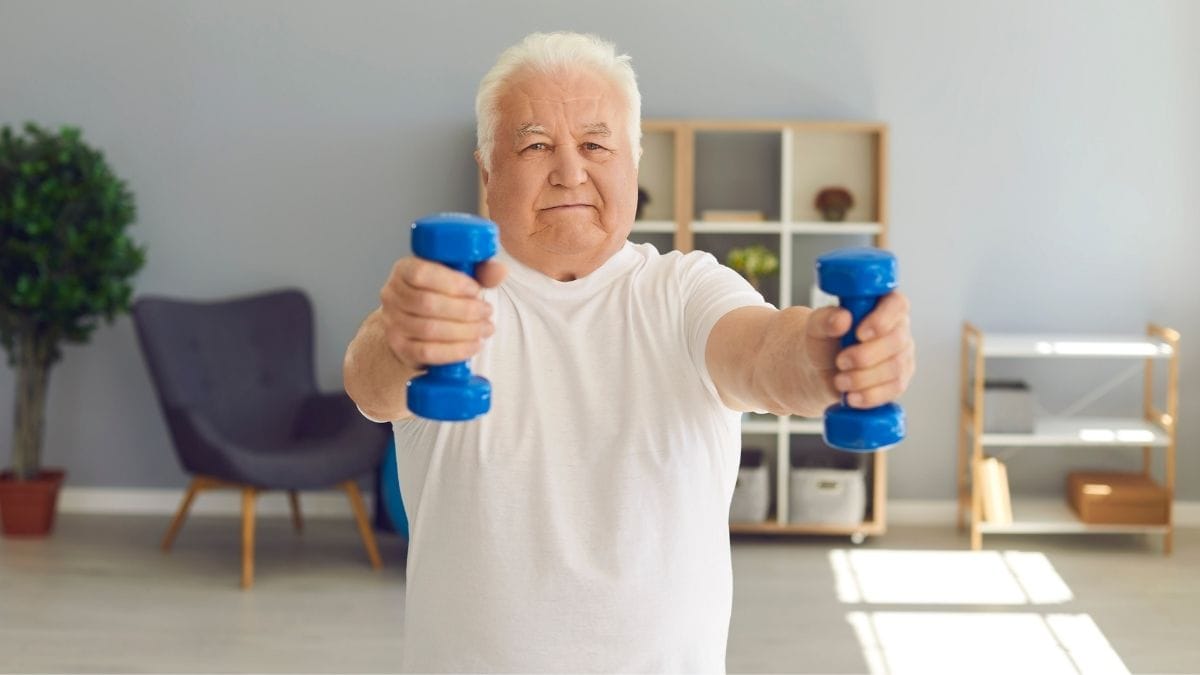
CNN health reporting also confirms that older adults benefit from frequent, repeated training. Even light daily movement between sessions speeds up recovery and keeps muscles responsive.
The easiest way to make this stick? Do your three exercises right after you brush your teeth. That is it. Attach it to something you already do every morning without thinking. After six years of that one habit, you will have more muscle than you thought possible.
Final Thought:
Muscle loss is real but it is not permanent. John started with a wall and a resistance band. Mitch started at 265 pounds. Jack started at 75. None of them waited for the perfect moment.
Tomorrow morning, after you brush your teeth, drop into 10 squats. That is how every one of their stories began too.