
Three workouts a week, months of effort, and your body has barely changed — that is not bad luck, that is a sign your body is running on a completely different set of rules than it was ten years ago.
Most people over 40 in Montgomery County are working hard enough. They are just missing three specific things that nobody bothered to tell them about. And once you see what those things are, you will not be able to unsee them.
1- Your Body Changed. Your Workout Didn’t
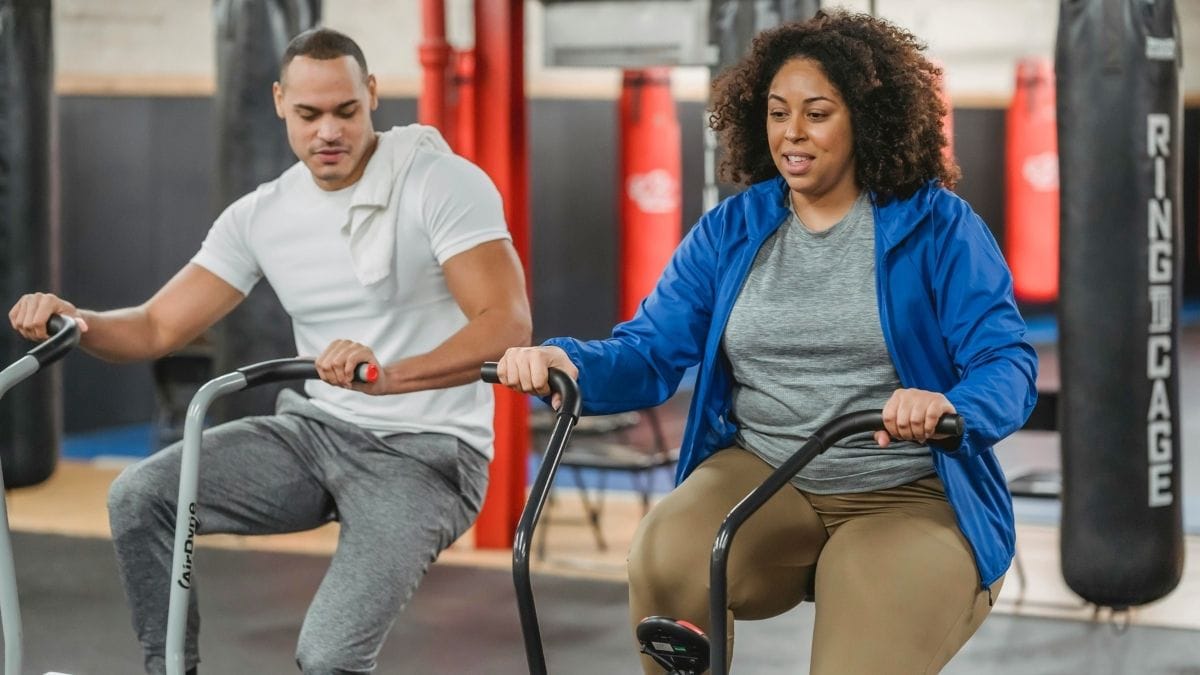
Here is what most people miss. After age 40, your body loses 0.4 to 0.8 percent of muscle mass every single year. That is not an opinion. That is from a 2025 study published in the journal Nutrients on the NCBI database.
Less muscle means a slower metabolism. Adults typically lose 3 to 8 percent of their muscle per decade, and the drop speeds up after 40. With less lean muscle, your body burns 1 to 2 percent fewer calories every year — even if your diet stays the same.
And here is the part most gym-goers ignore. Doing the same treadmill routine or the same machine circuit you did three years ago is not training. It is just movement. Your muscles have fully adapted to it. They have no reason to grow or change.
A 16-week progressive overload program for men aged 50 to 65 showed roughly 40 percent strength gains, increased lean mass, and a 7.7 percent rise in resting metabolic rate. That is from Dr. Axe, citing peer-reviewed research.
You are not too old. You are using the wrong approach.
Tips:
- Add 5 pounds or 1 extra rep to one exercise every single week. That is progressive overload in its simplest form.
- Write down every weight and rep from each workout. If the numbers are not going up over time, nothing in your body is changing either.
2- Your Hormones Shifted. That Changes Everything

If your workouts feel harder but produce less, your hormones are likely involved. This is not an excuse. It is biology.
Testosterone drops gradually in men after 40. In women, it often drops sharply during perimenopause. When testosterone falls, muscle growth slows down, energy drops, and workouts feel less effective — even when the effort is real.
For women, low progesterone and shifting estrogen levels also cause increased belly fat, worse insulin sensitivity, and faster muscle loss.
A landmark study in The Journal of Physiology followed women aged 18 to 80 and found that strength decline accelerates in the 40s as hormones change. Menopause, not just aging, drives this.
Cortisol is another problem. Welltech tracked over 869,000 searches between 2024 and 2025 for “why am I not losing weight despite exercising.” Stress — and the cortisol it produces — was the top hidden factor.
The fix starts with a simple bloodwork visit. Ask your doctor to check testosterone, cortisol, thyroid, and fasting insulin. Holy Cross Health in Silver Spring and Shady Grove Medical Center both serve Montgomery County residents.
Tips:
- Ask your doctor specifically for a cortisol and hormone panel, not just a standard check-up blood draw. Many doctors skip these unless you ask.
- Cut back on back-to-back high-intensity sessions. Replace one weekly workout with lower-intensity strength training to bring cortisol down.
3- You’re Under-Recovering, Not Under-Training

Most people who plateau think the answer is more workouts. Almost every time, the real answer is better recovery.
Your body does not build muscle during the workout. It builds muscle after, while you sleep and rest. If your recovery is broken, your three weekly sessions are producing stress without results.
Sleep is the biggest one. Aim for 7 to 9 hours a night. Chronic poor sleep raises cortisol, breaks down muscle, and kills progress — no matter how hard you train. That comes directly from the Australian Institute of Fitness.
Protein timing matters too. Research published on ResearchGate recommends 1.2 to 1.5 grams of protein per kilogram of body weight daily for active adults over 40. Spread it across 3 to 4 meals. Do not pile it all into dinner.
Pre-sleep protein is a tool most people never use. Consuming 20 grams (women) or 40 grams (men) of casein protein 30 minutes before bed — combined with resistance training — was shown to increase muscle mass and strength. Greek yogurt or cottage cheese both work.
Tips:
- Use the free Sleep Cycle app or your iPhone’s Health app to track your sleep quality for one week. Most people are shocked at how broken their sleep actually is.
- Put cottage cheese or a casein protein shake on your grocery list tonight. Have it 30 minutes before bed after every workout session.
Bonus: Your Workout Time May Be Hurting You
This one is surprising. A 2026 study cited by MindBodyGreen tracked 150 adults between 40 and 60. People who worked out in sync with their natural energy rhythm — morning types trained in the morning, evening types trained in the evening — saw nearly double the cardiovascular improvement compared to those who did not.
In plain language: if you force yourself to train at 5 a.m. but you are naturally an evening person, you are getting less than half the benefit from every session.
You do not need to overhaul your entire schedule. But it is worth testing. If your Tuesday 6 a.m. session always feels terrible, try shifting it to 6 p.m. for a few weeks and compare how you feel and perform.
This is a free, zero-cost adjustment that could meaningfully improve your results in Montgomery County — or anywhere.
Tips:
- Pay attention to when during the day you naturally feel sharpest and most energized. That window is likely your best training time.
- Try one workout at a different time of day this week. Track how your energy, strength, and mood compare to your usual sessions.
The Bottom Line
Your results are missing because your training, hormones, and recovery have not caught up to where your body is in 2026. The fix is not more effort. It is smarter structure.
Pick one of the three factors above. Take one action this week.
If you are over 40 and working out in Montgomery County, training smarter is the only thing that will actually move the needle.