

Your bowels ran like clockwork for decades. Then, within a few weeks, the clock stopped. Your diet did not change, and nothing else feels different. You may not want to talk about it, but you should not ignore it.
That sudden break is unsettling, and it deserves a real answer. Being constipated after 60 often traces back to a recent change, such as a new pill or a dropped habit.
Some causes are easy to fix. Others need a doctor soon, and those should not wait. I will show you where to look first, starting with the most common and most fixable causes. Then I will explain how to tell which group you are in.
Start With Your Medicine Cabinet
Note: Do not stop or change a prescribed medicine on your own. Talk with your doctor or pharmacist first.
Medicines top my list when a change is sudden. Cleveland Clinic names several common culprits. These include opioid pain medicines, ibuprofen and naproxen, some antidepressants, and antihistamines like Benadryl.
The NIDDK also names iron supplements and antacids with aluminum or calcium. Both can make constipation worse. Neither may feel like medicine, so list them anyway.
The MSD Manual adds blood pressure drugs called calcium channel blockers. It also flags anticholinergic medicines, a group that includes some antihistamines, some antidepressants, and some Parkinson’s drugs. The NIDDK adds diuretics, often called water pills, and seizure medicines.
One gastroenterologist told SilverSneakers that medicines are the most overlooked cause in older adults. Some drugs dry the stool. Others slow the intestines. The MSD Manual adds that medicines are common causes of both sudden and long-lasting constipation.
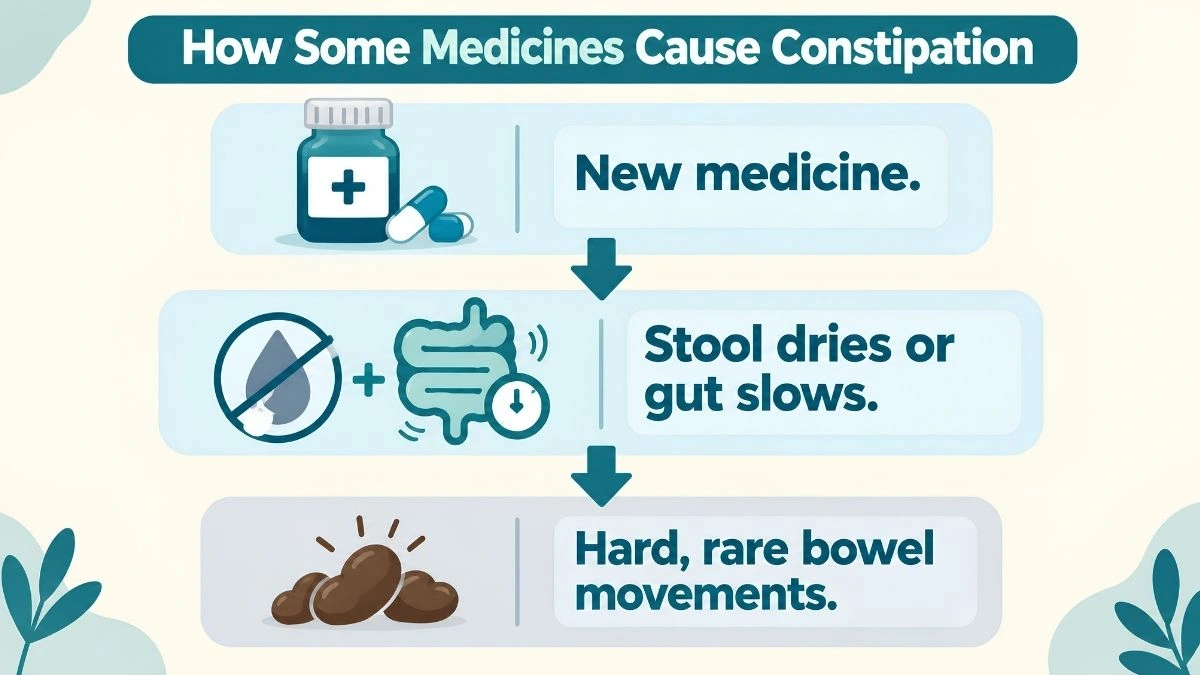
Here is an example. A 64-year-old starts a new blood pressure pill in March. By April, bathroom trips are hard and rare. Nobody connects the two. The timing is the clue, and the MSD Manual notes that drug-related constipation usually starts soon after a new medicine begins.
Write down every medicine and supplement you take. Add the date you started each one. Include over-the-counter products. Then ask your pharmacist which items can cause constipation. The MSD Manual says doctors sometimes pause a suspect drug to see whether the problem clears.
If your list holds no suspects, the next place to look is your daily routine.
Fiber, Fluids, and Movement: What Quietly Changes With Age

The National Institute on Aging says about one-third of older adults have occasional symptoms of constipation. You are far from alone.
Age changes the gut in specific ways. The MSD Manual explains that the rectum grows larger as people get older. Older adults then need more stool in the rectum before they feel the urge to go.
The NIDDK also lists getting older as a trigger for bowel changes. So a routine that worked at 45 may stall in your 60s. Small changes in movement, meals, or medicines can each add to the problem.
Water plays a direct role. The MSD Manual explains that a body short on fluid pulls extra water from the stool. The result is hard, dry stool.
The NIDDK names other triggers that fit daily life. Ignoring the urge is one. So are low fiber, too few liquids, and too little physical activity. A change in how much or what you eat can also do it.
Smart Choices for Digestion
How small daily shifts in diet and activity improve regularity.
Swap Heavy Dinner Foods
Replace fatty meats, sweets, or processed items with fruit, beans, or whole grains at dinner.
Maintain Daily Walking
Dropping a routine morning walk can slow down gut motility, even if you eat lighter meals.
Beware Compound Changes
Changing diet and physical movement simultaneously doubles the strain on your digestive system.
Start with One Menu Swap
You don’t need a total overhaul—exchanging just one dinner item produces noticeable relief.
Reverse each trigger in small steps. Add one extra serving of vegetables a day. Drink a glass of water with each meal. Take a 15-minute walk.
Then give the bathroom a fair chance. Healthline suggests timing your visit after a meal. Sit for a few unhurried minutes, and never rush past the urge.
If your habits look sound and your medicines check out, look at your health next.
Underlying Conditions Worth Ruling Out
Some health conditions slow the bowel. The NIDDK lists hypothyroidism, or an underactive thyroid, and diabetes. Cleveland Clinic adds high blood calcium. Your doctor can test for all three.
Brain and spine conditions matter too. The NIDDK lists Parkinson’s disease and injuries to the brain or spinal cord.
The NIDDK says pelvic floor disorders can delay emptying of the colon, especially in women. Straining, a feeling of blockage, or a sense that you did not fully empty are worth mentioning to your doctor.

Digestive disorders count too: irritable bowel syndrome, celiac disease, and diverticular disease all appear on the NIDDK list. Mention any belly pain or bloating to your doctor.
The NIDDK notes that constipation can have more than one cause at a time. A new pill and a quieter routine can team up. That is why this checklist covers every area.
Most of these causes are treatable. A few warning signs, however, should not wait.
Red Flags That Should Not Wait
The National Institute on Aging says constipation is not serious most of the time. Still, the NIDDK lists warning signs that need a doctor right away. These include rectal bleeding, blood in your stool, and constant belly pain.
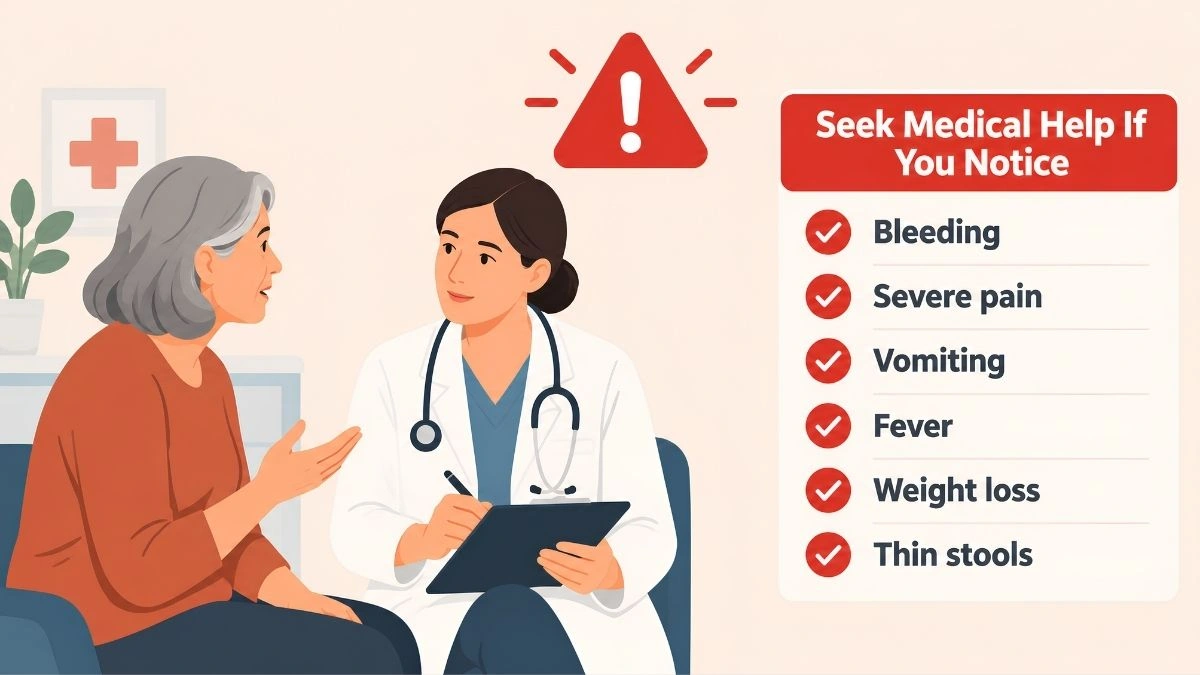
The same list includes inability to pass gas, vomiting, fever, lower back pain, and losing weight without trying.
UCLA Health adds red or black stool and a change in stool shape to the list of warning signs for colorectal cancer. New constipation appears on that list too.
A Mayo Clinic Proceedings review describes colon cancer symptoms in people aged 65 to 79. Stool width changes are most common, followed by bleeding, belly pain, and constipation. A new bowel change deserves a checkup, even though most causes are simple.
A clinical review on PubMed Central names age over 50 with recent symptoms as an alarm feature. An alarm feature calls for a checkup. The NIDDK also says to see a doctor if self-care does not work. Do the same if colon or rectal cancer runs in your family.
Colorectal cancer ranks fourth in new US cases and second in cancer deaths, according to the American College of Physicians’ 2023 guidance. The same guidance suggests average-risk adults start screening at 50.
That advice covers people with no symptoms. If you have new symptoms, ask for an evaluation instead of waiting for a screening date.
If none of these signs fit, you can start your plan today.
What to Do This Week
Note: This article is general information, not medical advice. Check with your doctor before you use laxatives regularly or change your diet, especially with a chronic condition.

Give yourself one week to gather clues. Each day, write down what you ate, what you drank, and when you went. Note any pain or blood. Keep that log beside your medicine list.
Bring the log and your medicine list to your appointment. The NIDDK says doctors use your medical and family history, an exam, or tests to find the cause. Your log makes that history exact. If talking about it feels awkward, bring a trusted friend or family member.
Bring three questions to your visit:
- Could any of my medicines or supplements cause this?
- Should I have blood tests for my thyroid, blood sugar, or calcium?
- Do my symptoms mean I need a colon exam now?
Be careful with laxatives. The MSD Manual says many older adults use laxatives too often. Ask your doctor which type fits you, and how long to use it.
Keep your daily basics going during that week: water with meals, a daily walk, and a set bathroom time. Call sooner if any warning sign from the last section appears. Do not wait for the week to end.
A Final Word
A sudden change in your body is worrying, yet you now know where to look. This week, take one small step. Gather every pill bottle and supplement you own, set them on the kitchen table, and show them to your pharmacist.
Answers often start with a clear picture of what changed. You are already asking the right question, and you do not have to work it out alone.